The core HVAC filters maintenance tips: change or clean your filter every 30 to 90 days, shut the system down first, and match the method to the filter type.
Replace disposables. Wash reusables.
That is the whole job, and most homes finish it in about fifteen minutes.
These HVAC filters maintenance tips apply to any forced-air furnace, central air conditioner, or heat pump that pulls return air through a filter slot.
That covers most U.S. homes. Ductless mini-splits and electronic air cleaners use different filter hardware, and the washable-filter notes apply to them.
Skip the advice that tells you to vacuum a disposable filter in place. It works for a few days and then stops, because the dirt that matters is embedded inside the pleats.
What HVAC Filter Maintenance Actually Includes
Filter maintenance is two tasks, and the first one is deciding which of the two applies to the filter you own. Disposable fiberglass and pleated filters get replaced on a schedule.
Washable filters, found in most ductless mini-splits and whole-house air cleaners, get rinsed and reused until the media wears out.
The distinguishing question is printed on the frame.
A cardboard frame with a single-use sheet is disposable; a filter labeled washable or reusable sits inside a removable cassette.
MERV stands for Minimum Efficiency Reporting Value, and the U.S. EPA explains MERV ratings as a measure of how well a filter captures particles of different sizes.
Higher ratings catch more and smaller particles but add airflow resistance, so most residential systems run best between MERV 8 and 13.
The hvac filters maintenance tips that matter most come down to one habit: service the filter on schedule, whatever its rating. The trade-offs between styles get covered in the hvac filters pros and cons breakdown, but the short version is this: spend on the filter your system tolerates, not the one with the highest number on the box.
One decision rule saves most of the confusion.
If the frame is cardboard, replace it. If the manual says wash, wash it.
Prerequisites: Tools and Materials to Have Ready
You need five minutes, a light source, and a replacement filter in the exact size printed on the old frame.
Everything else on the list below is optional.
- New filter in the exact size stamped on the old frame, such as 20x20x1.
- A flashlight or phone light to inspect the media.
- A vacuum with a brush attachment, only for washable filters.
- Lukewarm water and a clean sink, only for washable filters.
- A marker or a calendar to log the change date.
Buying the right filter before you start prevents the most common mid-job failure: reaching into the slot with the wrong thickness.
A two-inch filter will not seat in a one-inch slot. Forcing it blocks airflow.
| Filter type | Cost tier | Service life | Maintenance action | Best fit |
|---|---|---|---|---|
| Disposable fiberglass (MERV 1-4) | Budget | 30 days under heavy use | Replace | Budget setups, light use |
| Disposable pleated (MERV 8-13) | Moderate | 60-90 days | Replace | Most homes |
| Washable (mini-split, electronic) | One-time, paid with the cassette | 1-10 years | Vacuum and rinse per manual | Ductless systems |
| Thick media cabinet (4-5 inches) | Higher | 6-12 months | Replace | Allergy-conscious households |
Cost tiers are relative comparisons, not quotes.
Retail prices vary by brand, size, and region, and the service life column is the manufacturer default.
Step-by-Step HVAC Filters Maintenance Tips
These hvac filters maintenance tips run in six steps: shut down, locate, inspect, service, reinstall, log. Each step carries a checkpoint that tells you it worked before you move on.
- Shut the system down. Set the thermostat to off and switch off the unit at the furnace or air handler disconnect if you can reach it safely.
- Wait until you no longer hear air moving. Then locate the filter slot.
- Find the slot at the return grille, beside the furnace blower compartment, or in a side channel on the air handler. If you cannot find it after ten minutes, stop and check the manual.
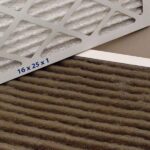
- Inspect the filter against light. Hold it up to a window or flashlight. Can’t see light through the media, or the surface looks fuzzy with gray lint? It needs service.
- Service the filter. For disposable types, discard the old unit and unwrap the new one.
- For washable types, vacuum the media, rinse with lukewarm water, and let it dry completely before reinstalling; a damp filter invites mold growth.
- Reinstall with the airflow arrow pointing at the blower. The arrow on the frame points in the direction air travels, which is toward the furnace or air handler.
- A backward filter still filters poorly and lets dust settle on the coil. Log the date on the new frame or set a phone reminder.
- If you cannot say when the filter is due next, the routine will not survive the season.
Checkpoint for the whole job: with the filter seated flush and the system back on, airflow at the nearest supply vent should return to normal within a minute, with no whistling from the slot.
That is the measurable pass standard for every run of this routine.
How Often Should You Maintain Your HVAC Filter?
Baseline cadence is every 90 days for a standard one-inch disposable filter in an average home. Tighten that to 30 to 45 days when you have pets, allergies, or heavy summer and winter runtime.
- Average home, standard one-inch filter: every 90 days.
- Dogs or cats in the house: every 30-45 days.
- Allergies or asthma in the household: every 30-45 days.
- Wildfire smoke or construction season: every 30 days or less.
- System runs daily, high occupancy: every 60 days.
- Four-to-five-inch media filter: every 6-12 months.
Seasonal checkpoints are the easiest anchor for the habit.
Add the filter swap to the same weekend as the spring hvac maintenance tips checklist in April and the fall hvac maintenance tips checklist in October. That covers the two largest filter loads of the year by default.
The hvac filters maintenance tips above work on that cadence for a one-inch filter. Adjust the interval when the household changes, and log every change so the pattern stays visible.
Common Failure Points and How to Catch Them
Four mistakes cause most filter-related problems: installing backwards, forcing the wrong thickness, washing disposables, and skipping changes while the system runs constantly. Each one produces a symptom you can catch before it reaches the blower.
- Arrow installed backward. Symptom: dust settles on the coil and supply registers stay dusty despite a new filter. Fix: flip the filter so the arrow points at the blower.
- Wrong thickness forced into the slot. Symptom: whistling from the return, reduced airflow at vents. Fix: remove it and install the exact size stamped on the frame.
- Disposable filter washed and reused. Symptom: media tears, pleats collapse, and the filter stops capturing dust within days. Fix: replace it; water damages the media.
- Changes skipped past 90 days. Symptom: energy use creeps up, vents blow weak, and the coil or blower runs hot. Fix: put the change date on the frame and a reminder on the phone.
If a symptom is already showing, do not assume the filter is the only cause. The common hvac filters problems guide walks through each failure with its diagnosis and the fix that applies.
DIY vs. Professional: Where Filter Maintenance Stops
Filter removal, replacement, and cleaning are DIY work. Anything that requires opening the electrical compartment, touching refrigerant lines, or working on gas-burning components is professional work, and the stop points below are not negotiable.
- Stop and call a licensed HVAC contractor if you smell gas, see sparks or bare wiring near the unit, find ice or oil on refrigerant lines, or hear the blower grinding. Turn the system off first.
- Do not climb into crawl spaces or attics to reach a filter without another person home. If the slot is not reachable from a safe position, book a pro.
- Do not touch electrical connections with wet hands, and never wash a filter and reinstall it damp.
- Do not attempt coil cleaning, blower removal, refrigerant work, or gas burner service as part of filter maintenance. Those tasks carry shock, fire, and carbon monoxide risks.
Filter changes sit inside a larger maintenance calendar, and the yearly tune-up belongs to the professional side of that schedule.
Local regional factors like coastal humidity and heavy airborne pollen can also accelerate filter clogging and impact overall cooling efficiency. Working with established local technicians, such as Coastal Air Technologies Inc of Hampton, can help property owners keep up with broader system maintenance, ensuring ductwork and internal components stay clean and operational throughout extreme seasonal weather shifts.
General household upkeep often extends beyond air filtration to include other vital home utility systems. Addressing minor pipe issues early supports overall property health, and arranging routine drain cleaning in Oceanside can prevent severe backups that disrupt daily living. Keeping wastewater lines clear reduces pressure on plumbing fixtures and ensures the home functions smoothly alongside properly maintained heating and cooling units.
For the full picture of what to book and when, the how often should hvac maintenance be done guide lays out the yearly cycle.
Measurable acceptance criteria for a finished job: the system restarts cleanly, supply airflow returns to normal within a minute, no whistling comes from the slot, and a light test on the new filter shows clean media. If all four hold, the maintenance is done.
If the whistle or weak airflow returns within a week, the next step is professional, not a second filter swap.
When unexpected mechanical breakdowns happen alongside airflow restriction, immediate professional intervention becomes necessary to protect the system from long-term damage. Homeowners facing severe cooling failures during extreme heat waves often rely on emergency AC repair in Lexington to quickly diagnose underlying electrical or compressor issues that regular filter replacements cannot resolve.
Book a contractor instead of repeating the routine.
HVAC Filter Maintenance FAQ
How do I maintain my HVAC filter?
Follow the hvac filters maintenance tips step by step: turn the system off, remove the filter, and match the action to the type. Replace a disposable filter, or vacuum and rinse a washable one, let it dry fully, reinstall with the airflow arrow pointing toward the blower, and note the date.
The full routine repeats on a 30 to 90 day cadence.
Is it better to have a clean or dirty HVAC filter?
A clean filter.
A dirty filter restricts airflow, raises energy use, and lets dust bypass into the system, which pushes the blower to work harder and shortens its life. Replace or clean it before it looks visibly clogged.
Can HVAC filters be cleaned and reused?
Only if the filter is labeled washable or reusable, such as the filters in most ductless mini-splits and electronic air cleaners. Disposable fiberglass and pleated filters cannot be washed; water damages the media and leaves captured debris embedded in the folds.
How often should I change my HVAC filter?
Every 90 days for a standard one-inch disposable filter in an average home, and every 30 to 45 days with pets, allergies, or heavy seasonal runtime. Thicker media filters and washable filters follow their own schedule from the manufacturer.
Write the next due date on the new filter frame the day you install it. For the rest of the seasonal maintenance calendar, the Home Improvement guides hub collects the other pieces of this series.
Last modified: October 6, 2026