Installing a new toilet usually costs about $350 to $800 when the job is a standard replacement and the price includes the toilet, basic supplies, and plumber labor, explains Harper Property Management solutions.
The number gets uncomfortable fast when the quote includes a premium fixture, haul-away, flange repair, floor repair, a new drain line, or a wall-mounted toilet. A $400 job and a $1,400 job can both be real. They are just not the same job.
The Realistic Average Cost
A normal toilet replacement in the United States often lands between $350 and $800 total, while labor-only installation commonly runs about $150 to $450. If a plumber is supplying a decent toilet and removing the old one, $600 to $900 is not shocking in many markets.
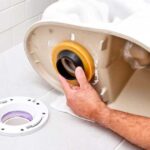
For a simple swap, the work is physically awkward more than technically exotic: shut off the water, drain the tank and bowl, remove the old unit, inspect the flange, set the wax ring or wax-free seal, lower the new bowl over the bolts, connect the tank and supply, then test for leaks.
HomeGuide’s 2026 cost data puts the average total cost for toilet plus plumbing labor at $350 to $800, with a national average around $600. HomeGuide also notes that the toilet itself can range from basic $100 models to far more expensive specialty units.
Angi’s 2026 data is lower because it focuses on professional installation costs, listing a typical range of $224 to $533 and an average near $374 for installing the fixture. Angi separately flags old toilet removal and floor repair as add-ons that change the bill.
| Job type | Typical cost | What is usually included |
|---|---|---|
| Labor-only replacement | $150 to $450 | You buy the toilet; plumber installs it on existing rough-in |
| Standard replacement package | $350 to $800 | Basic toilet, wax ring, supply line, installation, leak test |
| Replacement with removal and disposal | $400 to $1,000 | Old toilet removed, hauled away, new toilet installed |
| Flange, subfloor, or shutoff valve repair | $650 to $1,500+ | Installation plus repair work discovered after removal |
| New toilet location | $1,000 to $3,500+ | New drain, venting, water supply, drywall or floor work |
Personally, I would treat any quote under $500 as a good sign only if the toilet, haul-away, and repair exclusions are written clearly. A low number with vague terms is not a bargain. It is a question mark.
Why One Quote Is $350 and Another Is $1,200
The biggest price swing comes from whether the plumber is replacing an existing toilet in good condition or solving hidden plumbing and floor problems at the same time. The toilet is often the cheapest part of the story.
Many homeowners do not see the real condition of the flange until the old toilet is lifted. That little metal or plastic ring at floor level has to hold the bowl steady and seal the waste line. If it is cracked, too low, corroded, or surrounded by soft flooring, the job changes right there.
Homewyse’s May 2026 calculator estimates a national starting range of $635 to $1,151 per toilet for basic mid-range work in serviceable conditions. Homewyse also warns that work outside the listed scope, local labor shortages, premium materials, and code-related changes can push costs higher.
This is where things get tricky. The plumber may quote a clean replacement over the phone, then find a rotten subfloor, a seized shutoff valve, or a toilet flange sitting below new tile.
- Fixture price: A basic two-piece toilet can cost around $100 to $300, while one-piece, wall-hung, bidet, pressure-assisted, and smart toilets cost much more.
- Labor minimums: Many plumbers charge a trip fee or two-hour minimum even when the physical swap takes less time.
- Old toilet disposal: Haul-away commonly adds $50 to $200, especially where disposal rules are strict.
- Flange repair: A damaged flange can add parts, labor, and sometimes floor work.
- Floor damage: A slow leak can soften plywood or stain finished flooring around the base.
- New plumbing: Moving the toilet is not a toilet install anymore. It is a plumbing remodel.
On a Tuesday morning, a standard swap can feel almost boring: two towels on the floor, a bucket nearby, old wax sticking to a putty knife, the new bowl hovering awkwardly over the closet bolts. Then one bolt spins loose in a rusted flange and the whole mood changes.
Cost by Toilet Type
The toilet style affects both the fixture cost and the installation difficulty. A standard floor-mounted two-piece toilet is the budget baseline; wall-mounted, upflush, bidet, and smart toilets move the project into specialty territory.
If the bathroom already has a 12-inch rough-in and the shutoff valve works, a normal two-piece toilet is usually the most economical choice. It is also the easiest type for a plumber to source, carry, set, and repair later.
| Toilet type | Typical installed cost | Best fit |
|---|---|---|
| Two-piece gravity toilet | $250 to $950 | Most standard replacements |
| One-piece toilet | $350 to $1,400 | Cleaner look, easier exterior cleaning |
| Dual-flush toilet | $250 to $1,500 | Water-saving upgrades |
| Pressure-assisted toilet | $500 to $2,000 | High-use bathrooms or stronger flush needs |
| Upflush or macerating toilet | $1,000 to $2,000+ | Basements or areas below the main drain line |
| Wall-mounted toilet | $600 to $2,400+ | Modern remodels with in-wall carrier work |
| Smart toilet or bidet toilet | $750 to $4,000+ | Luxury bathrooms, heated seats, wash functions |
Do not buy the toilet on looks alone. Check the rough-in distance, bowl shape, seat height, flush type, outlet location, and whether the toilet requires an electrical outlet nearby.
Small detail, big consequence: a comfort-height elongated toilet may be pleasant for adults, but it can feel oversized in a tiny powder room. The door swing and knee clearance still matter.
Labor Cost and How Long Installation Takes
A clean toilet replacement usually takes one to three hours, but the billed price may reflect the plumber’s minimum charge, travel time, supplies, disposal, and warranty risk. Labor is not just minutes spent turning a wrench.
For labor only, many homeowners should expect roughly $150 to $450 for a straightforward replacement. Higher-cost cities, emergency calls, difficult stairs, condo parking, and after-hours appointments can push the price higher.
A good plumber will also test the shutoff valve, check for rocking, inspect for leaks, and avoid over-tightening the closet bolts. Over-tightening sounds harmless until the porcelain cracks. Then the cheap job becomes a second toilet purchase.
Not always.
If the old toilet has been leaking into the floor, the labor clock becomes less predictable. The same is true when the flange is below a thick tile floor and needs an extender or reset.
When a Toilet Installation Quote Is Reasonable
A quote is reasonable when it matches the scope: standard replacement prices should explain the toilet model, labor, supplies, disposal, and what happens if flange or floor damage is found. A single lump sum with no scope is hard to judge.
For a basic replacement where you already bought the toilet, $200 to $450 for labor can be fair in many areas. For plumber-supplied installation with haul-away and a midrange toilet, $500 to $900 is often within normal territory.
A $1,200 quote is not automatically wrong, but it should come with details. Does it include a high-quality toilet, removal, disposal, new shutoff valve, flange repair allowance, warranty, and a licensed plumber? Or is it a basic swap with a large company markup?
“I got 2 quotes from 2 companies and they were $100 apart. Both are large local companies, who got bought out by private equity firms. They do good work and have had great reviews/reputation for years. That being said, the quote seems high. $1,200 is like the highest I’d preferably want to pay for a new toilet…”
– r/HomeMaintenance, November 2025
That reaction is useful because it reflects the real homeowner problem: the number alone does not tell you whether the price is padded or whether the contractor is taking responsibility for a messy job.
DIY vs Hiring a Plumber
DIY toilet replacement can cost under $250 if you buy a basic toilet and already own the tools, but hiring a plumber is worth it when the flange, shutoff valve, flooring, or drain line is questionable.
Replacing a toilet is one of the more approachable plumbing tasks. It is still heavy, wet, and unforgiving if the bowl is not seated evenly. The awkward part is lowering 80 to 120 pounds of porcelain straight down over two bolts without smearing the wax ring out of place.
You can consider DIY if the existing toilet is floor-mounted, the shutoff valve works, the floor is solid, the flange is intact, and you can lift the toilet safely. You should hire a plumber if the toilet rocks, the floor feels soft, the valve leaks, the flange is broken, or the new toilet does not match the existing rough-in.
| Situation | DIY risk | Better choice |
|---|---|---|
| Simple two-piece replacement on solid floor | Low to moderate | DIY or plumber |
| Old toilet rocks or smells like sewer gas | Moderate | Plumber |
| Shutoff valve will not close | High | Plumber |
| Soft floor around the base | High | Plumber plus possible flooring repair |
| Wall-mounted or upflush toilet | High | Specialist installer |
I still think DIY is underrated for a confident homeowner doing a clean like-for-like swap. The catch is knowing when to stop. A wobbly flange is not a bravery test.
Quote Questions That Save Money
The best way to control the cost is to ask for an itemized quote before the plumber arrives and clarify what is excluded. A fair estimate should separate fixture cost, labor, supplies, disposal, and possible repair work.
Send photos if the company allows it: the existing toilet, floor around the base, shutoff valve, and space behind the toilet. Measure from the wall behind the toilet to the center of the floor bolts. That rough-in measurement is usually 12 inches, but 10-inch and 14-inch rough-ins exist.
- Ask whether the quote includes the toilet or labor only.
- Ask whether the old toilet will be removed and disposed of.
- Ask what brand and model will be supplied if the plumber buys the toilet.
- Ask whether a new wax ring, bolts, and supply line are included.
- Ask how flange repair, shutoff valve replacement, or floor damage is priced.
- Ask whether the installer is licensed and insured in your area.
- Get two or three quotes if the first number is above $900 for a standard swap.
One more practical move: buy a toilet from a common brand with parts available locally. A fancy imported model can look terrific until the fill valve or seat hardware needs replacement.
When Installing a New Toilet Costs Much More
The project becomes expensive when the toilet is being moved, added to a new location, mounted on a wall, or tied into plumbing that was not designed for it. At that point, you are paying for drainage, venting, water supply, and repair work, not just installation.
Installing a toilet where none existed before can involve opening floors or walls, connecting to the main drain, adding venting, running a water line, patching surfaces, and possibly pulling permits. That is why a new bathroom toilet can cost several thousand dollars before the rest of the bathroom is even finished.
Basement toilets can be expensive for a different reason. If the drain line is above the toilet location, an upflush or macerating toilet may be needed to pump waste upward. The unit costs more, has more mechanical parts, and needs a suitable electrical setup.
Wall-mounted toilets have their own price logic. The visible bowl may look simple, but the support carrier and tank sit inside the wall. Installing one in a room that was built for a floor-mounted toilet usually requires wall framing and finish work.
A Fast Budget Rule
Budget $500 to $900 for a plumber-supplied standard toilet replacement if you want a realistic cushion. Budget less only when you are buying the toilet yourself and the existing plumbing is clean.
For a no-surprises powder room swap, the low end is possible. For an older bathroom with stained flooring, a rusty valve, and a toilet that rocks slightly when someone sits down, assume the first quote is only the beginning.
The honest answer is a range because the old toilet hides the most important evidence. Once it is lifted, the floor tells the truth.
FAQ
How much does it cost to install a new toilet?
It usually costs $350 to $800 to install a new toilet when replacing an existing floor-mounted toilet with a standard model. Labor-only jobs often cost $150 to $450.
Is $1,200 too much for toilet installation?
$1,200 is high for a basic toilet swap, but it can be reasonable if it includes a premium toilet, haul-away, repairs, warranty, or difficult site conditions. Ask for an itemized quote.
How long does toilet installation take?
A standard toilet replacement usually takes one to three hours. Repairs to the flange, shutoff valve, flooring, or drain line can add several hours or require a second visit.
Can I install a toilet myself?
You can install a toilet yourself if it is a simple like-for-like replacement and the floor, flange, shutoff valve, and rough-in are in good condition. Hire a plumber for leaks, rocking, valve trouble, or specialty toilets.
Does toilet installation include removing the old toilet?
Toilet installation does not always include old toilet removal. Many plumbers charge extra for removal and disposal, so confirm haul-away before accepting the quote.
What is the cheapest way to replace a toilet?
The cheapest way is to buy a standard two-piece toilet yourself and hire a plumber for labor only, or DIY the job if the plumbing is in good shape and you can lift the fixture safely.
Last modified: May 27, 2026