If your AC suddenly sounds louder than normal, the safest first step is not to guess the part. Identify where the sound is coming from, when it happens, and what kind of sound it is. Those three clues usually tell you whether you can do a simple homeowner check or should shut the system off and call an HVAC technician, says property management Pitt County NC.
Updated May 22, 2026 · Written for homeowners · Safety-first HVAC guidance
Quick answer: why your AC unit is making a loud noise
Unexpected sounds often serve as a diagnostic tool for homeowners, indicating that internal components are struggling under mechanical stress. While a rhythmic hum is generally a sign of a healthy system, sharp or persistent noises suggest that a part has shifted or worn down over time. Identifying these auditory cues early can prevent minor vibrations from escalating into a full system failure. For instance, addressing issues related to furnace repair before the peak of a season ensures that the entire HVAC network operates efficiently. By paying close attention to these acoustic shifts, you can maintain a comfortable indoor environment and avoid the significant expenses associated with major mechanical breakdowns.
Your AC unit may be making a loud noise because of loose panels, debris in the outdoor condenser, a dirty filter restricting airflow, worn fan or blower bearings, a bent fan blade, duct pressure, electrical component failure, compressor stress, refrigerant-related problems, or installation vibration. A low hum and steady airflow sound can be normal, but sudden rattling, grinding, screeching, loud buzzing, clanking, or hissing should be treated as a warning sign.
Turn the AC off now if the noise is grinding, screeching, banging, clanking, hissing with weak cooling, paired with a burning smell, causing repeated breaker trips, or if the outdoor unit hums but the fan is not spinning. Those symptoms can involve moving parts, high voltage, compressor strain, or refrigerant issues that are not safe DIY repairs.
A sudden loud AC noise is best diagnosed by sound type, location, timing, and urgency rather than by guessing one part.
In this guide:
Noise diagnosis table · Where the sound is coming from · 5-minute safe check · Sound-by-sound causes · When to shut it off · What a technician checks · FAQ
AC noise diagnosis table: sound, likely cause, and urgency
The table below is designed for fast triage. It does not replace a professional diagnosis, but it helps you decide whether the issue is likely a simple airflow or debris problem, a developing mechanical failure, or an urgent shutoff situation.
| Noise you hear | Common likely causes | Safe homeowner action | Urgency |
| Rattling | Loose access panel, leaves or twigs near the condenser fan, loose screws, aging fan motor, loose duct/register. | Turn the system off before looking around the outside of the unit. Check for visible debris around the cabinet, not inside electrical compartments. | Schedule service if new or worsening |
| Loud buzzing or humming | Contactor/capacitor trouble, fan motor struggling, compressor strain, loose electrical parts, outdoor fan not starting. | If the outdoor fan is not spinning or the buzz is harsh, shut the system off and call a technician. | Often urgent |
| Banging or clanking | Loose or broken fan blade, failing compressor, loose blower wheel, disconnected mount, serious vibration. | Shut it off. Do not keep running a system that sounds like metal is striking metal. | Shut off now |
| Screeching or squealing | Motor bearing failure, blower motor issue, belt problem on some older systems, high internal pressure in severe cases. | Turn the system off if the sound is sharp, sustained, or much louder than normal. | Shut off now |
| Hissing | Air leak, refrigerant leak, expansion valve noise, or pressure equalization after shutdown. | If hissing is persistent, paired with poor cooling, ice, or chemical smell, turn the AC off and schedule service. | Service soon to urgent |
| Whistling | Dirty filter, closed vents, undersized return, duct leak, high static pressure. | Check the filter and open supply/return pathways. Do not ignore persistent whistling because airflow restriction can stress equipment. | Check today |
| Clicking | Normal relay click at startup/shutdown, thermostat signal, failing relay, control board issue. | A single click can be normal. Repeated clicking without cooling needs service. | Monitor or service |
| Grinding | Motor bearing failure, blower wheel rubbing, fan blade contact, compressor problem. | Turn it off. Grinding means a moving component may be damaging itself. | Shut off now |
First, locate the sound before guessing the cause
“My AC is loud” can mean several different things. The outdoor condenser, indoor air handler, ductwork, return grille, window unit, or even a new installation can all create different sounds. A homeowner can usually identify the sound location safely by listening from a distance and writing down when the sound happens.
| Where the noise seems to come from | What it often suggests | Why it matters |
| Outdoor condenser | Fan blade, fan motor, compressor, contactor, capacitor, debris, loose cabinet panel, vibration pad. | Outdoor noise can involve moving blades and high-voltage components, so inspection should stay external and service should be professional if the sound is severe. |
| Indoor air handler or furnace cabinet | Blower motor, blower wheel, filter restriction, loose panel, belt on older systems, cabinet vibration. | Indoor blower problems affect airflow across the evaporator coil and can reduce efficiency or contribute to coil icing. |
| Ducts or vents | Whistling, popping, booming, oil-canning ducts, closed vents, undersized returns, high static pressure. | Duct noise may not mean the outdoor unit is failing, but it can indicate airflow restriction or installation issues. |
| Only at startup or shutdown | Compressor startup, loose mounts, contactor, duct expansion, refrigerant equalization, hard-start condition. | Timing helps separate normal short sounds from abnormal bangs, buzzes, or compressor strain. |
| Newly installed unit | Sizing, mounting, refrigerant lines touching framing, duct mismatch, vibration transfer, fan speed setup. | A new system should not create severe vibration or intrusive noise; installation details matter. |
The 5-minute safe homeowner check before calling
Before you call for service, there are a few safe observations that can help you explain the problem clearly. These checks do not require opening electrical panels, reaching through grilles, or handling refrigerant. If the sound is severe, skip the checklist and shut the unit off.
Start with the air filter. Energy.gov notes that dirty, clogged filters reduce airflow and efficiency; when airflow is obstructed, dirt can bypass the filter and collect on the evaporator coil, reducing heat absorption and potentially contributing to equipment problems.[1] If the filter is loaded with dust, replace it with the correct size and airflow rating recommended for your system.
Next, make sure supply vents and return grilles are not blocked by rugs, furniture, closed doors, or stored items. Walk outside and look at the condenser from a safe distance. Do not remove electrical covers. Look for obvious leaves, grass clippings, branches, or a loose top grille. Energy.gov recommends keeping the area around the outdoor condenser clean and trimming foliage back at least two feet to support airflow.[1]
Finally, note whether the sound happens at startup, during the full cooling cycle, or only after shutdown. Record a short video from a safe distance. A good recording often helps the technician distinguish a rattling panel from a failing bearing, a harsh electrical buzz from a compressor sound, or duct whistling from outdoor condenser noise.
Do not test capacitors, touch contactors, open sealed refrigerant lines, bypass safety switches, or put your hand or tools through the condenser grille. Central air conditioners contain high-voltage electrical components, moving fan blades, and refrigerant circuits that should be handled by qualified technicians.
What each loud AC sound usually means
The same AC noise can have more than one cause, but sound patterns are still useful. Read the section that best matches what you hear, then combine it with location and timing.
Rattling: loose parts, debris, or early mechanical wear
Rattling is one of the most common AC noise complaints. If the sound comes from the outdoor unit, a loose cabinet screw, loose grille, small debris, or vibration against the pad may be responsible. If the rattling comes from the indoor unit, a loose blower panel, return grille, or duct section may be vibrating.
Rattling that suddenly appears and grows louder deserves attention even if the AC still cools. A small vibration can become a broken fan blade, a damaged motor mount, or a louder duct problem if ignored. If you can safely confirm that the sound is not from visible debris outside the cabinet, schedule service.
Buzzing or humming: electrical strain, fan trouble, or compressor stress
A gentle hum can be normal, especially around the outdoor unit. A loud, harsh buzz is different. It can point to a failing contactor, weak capacitor, motor that cannot start, loose electrical component, or compressor strain. If the outside unit is buzzing but the fan is not spinning, turn the system off and call a technician. Continuing to run it can overheat components.
Energy.gov lists electric control failure among common air conditioner problems and notes that wires and terminals should be checked during professional service calls.[2] That is a professional task, not a homeowner troubleshooting step.
Banging or clanking: shut the system off
Banging and clanking often mean something is loose, broken, or striking another part. In an outdoor condenser, this may involve a fan blade, motor mount, compressor mount, or internal compressor problem. In an indoor air handler, it can be a blower wheel, loose cabinet panel, or duct section.
A single soft duct pop may simply be metal ductwork expanding or contracting. Repeated metal-on-metal banging is not normal. Shut the AC off and schedule service before the sound damages more parts.
Screeching or squealing: bearing, motor, or belt trouble
A high-pitched screech or squeal is a strong warning sign. Older belt-driven blower systems may squeal from belt wear, while many modern systems squeal from motor bearing or blower issues. Outdoor fan motors can also develop bearing noise. Because these parts spin at high speed, the safe response is to shut the unit off if the sound is sharp, sustained, or new.
Hissing: air leak, refrigerant issue, or pressure equalization
A brief hiss after shutdown can be refrigerant pressure equalizing and may not be a problem by itself. Persistent hissing, hissing with weak cooling, ice on the refrigerant line, or a sudden loss of performance is different. Energy.gov explains that low refrigerant can result from undercharging or leaks, and that a trained technician should fix leaks, test the repair, and charge the system correctly.[2]
Do not add refrigerant as a guess. Refrigerant circuits require specialized equipment, leak testing, and proper handling.
Whistling: airflow restriction or duct pressure
Whistling usually points to airflow. A dirty filter, blocked return grille, closed supply vents, undersized return duct, or duct leak can create a high-pitched sound as air squeezes through a restriction. Because air conditioners rely on proper airflow across the indoor coil, airflow problems can reduce cooling and contribute to premature equipment stress.
Replace a dirty filter, open vents, and remove obvious return obstructions. If the whistling remains, a technician may need to measure airflow, inspect duct leakage, and check static pressure.
Clicking: normal once, abnormal if repeated
One click when the AC starts or stops is often just a relay or thermostat signal. Repeated clicking, clicking with no cooling, or clicking followed by a breaker trip is not normal. That pattern may indicate a failing control relay, thermostat issue, control board problem, contactor problem, or electrical interruption.
Grinding: moving parts are likely rubbing or failing
Grinding is not a “wait and see” sound. It may come from a blower wheel rubbing its housing, a motor bearing failing, a fan blade scraping, or a compressor problem. Turn the system off and call for service. The longer the equipment runs while grinding, the more likely it is to turn one repair into a larger one.
Gurgling or bubbling: refrigerant or condensate movement
Gurgling can sometimes come from normal refrigerant movement, but loud or persistent bubbling may point to refrigerant charge issues, air in the line set, or condensate drainage problems. Energy.gov recommends checking condensate drains because clogs can reduce the system’s ability to remove condensed water and may cause equipment shutdown or water damage.[1]
Popping, booming, or duct oil-canning
If the sound comes from ducts rather than the AC cabinet, you may be hearing sheet metal expand, contract, or flex under pressure. This is common in systems with undersized returns, closed vents, abrupt duct transitions, or high blower speed. It may be annoying rather than immediately dangerous, but it can still indicate airflow imbalance.
“It still works” does not always mean “ignore it”
One of the most useful homeowner clues is whether the system is still cooling. But cooling performance alone does not prove the noise is harmless. A unit can still produce cold air while a fan bearing, panel, motor mount, or compressor component is beginning to fail.
“Like the title says, just started doing it today I think. It is a rattling/whining sound that can be heard pretty far into the house. Is it worth getting serviced if it is still functioning?” — Reddit user in r/hvacadvice[4]
That question captures the real decision homeowners face. If your AC is still cooling and the sound is mild, you can do the safe checks above and schedule service if the noise continues. If the sound is loud, metallic, high-pitched, electrical, or rapidly worsening, it is safer to shut the system off even before cooling stops.
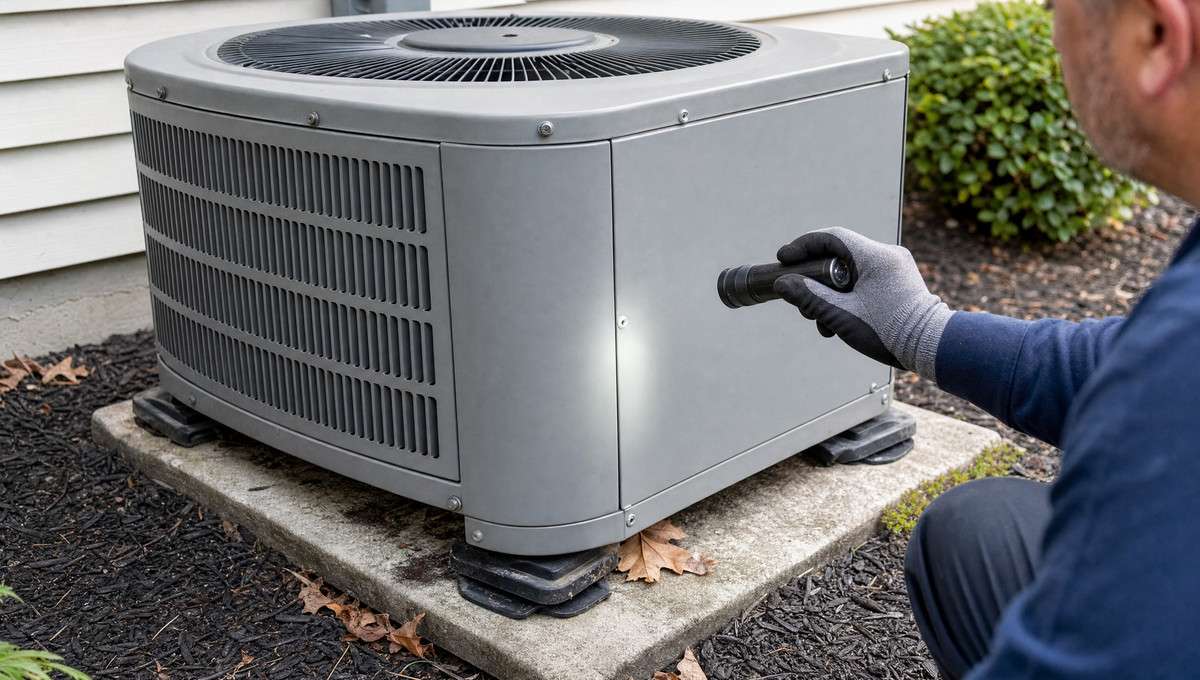 A technician can safely inspect electrical controls, fan operation, motor bearings, compressor behavior, refrigerant pressures, and mounting vibration.
Loud outside AC unit vs loud inside the house
If the outside AC unit is loud, think first about the condenser fan, compressor, contactor, capacitor, loose cabinet panels, debris, vibration pad, or refrigerant-related operation. Outdoor noise is more likely to involve high-voltage and rotating components, so homeowners should avoid internal inspection.
If the inside unit is loud, think about the blower motor, blower wheel, filter restriction, cabinet panel, return grille, or ducts. A roaring indoor air handler can be caused by high blower speed or airflow restriction. A whistling return can be a sign that the system is trying to move air through too small or too blocked a pathway.
If the ducts or vents are loud, the equipment itself may not be failing. However, duct pressure and airflow problems still matter because poor airflow can make the system less efficient and less comfortable.
Why your AC is loud only when it turns on or shuts off
A short sound at startup can be normal because motors, relays, fans, and the compressor begin operating at the same time. The concern is the character of the sound. A brief soft click is different from a heavy bang, harsh electrical buzz, or screech.
A loud bang at startup may come from duct expansion, loose mounts, compressor movement, or a hard-starting compressor. A loud buzz at startup can indicate that a motor or compressor is trying to start but struggling. A sound that occurs only at shutdown may involve refrigerant pressure equalization, blower coast-down, duct movement, or a loose component settling after vibration.
If the noise wakes people, shakes walls, or has become noticeably worse over time, do not write it off as “just startup noise.” Record it and schedule a diagnostic visit.
Why a new AC unit may be louder than expected
A newly installed AC should not sound like it is shaking the house. Some new systems have different compressor and fan tones than older equipment, but intrusive noise may come from installation details. Common causes include an outdoor pad that is not stable, refrigerant lines touching framing, missing vibration isolation, ductwork that cannot handle the new airflow, an oversized system, or equipment placed near a bedroom window or reflective wall.
Energy.gov notes that faulty installation can result in leaky ducts and low airflow, and poor service procedures or incorrect refrigerant charge can impair efficiency.[2] If the system is new and the sound was present from day one, contact the installing contractor while the installation is still fresh and documented.
When to shut off your AC immediately
Shut off the AC at the thermostat and call for service if you notice any of the following: grinding, screeching, loud banging, clanking, burning smell, visible smoke, sparks, repeated breaker trips, hissing with poor cooling, ice on the refrigerant line with loud operation, an outdoor fan that will not spin while the unit hums, or a sound that suddenly becomes dramatically louder.
It is also wise to stop using the system if the sound is coming from the compressor area and the unit is struggling to cool. Compressor repairs are often expensive, and continuing to run a distressed system can increase the damage.
What an HVAC technician will inspect
A qualified technician does more than listen to the sound. A professional diagnostic visit may include inspecting the condenser fan blade and motor, blower wheel, motor bearings, contactor, capacitor, compressor operation, refrigerant charge and leak evidence, duct airflow, static pressure, coil condition, drain system, mounting pads, vibration isolation, and electrical terminals.
Energy.gov’s maintenance guidance says professional service may include checking refrigerant charge and leaks, measuring airflow across the evaporator coil, verifying electric control sequence, inspecting and tightening electrical terminals, oiling motors where applicable, checking belts for tightness and wear, and checking thermostat accuracy.[3] Those are exactly the kinds of checks that separate a harmless rattle from a developing failure.
How to prevent loud AC noises from coming back
Many loud AC problems are easier to prevent than repair. Replace or clean filters on the schedule recommended for your system, and check more often during heavy cooling use, dusty conditions, or pet-heavy homes. Keep the outdoor unit clear of leaves, mulch, grass clippings, and overgrown shrubs. Do not stack items around the condenser, because restricted airflow can raise operating stress.
Schedule routine maintenance before peak cooling season. A technician can tighten electrical connections, inspect motors and belts where applicable, clean coils, check refrigerant charge, verify airflow, and identify loose mounts before they become loud failures. Good maintenance does not make an AC silent, but it makes abnormal sounds easier to notice early.
FAQ about loud AC unit noises
Is it normal for an AC unit to be loud?
Some sound is normal. Most AC systems make a steady fan sound, low hum, and occasional click at startup or shutdown. A new loud noise is different. Rattling, grinding, screeching, clanking, harsh buzzing, or hissing should be investigated.
Can I keep running my AC if it is making a loud noise?
You can usually monitor a mild, steady sound if the system is cooling normally and there are no warning signs. You should turn it off if the sound is metallic, high-pitched, electrical, paired with burning smell, paired with cooling loss, or rapidly getting louder.
Why is my outside AC unit making a loud buzzing noise?
A loud buzzing outdoor AC may involve a contactor, capacitor, fan motor, compressor, loose electrical component, or fan that is not starting. If the unit buzzes but the fan does not spin, shut it off and call for service.
Why is my AC making a loud rattling noise?
Rattling often comes from loose panels, loose screws, debris near the outdoor fan, duct vibration, or worn moving parts. If the rattle is new, getting worse, or coming from inside the cabinet, schedule service.
Why does my AC make a loud noise when it starts?
Startup noise can come from compressor startup, relay operation, duct expansion, loose mounts, or a motor struggling to start. A soft click can be normal. A loud bang, harsh buzz, or screech is not normal and should be diagnosed.
Why is my AC so loud inside the house?
Indoor loudness may come from the blower motor, dirty filter, return restriction, duct pressure, loose cabinet panels, or vibration through framing. Check the filter and vents first, then call a technician if the noise continues.
Does a loud AC mean the compressor is failing?
Not always. Many loud sounds come from fans, panels, ducts, filters, or motors. However, loud banging, grinding, harsh buzzing, or deep compressor-area noise can involve serious components. A technician can confirm the source safely.
The bottom line
A loud AC unit is not one single problem. It is a symptom. The best next step is to classify the sound, locate it, note when it happens, and decide whether it crosses a shutoff threshold. Safe homeowner checks include the filter, vents, visible debris, airflow obstructions, ice, and sound recording. Electrical testing, refrigerant work, motor diagnosis, and compressor evaluation belong to a qualified HVAC technician.
If the noise is new, loud, metallic, electrical, or paired with weak cooling, shutting the system off and scheduling service is usually cheaper and safer than forcing it to run until it fails.
References
- Energy.gov — Air Conditioner Maintenance.
- Energy.gov — Common Air Conditioner Problems.
- Energy.gov — Hiring a Professional for Air Conditioner Maintenance.
- Reddit r/hvacadvice — AC outside unit making a loud noise, but inside everything is working fine.
Last modified: June 27, 2026