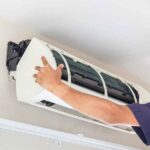
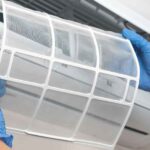
How often should HVAC maintenance be done? For most homes, the answer is twice a year: one professional visit in the spring before cooling season starts, and one in the fall before heating season.
That baseline serves a typical house with a single-family ducted system, two adults, and a temperate climate. The calendar answer is only a starting point.
Equipment type, how many people and pets live with you, allergy loads, local climate, how many hours the system actually runs, dust in the air, manufacturer warranty terms, and what the last inspection found all shift the number up or down. The sections below start from the baseline, then hand you a decision table that adjusts it to your house. Most homes land on two visits; a meaningful minority need three, and a few can stretch to one.
How Often Should HVAC Maintenance Be Done? Start With Twice a Year
The working answer is twice a year for most homes: spring for cooling, fall for heating. Each visit checks the equipment you are about to rely on, which is why the schedule follows the seasons instead of a random twelve-month loop.
The ENERGY STAR maintenance checklist, run by the U.S. EPA and the U.S. Department of Energy, frames the same idea around annual pre-season check-ups: have a contractor check the cooling system in the spring and the heating system in the fall. The checklist runs from thermostat settings and electrical connections through lubrication, the condensate drain, system controls, the starting cycle, and refrigerant and coils on the cooling side. For a heat pump, which heats and cools year-round, two visits still work as the floor, with filter care handled monthly at home. Anything involving refrigerant, gas, or high-voltage parts stays with a qualified contractor, and the ENERGY STAR maintenance checklist treats the whole job that way.
The spring visit preps the air conditioner and condenser before the first hot stretch, and the fall visit preps the furnace or heat pump before the first cold one. Book before demand spikes, because late-May and late-October appointment windows fill fast. Our spring hvac maintenance tips walk through the cooling-side checklist, and the fall hvac maintenance tips cover the heating-side version.
When the Baseline Stops Fitting: Ten Factors That Change the Number
Twice a year is the default rather than the ceiling. Ten factors can push you to three visits, pull you back to one, or simply change which months matter, and several of them compound in the same household.
The table maps each factor to the direction it moves the schedule. Read down the column that describes your setup, and let the highest-demand row set your cadence.
| Factor | How it shifts the schedule | Typical cadence |
|---|---|---|
| Equipment type | Heat pumps run both seasons and never get a natural rest; a gas furnace only runs winter | Heat pump: 2 visits plus strict filter care; furnace only: 1–2 visits |
| Occupancy | More people move more air and shed more dust and skin cells into the return | 2 visits baseline, filters changed more often |
| Pets | Shedding loads the filter faster and packs the outdoor coil | 2 visits, filter every 30 days during shedding season |
| Allergies or respiratory conditions | Filtration quality matters more, and airflow must stay high to keep bedrooms comfortable | 2 visits, higher-MERV filter, more frequent swaps |
| Climate | Extreme heat or cold means longer daily runtime and harder duty cycles | 2 visits, plus a mid-season check in punishing months |
| Runtime | A system that runs most of the year accumulates wear at roughly twice the rate | 2–3 visits for near-year-round operation |
| Dust load | Construction nearby, wildfire smoke, or a busy road load the filter and blower | 2 visits, filter every 30 days |
| Manufacturer instructions | Warranty terms often require documented annual service to stay valid | Follow the manual exactly, and keep the service receipts |
| Inspection findings | Last visit flagged a worn capacitor or a slow refrigerant leak, so the interval shortens until it is fixed | Shorten to 3 visits, or fix the part and return to baseline |
| Measurable triggers | Filter pressure drop, coil delta-T, or runtime creep signal trouble before the calendar does | Move the next visit earlier the moment a trigger trips |
Most homes land on two visits because one factor dominates: the system is a heat pump, or the household has pets, or the local summer runs May through September. When two or three factors stack, three visits a year is reasonable and still cheap compared to a mid-summer breakdown call. A common mistake is assuming the tune-up itself fixes what the schedule should have caught earlier. The visit finds the problem; the interval determines whether the problem is small when it is found.
What a Professional Maintenance Visit Actually Includes
A professional visit runs a fixed checklist rather than a quick glance. The contractor inspects the refrigerant circuit, combustion, electrical connections, airflow, drainage, and thermostat, then tests the system through a full cycle. Expect roughly an hour to two hours of work on a ducted system.
A thorough tune-up covers these checkpoints:
- Measure refrigerant pressures and temperature split on cooling equipment
- Inspect the heat exchanger for cracks, which is a carbon monoxide risk if missed
- Tighten and test electrical connections, capacitors, and the contactor
- Clean or inspect evaporator and condenser coils
- Check blower motor current draw and lubricate moving parts
- Verify thermostat calibration and cycle the system through a full run
- Clear the condensate drain line and check the safety float switch
- Test airflow, static pressure, and filter condition
Anything involving refrigerant, gas combustion, or live electrical panels stays with the licensed contractor. EPA regulations require Section 608 certification to handle refrigerant, and no homeowner check belongs near a cracked heat exchanger or a gas valve. At the end of the visit you should receive a written report of what was checked, what passed, and what is trending toward replacement. If the contractor will not give you one, treat that as a signal about the next company you hire.
Between Visits: Filter Changes and the Checks You Can Do Yourself
Between professional visits, one task carries most of the load: the filter. A clean filter keeps airflow high, the blower cool, and the coils free of the dust that drives most efficiency loss.
Filter interval depends on the filter, not the month. A 1-inch fiberglass filter is often fine for 30 days in a normal home; a pleated MERV 8 may stretch to 60–90 days; a high-MERV filter designed for allergies catches more but can choke airflow if you skip swaps. Pet hair, wildfire smoke, and heavy occupancy cut those windows roughly in half, and the hvac filters maintenance tips give the full interval logic.
The choice between disposable and washable filters is a real trade-off rather than a preference. The hvac filters pros and cons comparison lays out the cost, airflow, and maintenance differences, and the most common failure, a washable filter that never gets washed, is treated in detail in the common hvac filters problems guide.
Beyond the filter, a monthly walk-around takes two minutes: clear debris from around the outdoor unit, confirm the condensate drain runs water, and listen for new noises. The listen step is the one people skip, and by late July the condenser fins in some neighborhoods are packed with cottonwood fluff while the unit cycles on and off more often than it did in June. What you should not do yourself: open the refrigerant circuit, touch gas valves or the burner assembly, or work inside the electrical panel.
When mechanical issues go beyond simple homeowner checks, working with experienced technicians helps ensure safety and system efficiency. If you need local assistance to handle complex repairs or seasonal tune-ups, you can view it now to connect with certified professionals who understand regional cooling demands and system performance standards.
Routine checks often extend beyond basic heating and cooling components, as integrated home systems like water heaters and condensate lines also impact overall efficiency. Homeowners wanting to review broader maintenance options or address related piping issues can find details on professional support to keep household utilities running smoothly throughout the year.
Those are the safety stop points, and the cost of a service call is a bargain compared to the alternatives.
When heating or cooling performance drops suddenly, finding a qualified technician locally ensures that system issues are diagnosed before minor component wear causes broader equipment failure. Homeowners searching for reliable hvac near me can connect with regional specialists to restore proper airflow, address electrical faults, and maintain consistent indoor comfort throughout peak seasons.
Signs That the Schedule Is No Longer Enough
Some failures do not wait for the calendar. If you notice these between visits, move the appointment up instead of waiting for the next scheduled slot.
Warning signals include a room that never reaches setpoint, airflow that has weakened from vents, a sudden jump in the power bill with no rate change, a system that short-cycles on and off, unfamiliar noises from the outdoor unit, water pooling around equipment, or warm air from the registers in cooling mode. Any one of these justifies an earlier call.
Unexpected ignition issues or persistent cold spots often signal that internal heating components require timely attention before cold weather sets in. Homeowners facing sudden heating failures can rely on a furnace repair service in Hampton to evaluate system performance, resolve mechanical faults, and keep indoor temperatures consistent throughout the winter months.
The measurable version works even earlier. If you track filter pressure drop, coil temperature split, or daily runtime, a deviation from the system’s own baseline is a signal that predates the symptoms by weeks. That is the practical reason to keep the service report from your last visit: it gives you the numbers to compare against.
Frequently Asked Questions About HVAC Maintenance Frequency
How often should HVAC maintenance be done for a heat pump home?
Heat pumps run year-round, so the answer is still two professional visits a year, with filter changes handled monthly at home. Homes with heavy use, pets, or allergy sufferers may move to three visits.
What is the $5000 rule for HVAC?
The $5,000 rule is contractor shorthand rather than a law: when a single repair quote approaches roughly $5,000, or when repair costs climb near the value of replacing the equipment, replacement usually makes more financial sense. Use it as a decision prompt, then get two or three written quotes before acting.
What time of year is best for HVAC service?
Late spring and early fall are the best windows, because each visit checks the equipment right before the season you depend on it. Booking in April or September also avoids the late-May and late-October rush that pushes contractors to two-week waits.
Is annual HVAC maintenance necessary?
For a gas furnace or air conditioner, one professional visit a year is the minimum that many manufacturer warranties require, with documented service kept on file, and it catches the failures that cause emergency calls. Two visits a year is the more common recommendation for homes with heat pumps or heavy use.
How often should HVAC filters be changed?
Check the filter monthly and replace it when it looks loaded, which lands at roughly 30 days for a basic fiberglass filter and 60–90 days for a pleated MERV 8 in a normal home. Pet households and wildfire-smoke seasons typically cut that interval in half.
Is it better to leave AC on constantly?
No, letting the air conditioner run non-stop at a fixed temperature raises runtime and filter load without saving energy; a setback schedule for the hours the house is empty keeps the same comfort with shorter duty cycles. The twice-a-year maintenance baseline applies either way, and a system that runs near-continuously moves toward the three-visit end of the table above.
Set your calendar to twice a year, then let your equipment, your household, and the measurable signals refine it. The baseline keeps you out of trouble; the triggers keep you ahead of it. The surrounding territory, from filter choices to install timelines to the repair process, stays covered in the Home Improvement guides.
Last modified: September 29, 2026