The average house flip in the United States generated a gross profit of around $66,000 in 2025, according to ATTOM data — a 27.5% return on investment, observes McCourt Real Estate & Property Management professionals. That sounds compelling. What the data doesn’t mention is that the same year, roughly one in five flips sold for less than the total acquisition and renovation costs.
House flipping for beginners is less about finding a bargain and more about avoiding the mistakes that turn a promising deal into an expensive lesson. The investors who succeed consistently aren’t necessarily the ones who work the hardest — they’re the ones who run the numbers honestly, build the right team before they need it, and know when to walk away.
This guide covers everything a first-time flipper actually needs: how to tell if a deal works before you buy, where to find properties that aren’t on everyone’s radar, which renovations make money and which eat your margin, and how to structure the whole project from offer to closing.
What Is House Flipping?
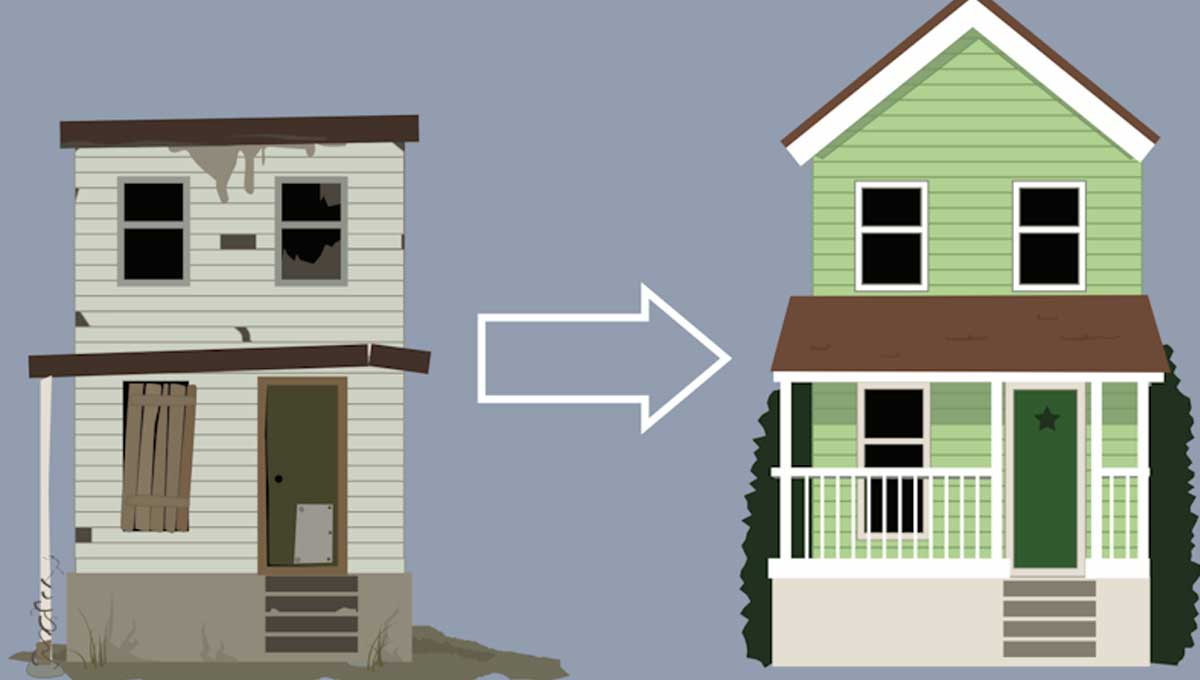
House flipping is a real estate investment strategy where you purchase a property below market value, improve it through renovations, and resell it at a higher price — ideally within a few months. The profit comes from the spread between what you paid (plus costs) and what you sold for.
The condition of properties flippers target ranges widely. Some require only cosmetic updates — paint, new fixtures, landscaping — while others need full structural work including roofs, plumbing, and electrical systems. As a beginner, cosmetic flips carry far less risk and are the right starting point.
Speed matters enormously in flipping. Every month you own the property, you’re paying carrying costs: loan interest, property taxes, insurance, and utilities. On a $200,000 hard money loan at 11% interest, that’s roughly $1,833 per month in interest alone, before taxes or insurance. A renovation that runs two months over schedule doesn’t just cost you time. It costs you $3,600 or more in additional interest.
What Do the Numbers Actually Look Like?
According to ATTOM’s 2025 data:
- Median gross profit per flip: ~$66,000
- Average return on investment: 27.5%
- Average time to complete a flip: 169 days (about 5.5 months)
Profit margins vary significantly by market. Among major cities, Memphis recorded the highest flipping profit margins at 75%, followed by New Orleans at 72.4% and Richmond, Virginia at 72.2%. Markets with lower home prices often produce higher percentage returns, even if the gross dollar amount is smaller.
Is House Flipping Right for You?
House flipping for beginners is most likely to succeed when you enter with a realistic picture of what’s required, not just financially, but in terms of time, risk tolerance, and what you don’t yet know.
You’re probably ready to start if:
- You have access to at least $50,000–$80,000 in capital (or a financing partner) to cover the purchase, renovations, and six months of carrying costs without draining your emergency fund
- You can dedicate 10–20 hours per week to the project, or hire someone who can
- You have some tolerance for uncertainty; the market, contractors, and permits don’t always cooperate
You may want to wait if:
- You’re counting on flip income to pay rent or debt, the timeline is unpredictable enough that this is a real risk
- You’ve never managed a renovation project and don’t yet have a trusted contractor
- Your local market is softening significantly; flipping in a declining market requires a larger margin of safety that beginners rarely build in
Do You Need Construction Skills?
No, but you need to either learn enough to evaluate bids intelligently, or accept that you’ll pay a premium for a general contractor to manage the project for you. Many successful flippers have zero hands-on construction skills. What they have instead is a reliable network: a GC who returns calls, an inspector they trust, and a real estate agent who understands investor deals.
The most relevant “skill” for a first flip isn’t a trade, it’s project management and cost control.
Full-Time vs. Part-Time Flipping
Reddit’s r/HouseFlipping is full of posts asking “should I quit my job to flip houses?” The honest answer for a first-timer: no. Run your first one or two flips while employed. The income stability lets you make decisions based on deal quality rather than desperation. Once you’ve completed two successful flips and have a system in place, that’s a reasonable time to evaluate whether the income supports a full-time transition.
Understanding the 70% Rule
The 70% rule is the most important calculation in house flipping. It sets the maximum price you should pay for a property based on what it will be worth after repairs.
The formula:
Maximum Purchase Price = (ARV × 70%) − Estimated Repair Costs
ARV stands for after-repair value, what the property will realistically sell for once it’s renovated.
A Realistic Beginner Example
Say you find a distressed property in a neighborhood where renovated homes sell for $250,000 (the ARV). You estimate $40,000 in renovation costs.
Maximum purchase price = ($250,000 × 70%) − $40,000 = $175,000 − $40,000 = $135,000
If you can acquire the property for $135,000 or less, the deal has a built-in margin for carrying costs, selling expenses, and unexpected overruns. If the seller wants $160,000, the deal doesn’t pencil, and forcing it by cutting your repair estimate is one of the most common ways beginners lose money.
Full Cost Breakdown: What You’re Actually Spending
| Cost Category | Notes | Typical Range |
|---|---|---|
| Purchase price | Based on 70% rule | Varies |
| Closing costs (buy side) | Title, lender fees, inspection | 2–5% of purchase price |
| Renovation budget | Get at least 3 bids before committing | Varies by scope |
| Contingency buffer | For surprises, and there will be surprises | 10–20% of renovation budget |
| Holding costs | Loan interest, property taxes, insurance, utilities | $1,500–$3,500/month |
| Permit fees | Often overlooked; varies by market and scope | $500–$5,000+ |
| Selling costs | Agent commissions + closing costs | 8–10% of sale price |
The number most beginners underestimate is holding costs. A project that runs two months over schedule adds $3,000–$7,000 in carrying costs that weren’t in your original budget, and that comes directly out of your profit.
How to Finance Your First Flip
Financing a flip is different from getting a conventional mortgage. Because the property isn’t your primary residence and you’re buying with the intent to resell quickly, most traditional loan structures don’t fit. Here are the four most common options beginners use:
| Financing Type | Interest Rate | Speed | Down Payment | Best For |
|---|---|---|---|---|
| Hard money loan | 9–14% | Fast (5–10 days) | 10–30% of ARV | Most beginners; no income-based approval |
| Private money / JV partner | 6–10% or profit split | Fast (days) | Varies by deal | Those with investors in their network |
| HELOC / cash-out refinance | 7–9% (current rates) | Slow (30–60 days) | None (uses home equity) | Homeowners with sufficient equity |
| Conventional investment loan | 7–9% | Slow (30–45 days) | 15–25% | Strong credit, non-distressed properties |
Hard money loans are the most common entry point for new flippers. The rates are higher than conventional mortgages, typically 10–12% annualized, but the approval process is fast and based primarily on the property’s ARV rather than your credit score or income history. For a $140,000 loan at 11%, you’re paying about $1,283 per month in interest. Budget for that from day one.
Private money is often the most cost-effective option once you have a track record. As veteran flipper Danny Johnson, host of the Flipping Junkie Podcast, puts it: “You can grow your real estate portfolio by using private money. Friends and family with low-earning savings are potential lenders who’d be happy to earn 6–10% interest. We’ve funded over 90% of our deals this way.”
How to Find Houses to Flip
Finding the right property is where most deals are won or lost, and this is the question most beginner guides treat as an afterthought. Deals visible on Zillow or Redfin to everyone have usually already been picked over by more experienced investors. The best deals come from sources most beginners aren’t using yet.
1. MLS with an investor-friendly agent. A real estate agent who works with investors regularly knows which listings are priced for quick sale, which neighborhoods are trending, and how to move fast when a deal appears. Partner with one before you need them, ideally one who has represented buyers on flips before.
2. Wholesalers. Real estate wholesalers find distressed properties, put them under contract at a low price, and then sell that contract to investors for an assignment fee. It’s a fast way to access off-market deals, but always verify the ARV and repair estimate independently before signing. Wholesaler comps and repair estimates are frequently optimistic.
3. Driving for dollars. Physically driving through target neighborhoods and noting properties that look vacant, overgrown, or neglected, then looking up owners through county tax records and sending a direct mail letter. Time-consuming, but it surfaces deals no one else is bidding on.
4. Tax-delinquent and pre-foreclosure lists. County tax assessors publish lists of properties where owners are behind on taxes. These owners are often motivated to sell. Tools like PropStream and ATTOM aggregate this data and let you filter by location, equity, and delinquency status.
5. Real estate investor meetups. Local REI groups, findable on Meetup.com or BiggerPockets, connect flippers, wholesalers, hard money lenders, and agents. Consistent attendance builds the network that surfaces deals before they’re ever listed publicly.
Which Renovations Actually Make Money
Not all renovations are equal, and this is one of the most expensive lessons beginners learn the hard way. Some upgrades reliably increase resale value more than they cost. Others eat your margin without meaningfully moving the price buyers will pay.
| Renovation | Typical Cost | ROI for Flips | Notes |
|---|---|---|---|
| Interior + exterior paint | $3,000–$8,000 | High ✓ | Best bang-for-buck; almost always worth it |
| Refinish or replace floors | $2,000–$8,000 | High ✓ | Clean floors are one of the first things buyers notice |
| Landscaping / curb appeal | $500–$3,000 | High ✓ | Drives showings; first impression matters |
| Kitchen refresh (paint cabinets, new hardware, appliances) | $8,000–$20,000 | Moderate–High ✓ | Good ROI if you don’t over-improve for the neighborhood |
| Bathroom update (fixtures, vanity, tile) | $5,000–$15,000 | Moderate–High ✓ | Refresh, not luxury, match the neighborhood |
| Full kitchen gut remodel | $50,000–$80,000+ | Low–Moderate ⚠ | Rarely pencils out on a flip; buyers won’t pay full premium |
| Adding a bathroom | $20,000–$40,000 | Situational ⚠ | Can be worth it if the home is under-bathed for the neighborhood |
| Swimming pool | $40,000–$80,000+ | Poor ✗ | Almost never justified on a flip |
GC vs. Managing It Yourself
For most first-time flippers, hiring a general contractor is the right call, even though it adds 10–20% to your renovation budget. A GC handles scheduling, hiring subcontractors, pulling permits, and solving day-to-day problems on the job site. You pay for the coordination, but you don’t have to manage a dozen schedules while working your regular job.
Acting as your own GC makes more sense once you’ve completed a few flips and have a trusted roster of subcontractors. Either way, get a signed contract before any work begins, with a payment schedule tied to milestones (not a large upfront sum) and a lien waiver to protect you if a subcontractor claims nonpayment.
Regardless of who manages the work, the priority order is always: structural and mechanical systems first (HVAC, plumbing, electrical, roof), then cosmetics. These are what inspectors flag, what lenders require, and what kills deals in due diligence if left unaddressed.
Your First Flip: A Step-by-Step Timeline
Most first flips take five to seven months from accepted offer to closing, and house flipping for beginners typically runs closer to seven or eight months. Here’s how that time breaks down, phase by phase:
Weeks 1–4: Research and setup. Define your target market, set your maximum budget, get pre-approved with a hard money lender, and build your core team, investor-friendly agent, inspector, and at least one contractor you can call for bids. Don’t skip team-building. Arriving at your first deal without a reliable contractor contact is how renovation budgets spiral.
Weeks 5–8: Deal finding and due diligence. Actively review listings with your agent, connect with wholesalers, and run the 70% rule on every candidate before anything else. When a deal passes the math, get a professional inspection and three contractor bids before making a final offer. Walk away from deals that only work if everything goes perfectly, they almost never do.
Weeks 9–12: Acquisition and renovation planning. Close on the property, pull permits, and finalize your renovation scope and contractor contracts with milestone-based payment schedules. Do not start demolition until permits are approved, permit delays are among the most common causes of timeline overruns.
Weeks 13–24: Renovation. Schedule weekly check-ins with your GC or subcontractors. Address deviations from the plan early, problems on job sites compound when ignored. Keep your contingency reserve intact until it’s actually needed.
Weeks 25–28: Listing and contract. Complete a final walkthrough, address punch-list items, stage the home, and list at a price informed by current comps. Avoid the common mistake of pricing based on what you need to make your numbers work rather than what the market will support. Then close.
Why Most First Flips Fail, And How to Avoid the Same Mistakes
House flipping failure is almost always predictable in retrospect. For those new to house flipping for beginners, these five mistakes appear in the majority of losing deals, and every one is avoidable with the right preparation upfront.
1. Paying too much at acquisition. The most common and most avoidable error. If you overpay at purchase, no renovation quality or market timing can recover the margin. Use the 70% rule without exception on your first deal.
2. Underestimating renovation costs. Beginners consistently underestimate because they rely on a single contractor bid or skip the contingency buffer. Always get three bids, always add 15–20% for overruns, and never commit to a purchase price until you have a realistic repair number from a contractor who has actually walked the property.
3. Over-improving for the neighborhood. A high-end kitchen renovation in a $180,000 ARV market doesn’t raise the ARV, it just reduces your margin. Buyers in that price range won’t pay a premium for luxury finishes. Match the renovation level to what comparable homes in that neighborhood actually sell for.
4. Ignoring holding costs in the pro forma. Many first-timers budget for purchase and renovation but treat the holding period as essentially free. It isn’t. Carrying costs should be explicitly modeled in your deal analysis from the start, at the rate of your actual loan, not a rough guess.
5. Using an unreliable contractor. Contractor problems, delays, quality failures, mid-project abandonment, are one of the most frequently cited issues in r/HouseFlipping. Vet contractors through references from other investors, not online reviews. Ask specifically: have you worked on investor flips before, and can I speak to two investors you’ve worked with in the last six months?
Frequently Asked Questions About House Flipping for Beginners
How much money do I need to start flipping houses?
A modest first flip typically requires $50,000–$100,000 in accessible capital, enough to cover a down payment on a hard money loan, your share of the renovation budget, carrying costs, and selling expenses. If you’re using hard money financing, lenders typically cover 70–90% of the purchase price, but you still need reserves for the gap, overruns, and monthly carrying costs during the renovation period.
Can I flip houses with no experience?
Yes, with the right team in place. Experienced flippers who lose money are often more dangerous than complete beginners, because they’re overconfident. What matters is compensating for the knowledge gap with a stronger network: an investor-friendly agent, an experienced general contractor, and ideally a mentor or local investor group that will review your numbers before you commit.
Do I need construction skills to flip houses?
No. Many successful flippers have no hands-on construction ability. What matters more is the ability to evaluate contractor bids, understand a basic scope of work, spot red flags during a walkthrough, and manage a project timeline. If you lack construction knowledge, budget for a reliable GC, the cost of errors made while learning a trade on your first flip is almost always higher than the GC markup.
What is the 70% rule in house flipping?
The 70% rule states you should pay no more than 70% of a property’s after-repair value (ARV) minus estimated repair costs. Example: ARV $250,000, repairs $40,000 → ($250,000 × 70%) − $40,000 = $135,000 maximum purchase price. The rule exists to build in a margin for holding costs, selling expenses, and unexpected overruns, all of which are guaranteed to occur.
How long does it take to flip a house?
The national average is approximately 169 days, or about five and a half months. First flips typically run longer, plan for six to eight months. Permit delays, contractor scheduling conflicts, and the buyer’s inspection and financing process all add time that experienced flippers have learned to anticipate and build into their holding cost estimates.
What is the best state for house flipping?
Markets with lower median home prices, Memphis, Cleveland, Indianapolis, and Birmingham, tend to produce the highest ROI percentages, even if the gross profit is smaller. For beginners, the best market is usually the one you know well: a city where you understand the neighborhoods, can meet contractors in person, and can monitor a renovation without a cross-country flight.
Should I quit my job to flip houses?
Not on your first deal, and probably not on your second. Maintaining income stability while you learn the process lets you make decisions based on deal quality rather than financial pressure. Investors who need each flip to cover living expenses routinely accept deals with insufficient margin, rush renovations, and overprice listings. Complete two or three successful flips with a documented system before evaluating whether flipping income can replace your salary.
How are house flipping profits taxed?
If you sell a property within one year of purchase, the profit is taxed as ordinary income at your marginal rate, potentially as high as 37%. On a $60,000 gross profit, that’s up to $22,200 in federal taxes. If you flip regularly, the IRS may classify you as a real estate dealer, which also subjects net income to self-employment tax (15.3%). Consult a CPA who works with real estate investors before your first deal, not after.
The Bottom Line
House flipping for beginners is not a passive strategy, it’s an active business that requires real capital, real time, and a realistic tolerance for things going wrong on a predictable schedule. But it’s also one of the few investment approaches where a first-time investor can generate a meaningful return within a single year.
The flippers who succeed on their first deal share a common pattern: they ran the 70% rule before they fell in love with a property, they got three contractor bids before committing to a repair budget, and they had a team assembled before they needed it. None of that requires prior construction experience, a real estate license, or a large existing network. It just requires the discipline to do the analysis before the deal, not after the check clears.
Last modified: May 20, 2026