Running a small business often gets framed as a story of independence and financial opportunity. What receives far less attention is the emotional burden that comes with carrying payroll, managing uncertainty, solving problems daily, and feeling personally responsible for every outcome. For many business owners, stress does not stay neatly contained within office walls. It can affect sleep, relationships, physical health, and in some cases contribute to unhealthy coping mechanisms. Understanding the connection between entrepreneurship, mental health, and addiction recovery is becoming increasingly important as more professionals seek sustainable ways to lead their companies without sacrificing their well-being.
The Pressure of Wearing Every Hat
Unlike executives in large corporations, small business owners rarely have extensive support systems. They often serve as manager, salesperson, accountant, customer service representative, and strategist at the same time. Financial setbacks feel personal because the business is often tied directly to their identity and livelihood.
The result can be chronic stress that never fully switches off. Many owners find themselves checking emails late at night, worrying about cash flow during family dinners, or mentally planning the next workday while trying to relax. Over time, this constant state of alertness can increase the risk of anxiety, depression, and burnout.
The challenge becomes even greater when business owners believe they must appear strong at all times. Admitting exhaustion or emotional strain may feel like a sign of weakness, even though it is a common experience among successful entrepreneurs.
What We Often Miss About Entrepreneurs and Recovery
Conversations about entrepreneurs and addiction often focus on high-profile executives or dramatic success stories. In reality, the issue frequently develops in less obvious ways. A business owner may begin relying on alcohol to unwind after long days, prescription medications to manage anxiety, or other substances to maintain energy and focus.
What makes recovery particularly challenging for entrepreneurs is the difficulty of stepping away from work responsibilities. Many fear that taking time for treatment will damage the business they spent years building. Others convince themselves they can manage the problem independently because self-reliance helped them succeed professionally.
Recovery specialists increasingly recognize that business owners have distinct needs. Flexible treatment options, executive-focused programs, and ongoing accountability structures can help individuals address both their health concerns and their professional obligations. The goal is not simply returning to work. It is creating a healthier relationship with work itself.
Building a Business Without Sacrificing Mental Health
Preventing burnout requires more than taking occasional vacations. Sustainable leadership depends on creating systems that reduce emotional overload and encourage balance throughout the year.
Delegation is one of the most effective yet underused strategies. Many founders continue handling tasks long after their companies have grown beyond the point where that approach makes sense. Trusting employees and outsourcing appropriate responsibilities can reduce stress while improving operational efficiency.
Establishing boundaries also matters. Constant accessibility often appears productive but can gradually erode mental resilience. Creating defined work hours, scheduling uninterrupted personal time, and protecting sleep can have a meaningful impact on long-term performance.
Professional support should not be viewed as a last resort. Therapists, executive coaches, support groups, and recovery professionals can provide valuable perspective during periods of intense pressure. Seeking help is often a sign of strategic thinking rather than personal failure.
Finding Treatment That Aligns With Professional Responsibilities
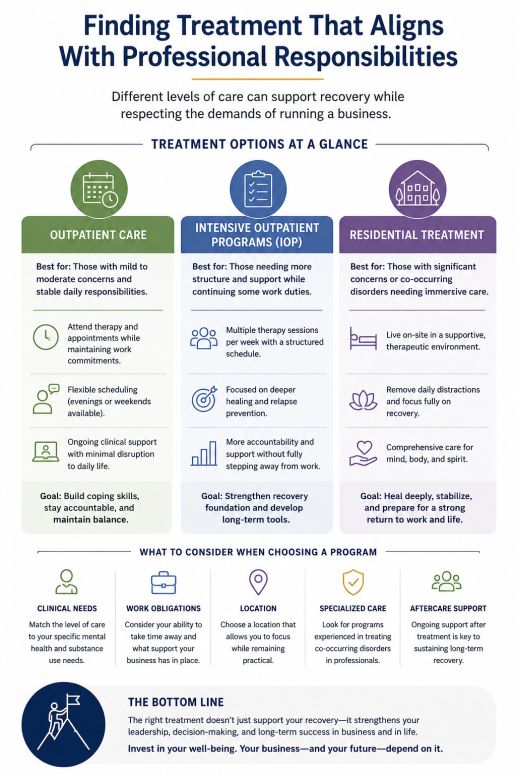
Business owners who need support for mental health or substance use concerns often look for programs that understand the realities of leadership. Treatment environments vary significantly in their structure, philosophy, and level of personalization.
Some individuals benefit from outpatient programs that allow them to maintain limited involvement with their companies while receiving care. Others need a more immersive experience that removes daily distractions and creates space for meaningful recovery work.
For those seeking comprehensive support, luxury mental health facilities in California, Oregon or Maine that specialize in co-occurring disorders may offer integrated treatment models addressing both mental health conditions and substance use concerns simultaneously. These programs often emphasize individualized care plans, clinical expertise, and therapeutic approaches designed to support professionals managing complex personal and professional responsibilities.
The most effective treatment choice depends on the individual’s circumstances, symptoms, support system, and recovery goals. What matters most is finding a program capable of addressing the full picture rather than focusing on only one aspect of the challenge.
Creating a Healthier Definition of Success
Many small business owners spend years measuring success through revenue, growth, and productivity. While those metrics matter, they tell only part of the story. Sustainable success also includes emotional stability, healthy relationships, physical well-being, and the ability to enjoy life beyond work.
When mental health receives the same attention as financial performance, business owners often discover they become better leaders. They make clearer decisions, communicate more effectively, and build organizations that can thrive without requiring constant personal sacrifice.
The demands of entrepreneurship can create unique mental health and recovery challenges, but they do not have to define a business owner’s future. With the right support, healthier boundaries, and a willingness to prioritize well-being, it is possible to build both a successful company and a healthier life.
Last modified: June 19, 2026