Most homeowners do not realize their standard furnace runs at full blast even on a mild 35°F autumn day. Operating a heating system this way is like driving your car at 80 miles per hour through a residential school zone. It works, but it wastes energy, creates unnecessary noise, and puts excessive wear on the machinery, explains Keyrenter West Chicago team.
When you start researching HVAC replacements, contractors will inevitably pitch you an upgrade. Understanding exactly what a two-stage furnace is, how the physical mechanism operates, and the true cost difference will prevent you from overspending on technology your home might not even need, explains Abacus Avenue Property Management professionals.
This guide breaks down the actual mechanics of two-stage heating, provides real repair cost comparisons, and offers a clear framework to determine if this upgrade makes financial sense for your specific climate zone.
What “Two-Stage” Actually Means
A two-stage furnace is exactly what the name implies: a heating system designed with two distinct levels of heat output. Unlike a traditional single-stage furnace that only knows how to run at 100% capacity, a two-stage system features a specialized two-position gas valve.
When the furnace turns on, it defaults to Stage 1. In this lower gear, the gas valve opens partially, typically delivering about 65% of the furnace’s total heating capacity. The blower motor also runs at a slower, quieter speed. If this lower output is sufficient to warm your home, the furnace never enters high gear.
If the outdoor temperature drops sharply and Stage 1 cannot meet the thermostat’s demand, the system automatically shifts into Stage 2. The gas valve opens fully, delivering 100% capacity to quickly raise the indoor temperature.
According to the U.S. Department of Energy (DOE), reducing the number of on-and-off cycles is one of the most effective ways to improve heating efficiency. A two-stage furnace achieves this by running longer at a lower, more efficient speed, rather than blasting high heat for five minutes and abruptly shutting off.
How a Two-Stage Furnace Works Step by Step
To understand why this matters for your daily comfort, you need to see how the system responds to a typical heating demand.
- The Initial Call for Heat: Your thermostat detects the room temperature has dropped below your setpoint and sends a signal to the furnace.
- Stage 1 Activation: The furnace always starts in low gear. The draft inducer motor spins up quietly, the gas valve opens to 65%, and the blower pushes a gentle stream of warm air through your vents.
- The Evaluation Window: The system operates in Stage 1 for roughly 10 to 15 minutes. During this time, it monitors whether the indoor temperature is rising toward the setpoint.
- The Decision Point: If the home reaches the desired temperature, the furnace shuts down smoothly. If the temperature deficit persists (typically remaining 1 to 2 degrees below the setpoint), the control board signals the gas valve to open fully.
- Stage 2 Activation: The system shifts into 100% capacity. The air coming from your vents gets noticeably warmer and flows with more force until the thermostat is satisfied.
In moderate winter weather, a two-stage furnace will operate in Stage 1 roughly 80% of the time. You only use the maximum capacity when you truly need it.
Two-Stage vs. Single-Stage vs. Variable-Speed: The Real Differences
When comparing furnace types, you are essentially choosing between three levels of technology.
A single-stage furnace is the baseline. It has one speed: full blast. It is the cheapest to buy and the cheapest to repair, but it provides the least consistent comfort and creates noticeable temperature swings in the home.
A two-stage furnace represents the middle ground. It offers low and high gears, delivering a real improvement in comfort and noise levels while keeping equipment costs within a reasonable range.
A variable-speed (or modulating) furnace is the premium tier. Instead of two gears, its gas valve can adjust output in tiny increments, ranging from 40% to 100% capacity, acting like a car’s accelerator pedal to maintain the exact temperature you set.
⚠️ Technician Warning
“A company will try and convince you that ‘it’s the best efficiency around and will save you hundreds per year.’ Which is true, however when it breaks, the parts can be up to 4X more expensive. There goes all your savings from efficiency. For example, induced draft motor on a regular / 2-stage furnace, $150–$300 for just the motor. Inducer motors I’ve seen on a modulating furnace, $500–$2,000 for just the motor. Sincerely, a fed up hvac tech.”
— Ok_Tour_5503, r/hvacadvice
For most homeowners, two-stage heating hits the sweet spot. It delivers 80% of the comfort benefits of a modulating system without the exorbitant repair risks.
Is a Two-Stage Furnace Worth the Extra Cost?
The upfront price premium for a two-stage furnace typically ranges from $300 to $700 over a comparable single-stage model. Whether that investment makes sense depends entirely on what you value.
From a pure energy savings perspective, the math is tight. A two-stage furnace might save you 10% to 15% on your annual heating bill compared to a single-stage unit with the same AFUE rating. If your winter heating costs are $800, you save about $100 per year, making the payback period roughly 4 to 7 years.
However, the primary reason to upgrade is not financial return. It is physical comfort.
💡 Homeowner Experience
“On the whole, we have had our current hvac for close to ten years now and it is night and day better in terms of comfort when compared to our old system.”
— RealC2025, r/hvacadvice
Because Stage 1 runs longer, the air in your home circulates more continuously. This eliminates the cold spots in distant bedrooms, reduces the blast of dry air that characterizes single-stage systems, and provides superior humidity control during the shoulder seasons.
Is Two-Stage Right for Your Climate?
Your geographic location should be the heaviest factor in your decision. The ENERGY STAR program divides the country into distinct climate zones, which perfectly map to furnace technology choices.
If you live in Zones 1 or 2 (Florida, Texas, southern California), a two-stage furnace is generally unnecessary. Your heating season is short, and when you do need heat, a single-stage system will handle the job quickly. The Stage 2 capacity would almost never activate.
If you live in Zones 3 or 4 (North Carolina, Tennessee, lower Midwest), a two-stage furnace is highly recommended. The extended shoulder seasons, with chilly mornings that turn into mild afternoons, are exactly where Stage 1 operation shines.
If you live in Zones 5 through 7 (Minnesota, Wisconsin, New England), a two-stage furnace should be considered the minimum standard for comfort. In these deep-freeze climates, the ability to run continuously on low fire prevents the harsh temperature swings that make harsh winters miserable.
When a Two-Stage Furnace Is NOT Worth It
Despite what a commissioned sales representative might tell you, a two-stage upgrade is not universally beneficial. You should stick with a single-stage furnace if:
- You have a very small home: If your house is under 1,000 square feet, even the smallest two-stage furnace might be too powerful, causing it to short-cycle and defeat the purpose of the technology.
- You plan to move soon: If you are selling your house within the next three to five years, you will not live there long enough to recoup the energy savings, and buyers rarely pay a premium for HVAC staging technology.
- Your ductwork is severely undersized: Two-stage systems require proper airflow to function correctly. If your existing ducts are too small, the lower blower speed in Stage 1 might fail to push warm air to the farthest rooms in the house.
Thermostat Compatibility: Don’t Make This Mistake
One of the most common installation errors involves the thermostat. A two-stage furnace requires a thermostat capable of managing two distinct heating stages.
In HVAC wiring terms, a single-stage thermostat uses a “W1” wire to call for heat. A two-stage thermostat requires both a “W1” wire for low heat and a “W2” wire for high heat.
If a contractor installs a beautiful new two-stage furnace but leaves your old single-stage thermostat on the wall, the furnace control board has to guess when to switch stages using an internal timer. This completely bypasses the smart temperature sensing you paid for, effectively turning your premium furnace into a glorified single-stage unit.
⚠️ Equipment Lock-in Warning
“It’s kind of annoying you’re locked into the manufacturer’s thermostat and app for scheduling, adjustments, and remote access… it is definitely not up there with ecobee and will never be compatible with my smart home stuff.”
— RealC2025, r/hvacadvice
This is another reason two-stage systems hit the sweet spot. While fully modulating furnaces often force you to use the manufacturer’s expensive, proprietary thermostat (as the Reddit user above experienced), two-stage furnaces are universally compatible with excellent third-party smart thermostats like the Ecobee SmartThermostat or Nest Learning Thermostat.
How to Tell If Your Furnace Is Already Two-Stage
If you recently bought a home and want to know what kind of heating system you inherited, you do not need to call a technician. You can verify the staging technology yourself using three methods.
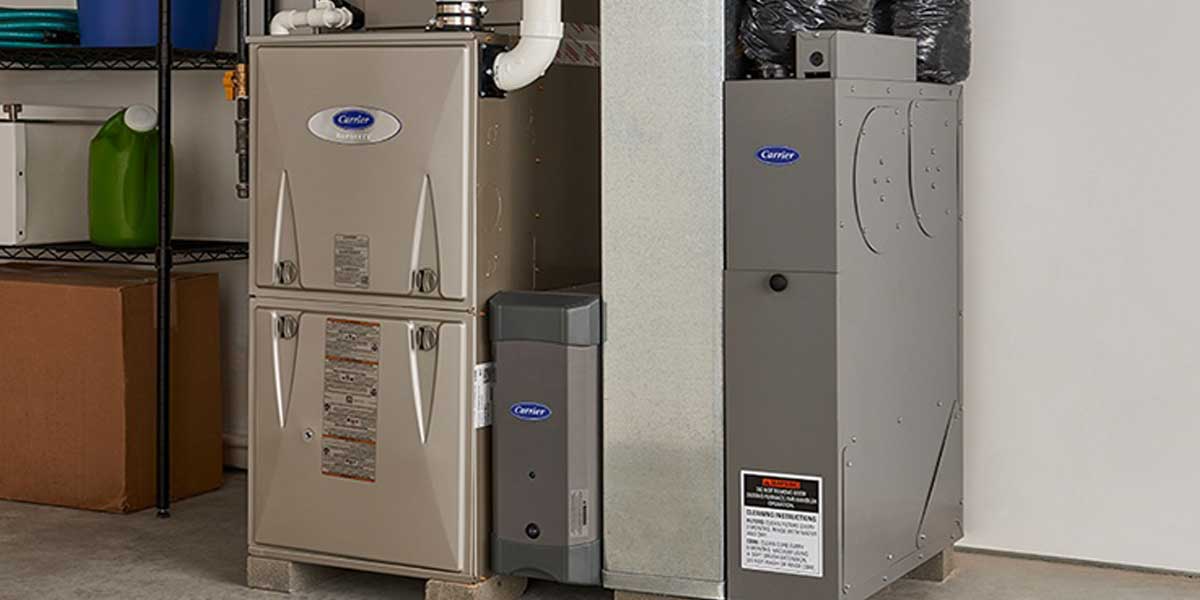
First, check the manufacturer’s label inside the front cabinet panel. Look for specific terminology like “2-stage,” “two-stage,” or “DS” (Dual Stage) in the model description. For example, a Carrier 59TP6 or a Trane S9V2 indicates two-stage operation.
Second, pull the faceplate off your thermostat and look at the wiring block. If you see a wire connected to the terminal labeled “W2,” your system is wired for two-stage heating.
Third, simply listen to the system start up on a cold morning. A single-stage furnace roars to life immediately at full volume. A two-stage furnace starts with a quiet hum and lower airflow, running that way for ten minutes before you hear a distinct click and an increase in blower volume as it shifts into high gear.
Repair Costs: What Happens When Things Break
When evaluating HVAC technology, you must look past the initial purchase price and consider the long-term maintenance reality. According to service cost benchmarks from the Air Conditioning Contractors of America (ACCA), more complex systems carry higher repair liabilities.
| Component | Single-Stage Furnace | Two-Stage Furnace | Modulating Furnace |
|---|---|---|---|
| Inducer Motor | $150 – $300 | $150 – $350 | $500 – $2,000 |
| Control Board | $200 – $600 | $250 – $700 | $400 – $1,200 |
| Gas Valve | $150 – $400 | $200 – $500 | $300 – $800 |
| Blower Motor | $300 – $600 | $400 – $800 | $800 – $1,500 |
As the data shows, repairing a two-stage furnace is only marginally more expensive than fixing a single-stage unit. The parts are slightly more complex, but they are still widely available generic components that any competent technician can source and replace.
This contrasts sharply with modulating furnaces, where a single proprietary inducer motor failure can wipe out a decade of energy savings in one afternoon.
Frequently Asked Questions
How long do two-stage furnaces last?
A properly installed and maintained two-stage furnace will last 15 to 20 years. Because the system runs primarily in low gear, it actually experiences less mechanical stress and fewer harsh on-and-off cycles than a single-stage unit, which can contribute to a longer operational lifespan.
Can I add a two-stage furnace to my existing ductwork?
In most cases, yes. Two-stage furnaces push less air during Stage 1 operation, which is generally easier on older ductwork. However, your contractor must perform a static pressure test to ensure your ducts can handle the maximum airflow required when the system occasionally shifts into Stage 2.
Does a two-stage furnace use less gas?
Yes, but the savings come from reduced cycling, not magical combustion. Every time a furnace turns on, it burns a small amount of gas just to heat up the heat exchanger before warming your home. By running longer in Stage 1 and turning off less frequently, a two-stage furnace minimizes this wasted startup energy.
What brands make the best two-stage furnaces?
Nearly all major HVAC manufacturers produce reliable two-stage equipment, as the internal components (like gas valves and control boards) are often made by the same third-party suppliers (such as Honeywell or White-Rodgers). Focus less on the brand name on the cabinet and more on finding a contractor who will properly size the unit, perform a static pressure test, and configure the thermostat wiring correctly.
Last modified: July 16, 2026