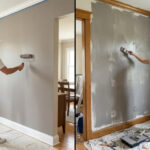
As noted by Spectrum Realty Management, a handyman charges $200 to $600 to paint a standard 12-by-12 room including walls, ceiling, and trim. The labor is the largest cost. Paint adds $50 to $100. The total cost depends on room size, ceiling height, the number of doors and windows that require cutting in, and the condition of the existing walls. A room with peeling paint, drywall repairs, and a dark color being covered with a light color costs more than a room with clean walls being repainted the same color.
Here is what the price includes, how handyman rates compare to professional painters, and how to evaluate a quote.
Price Breakdown by Room Size
| Room Size | Walls Only | Walls + Ceiling | Walls + Ceiling + Trim |
| 10×10 (100 sq ft floor, ~350 sq ft walls) | $150–$300 | $200–$400 | $250–$500 |
| 12×12 (144 sq ft floor, ~400 sq ft walls) | $200–$400 | $300–$500 | $350–$600 |
| 15×15 (225 sq ft floor, ~500 sq ft walls) | $300–$500 | $400–$650 | $500–$800 |
The range reflects whether the job is a simple repaint of clean walls in the same color, which is at the low end, or includes wall repairs, a color change from dark to light requiring multiple coats, and cutting in around windows, doors, and built-ins, which is at the high end. The price is for labor only. Paint is additional.
Handymen typically charge by the job, not by the hour. A painter with a crew charges by the square foot of wall surface, typically $1.50 to $3.50 per square foot including paint. A handyman working alone charges a flat rate per room. The per-room pricing is easier for the homeowner to understand but may not be as precise for rooms with unusual dimensions or features.
Handyman vs. Professional Painter: The Cost Difference
A handyman charges $200 to $600 per room for labor. A professional painting company charges $400 to $1,200 per room for labor and paint. The painting company is more expensive. The question is what you get for the additional cost.
A professional painting company sends a crew of two to three painters who complete the room in a day. A handyman working alone takes a day and a half to two days. The painting company includes wall preparation: filling holes, sanding, caulking, and priming. A handyman may include basic prep but may also treat the job as a repaint over existing walls without significant prep. The painting company includes paint in the quote. A handyman typically quotes labor only, and you supply the paint or pay for it separately. The painting company carries liability insurance and workers’ compensation. Many handymen do not. If a handyman falls off a ladder in your house and has no insurance, your homeowners insurance is the next in line.
For a simple repaint of a bedroom in the same color, a handyman is the cost-effective choice. For a living room with 12-foot ceilings, extensive trim, a dark-to-light color change, and wall damage that needs repair, a professional painter is the better choice. The prep work and the speed of a crew justify the higher cost.
What Affects the Cost
Wall condition. The largest variable. Walls with holes, cracks, peeling paint, or texture that requires skim coating add hours of prep work. Prep is labor. Labor is what you are paying for. A handyman who quotes a flat rate per room may not include significant drywall repair in that rate. Ask specifically whether wall repair is included. If it is not, the repair is a separate line item or an additional charge.
Ceiling height. Standard 8-foot ceilings require a step stool. Nine- and 10-foot ceilings require a ladder. Cathedrals and vaulted ceilings require scaffolding or an extension ladder and a steady hand at the top. Higher ceilings add time, risk, and cost. A room with a 12-foot ceiling costs 50 to 100 percent more to paint than the same room with an 8-foot ceiling.
Color change. Painting a room the same color is one coat. Painting a light color over a dark color is two coats, possibly three if the dark color is especially saturated. Each additional coat adds 50 percent to the labor cost. Painting dark over light is one coat. The color change matters more for light-over-dark than dark-over-light.
Trim complexity. A room with standard baseboards and a single door costs less than a room with crown molding, chair rails, wainscoting, built-in bookshelves, and multiple windows with divided lites. Every edge that requires cutting in with a brush instead of rolling adds time. Crown molding alone can add $100 to $200 to a room because the two-color cut line at the ceiling requires precision and a steady hand.
Doors and windows. Each door and window adds cutting-in time. A room with one door and one window is standard. A room with two doors, three windows, and French doors has significantly more cutting-in labor. The square footage of the walls does not change much. The labor time does.
What the Paint Costs
If the handyman supplies paint, the cost is marked up 10 to 30 percent above retail. If you supply paint, you pay retail. A gallon of quality interior latex paint costs $35 to $70. A 12-by-12 room requires approximately 1 gallon for the walls, assuming one coat. Two coats requires 2 gallons. The ceiling requires an additional gallon if it is being painted. Trim paint, typically a quart of semi-gloss or satin, costs $15 to $25.
Total paint cost for a 12-by-12 room with walls, ceiling, and trim is $90 to $200 for two coats on the walls and one coat on the ceiling and trim. Primer, if needed for a dark-to-light color change or to cover stains, adds $25 to $40 per gallon. The handyman’s price should clearly state whether paint is included or is a separate cost. A quote that seems too low may be labor-only with paint additional. Ask before comparing quotes.
DIY Cost Comparison
Painting a room yourself costs $90 to $200 in paint and supplies, plus a weekend of your time. The supplies include paint, primer if needed, rollers, brushes, painter’s tape, drop cloths, a roller tray, and a paint pole. The equipment is reusable for future rooms. The handyman’s $200 to $600 labor charge is the cost of buying back your weekend and ensuring the cut lines at the ceiling and trim are straight. For many homeowners, the handyman’s price is worth the time saved. Painting is not difficult. It is time-consuming. The value of hiring it out depends on how much you value your free time.
How to Evaluate a Quote
Get three quotes. A handyman who quotes $200 for a room and another who quotes $500 are not necessarily offering different quality. They may be offering different scope. Ask each one the same questions. Does the price include wall repair, or is repair extra? Does the price include paint, or is paint a separate cost? How many coats are included? One coat is a repaint. Two coats is a color change. Ask specifically. Does the price include moving furniture and covering floors? Most handymen require the room to be cleared before they arrive. Does the price include cleanup and trash removal?
A quote that answers all of these questions clearly is a quote from someone who has done this before. A quote that is a single number with no detail is a quote from someone who is guessing. You want the detailed quote even if it is the higher number. The detail means the contractor has thought through the job and is pricing it based on experience, not hope.
Frequently Asked Questions
Do handymen charge by the hour or by the room?
Handymen charge by the job for painting because it is a defined scope of work with a known time commitment. A handyman who charges by the hour, typically $50 to $100 per hour, does so for jobs where the scope is uncertain or where you need a range of small tasks completed. For painting a room, flat-rate pricing is the norm. The flat rate protects you because a slow painter working by the hour costs more than a fast painter, even if the result is the same. A flat rate aligns the handyman’s incentive with yours. They want to finish efficiently. You want the room painted.
Should I buy the paint or let the handyman supply it?
Buy the paint yourself if you want a specific color and brand and you want to control the cost. Give the handyman the unopened cans. You pay retail and the handyman does not mark up the paint. Let the handyman supply the paint if you do not want to make a trip to the paint store and you trust their product selection. The convenience is worth the markup. If you supply the paint, buy an extra gallon beyond what the room needs and leave it with the house for future touch-ups. The handyman will use what is needed. The leftover gallon is yours. Future touch-ups with the same paint from the same can match perfectly. A new can mixed a year later may not match exactly due to slight variations in tint formulation.
Is it cheaper per room to paint multiple rooms at once?
Yes. A handyman painting three rooms in one day charges less per room than painting one room on three separate days. The setup and cleanup time is shared across all the rooms. The handyman does not have to drive to your house three times. The per-room cost for a multi-room job is typically 10 to 20 percent less than the per-room cost for a single room. If you have multiple rooms to paint, do them at the same time.
Last modified: June 27, 2026