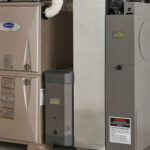
Most homes in the U.S. have a furnace that is too big for the house it heats. Not a little too big — often 40% to 60% oversized, according to a Department of Energy field study of residential HVAC installations. The result is not more comfort, points out 480 Realty & Property Management specialists: it is less efficiency, more noise, and a heat exchanger that fails years before it should.
The right furnace size comes down to three numbers: your home’s square footage, your climate zone, and how well your house holds heat. The rule-of-thumb shortcut (30 to 60 BTU per square foot) works for a rough estimate, but getting the number right means adjusting for ceiling height, insulation quality, window count, and air leakage. This guide walks through every factor, including a climate-zone lookup table and a step-by-step calculation you can do in 10 minutes.
What Is a BTU and Why Does Furnace Size Matter?
BTU stands for British Thermal Unit. One BTU is the amount of energy needed to raise one pound of water by 1°F at sea level. For a furnace, the BTU rating tells you how much heat the unit can produce per hour at its rated input — the higher the BTU, the more heat it can dump into your ductwork in a given hour.
A furnace that is too small cannot keep up on the coldest days. The house loses heat faster than the furnace can replace it, and the indoor temperature drifts downward no matter how long the system runs.
A furnace that is too large reaches the thermostat setpoint in five minutes and shuts off, then fires again ten minutes later when the temperature drops.
This short-cycling does three things: it wastes fuel (the startup cycle burns more gas per minute of useful heat), it wears out the heat exchanger through repeated thermal expansion and contraction, and it leaves half the house cold because the blower never runs long enough to push heated air into the far rooms.
The Department of Energy is explicit on this point: “A properly sized furnace or boiler will operate most efficiently.” That line appears in their furnace buying guide not as a suggestion but as a design requirement.
Oversizing is the single most common installation mistake in residential HVAC, and it costs homeowners hundreds of dollars per year in wasted fuel.
The Quick BTU Rule of Thumb (30-60 BTU per Square Foot)
For a fast estimate before you call a contractor, multiply your home’s square footage by a climate-zone factor. The numbers are intentionally wide ranges because a 1950s house with single-pane windows in Minnesota needs more than twice the BTU per square foot of a new build with spray-foam insulation in Tennessee.
| Climate Zone | BTU per sq ft | Example Cities | Typical Winter Low
|
| Zone 1 (Hot) | 25-30 | Miami, Houston, Phoenix | >40°F |
| Zone 2 (Warm) | 30-35 | Atlanta, Dallas, Charlotte | 25-40°F |
| Zone 3 (Moderate) | 35-45 | St. Louis, Denver, Washington DC | 10-25°F |
| Zone 4 (Cold) | 45-55 | Chicago, Boston, Detroit | -5 to 10°F |
| Zone 5 (Very Cold) | 50-60 | Minneapolis, Fargo, Bangor | < -5°F |
Example: a 2,000 sq ft home in Chicago (Zone 4) needs roughly 45 × 2,000 = 90,000 BTU. The nearest standard furnace size is 90,000 or 100,000 BTU input.
This rule of thumb gets you within 15% to 25% of the correct number. For a replacement furnace where you already know your current unit’s size and performance, that margin is often close enough. For new construction or a major renovation, you need the next level of precision.
Quick formula reference: Square footage × climate factor (25-60) = estimated BTU input. Then round up to the nearest standard furnace size: 40,000 / 60,000 / 80,000 / 90,000 / 100,000 / 120,000 BTU. Standard sizes vary slightly by manufacturer.
The Detailed BTU Calculation (Step by Step)
The intermediate calculation accounts for the three factors that most affect your actual heating load: ceiling height, insulation quality, and the number and quality of windows. Each adjustment moves the BTU number up or down from the rule-of-thumb baseline.
Step 1: Adjust for Ceiling Height
The rule of thumb assumes 8-foot ceilings. If yours are higher, the furnace has to heat more air volume. For every extra foot of ceiling height beyond 8 feet, add 12% to 15% to your BTU estimate. A 2,000 sq ft home with 10-foot ceilings in St. Louis (base 40 BTU/sq ft × 2,000 = 80,000 BTU) would need approximately 80,000 × 1.30 = 104,000 BTU. Round up to 110,000.
Cathedral ceilings in a great room are a separate problem. The volume of air in that one room may be triple what the square footage suggests. A Manual J calculation handles this properly; the rule-of-thumb adjustment just gets you closer.
Step 2: Adjust for Insulation Quality
Insulation is the single largest variable in heating load. A house built to 2024 IECC code (R-49 attic, R-20 walls) needs roughly 30% less heating capacity than a 1970s house with R-11 batts and unsealed rim joists. Use these multipliers:
| Insulation Level | Multiplier | Typical Home
|
| Poor (pre-1980, no upgrades) | × 1.30 | Uninsulated walls, R-11 attic or less, single-pane windows |
| Average (1980-2005) | × 1.00 | R-13 walls, R-30 attic, double-pane windows |
| Good (2005-2020) | × 0.85 | R-19 walls, R-38 attic, low-E double-pane |
| Excellent (2020+, high-performance) | × 0.70 | R-20+ walls, R-49+ attic, triple-pane or low-E argon |
Going back to the 2,000 sq ft Chicago example with average insulation: 90,000 × 1.0 = 90,000 BTU. The same house with excellent insulation: 90,000 × 0.70 = 63,000 BTU. That is the difference between a 60K BTU furnace and a 100K BTU furnace — a gap of roughly $800 in equipment cost and $150 to $250 per year in operating cost.
Step 3: Adjust for Windows
Windows lose roughly 5 to 10 times more heat per square foot than insulated walls. Count the approximate percentage of each wall that is glass. If more than 20% of the total wall area is windows, add 10% to your BTU estimate. If the windows are single-pane, add another 15%. South-facing windows in cold climates reduce heating load (passive solar gain) by about 5% to 10% during sunny winter days, but a sizing calculation should not rely on that — the coldest days are often overcast.
A 2,000 sq ft home with 25% window-to-wall ratio and double-pane windows: 90,000 × 1.10 = 99,000 BTU. Round to 100,000.
Step-by-step recap for a 2,000 sq ft Chicago home with 9-ft ceilings, average insulation, 25% double-pane windows:
Base: 45 BTU × 2,000 = 90,000 BTU
Ceiling (9 ft): 90,000 × 1.13 = 101,700
Insulation (average): × 1.00 = 101,700
Windows (25%): × 1.10 = 111,870
Final: ~110,000-120,000 BTU furnace
BTU by Climate Zone: The Full Lookup Table
For a faster approach when you know your square footage and climate zone, use the lookup table below. This table assumes 8-foot ceilings, average insulation, and double-pane windows. Apply the adjustments from the previous section if your house differs significantly from those assumptions.
| Home (sq ft) | Zone 1-2
(Warm) |
Zone 3
(Moderate) |
Zone 4
(Cold) |
Zone 5
(Very Cold)
|
| 800-1,000 | 30K-40K | 40K-50K | 40K-60K | 50K-60K |
| 1,000-1,200 | 40K-50K | 45K-60K | 50K-70K | 60K-80K |
| 1,200-1,600 | 45K-60K | 50K-70K | 60K-80K | 70K-90K |
| 1,600-2,000 | 50K-70K | 60K-80K | 70K-100K | 90K-120K |
| 2,000-2,400 | 60K-80K | 70K-90K | 80K-110K | 100K-130K |
| 2,400-3,000 | 70K-90K | 80K-110K | 100K-140K | 120K-160K |
| 3,000-3,500 | 80K-110K | 100K-130K | 120K-160K | 140K-180K+ |
For homes above 3,500 sq ft or with complex layouts (multiple wings, split levels, walls of glass), the lookup table is not reliable. At that scale, air distribution becomes as important as total heat output, and a Manual J load calculation is the only defensible approach.
What Is Manual J and When Do You Need One?
Manual J is the industry-standard residential heating and cooling load calculation developed by the Air Conditioning Contractors of America (ACCA). It models every room individually: wall R-values, window U-factors and orientations, ceiling height, infiltration rates, duct leakage, internal heat gains from appliances and occupants, and the design outdoor temperature for your specific ZIP code. The output is a room-by-room BTU requirement that tells the installer exactly which furnace capacity to select and how to balance the ductwork.
A Manual J typically costs $200 to $500 when performed by an HVAC contractor as part of a system replacement quote.
Some utilities subsidize the cost through energy audit programs. In Minnesota and Massachusetts, for example, utility-sponsored home energy audits often include a simplified load calculation at no charge.
Manual J is mandatory for new construction in most U.S. jurisdictions under the International Energy Conservation Code (IECC).
For a simple furnace replacement where the old unit kept the house comfortable and you are not changing the envelope (adding insulation, replacing windows, finishing a basement), most contractors skip Manual J and base the replacement on the existing furnace size.
If the existing furnace was oversized, and the DOE data says it probably was, then even a “same size” replacement perpetuates the mistake.
When to insist on Manual J:
- New construction or major addition
- You have upgraded insulation, windows, or air sealing since the last furnace was installed
- Your current furnace short-cycles (runs less than 10 minutes per cycle on cold days)
- Rooms at the far end of the house are consistently colder
- You are switching from a different fuel type (oil to gas, electric to gas)
- Any home over 3,000 sq ft with a complex floor plan
The Hidden Costs of an Oversized Furnace
A contractor who installs a 120,000 BTU furnace where a 80,000 BTU unit would suffice is not doing you a favor. The problems compound over time in ways that are not obvious on the day the furnace fires up.
The immediate problem is short cycling. The oversized furnace blasts 120,000 BTU of heat into the ductwork, satisfies the thermostat in six minutes, and shuts off. The heat exchanger was designed to spend most of its life at a steady-state operating temperature. Rapid heating and cooling cycles create thermal stress at the welded joints and crimped seams. The manufacturer’s heat exchanger warranty assumes normal cycling — typically three to five cycles per hour in cold weather, not eight to ten.
The second problem is condensation inside the heat exchanger. A furnace needs several minutes to reach operating temperature before the combustion gases are hot enough to avoid condensing inside the secondary heat exchanger. During short cycles, acidic condensate sits on the metal surfaces for extended periods. Rust-through of a secondary heat exchanger on a 10-year-old condensing furnace is a $1,200 to $1,800 repair, and it is almost always caused by chronic short cycling.
The third problem is uneven heating. The blower shuts off before heated air reaches the farthest registers. The thermostat, usually in a central hallway, reads the setpoint and is satisfied. The bedrooms at the end of the trunk line are still cold. This is the most common homeowner complaint about oversized furnaces: the thermostat says 70°F, but the master bedroom is 64°F.
A properly sized furnace runs for 20 to 40 minutes on the coldest design day and cycles three to five times per hour on milder days. If your furnace fires for five minutes, shuts off for ten, then fires again, it is oversized — regardless of what the BTU label says.
Sizing for Older Homes: Why the Same Square Footage Needs More BTUs
A 2,000 sq ft house built in 1920 and a 2,000 sq ft house built in 2020 require dramatically different furnace capacities. The older home’s heating load is higher not because it is larger but because it leaks heated air faster and conducts heat through its envelope faster. Air leakage alone can account for 25% to 40% of the total heat loss in a pre-1950 house with no air sealing.
The key differences:
- Wall insulation: Most pre-1940 homes have no wall insulation at all (true balloon-frame construction). R-value is approximately R-4 for the plaster-and-lath assembly, compared to R-20+ for a modern 2×6 wall with batt insulation and exterior rigid foam.
- Attic insulation: A 1920s attic typically has R-5 to R-11 (if any was added later). A modern attic has R-49 to R-60.
- Windows: Original single-pane wood windows with storm windows have a U-factor around 0.50. Modern double-pane low-E windows have a U-factor around 0.25 to 0.30 — roughly half the heat loss.
- Air leakage: A pre-1950 home typically has 10 to 20 air changes per hour at 50 pascals (ACH50). A 2020 code-built home is required to have 3 ACH50 or less. The older house is losing its entire indoor air volume to the outdoors 10 to 20 times per hour on a windy winter day.
For a 2,000 sq ft home in Chicago:
- 1920s original condition: 55 BTU/sq ft × 2,000 = 110,000 BTU, round to 120,000
- Same house after air sealing + attic insulation to R-49: 40 BTU/sq ft × 2,000 = 80,000 BTU, round to 80,000
That is a 40,000 BTU difference — roughly a 33% reduction in furnace size — from two improvements that cost $2,000 to $4,000 combined. The energy savings from the smaller furnace alone pay back those improvements in five to seven years.
FAQ: Common Questions About Furnace Sizing
How do I know if my current furnace is the right size?
Time how long it runs on a cold day (below 30°F). If the cycle is shorter than 10 minutes from startup to shutdown, the furnace is likely oversized. A properly sized furnace runs 15 to 30 minutes per cycle on a cold day. Also check whether some rooms are consistently colder than others — this is a classic oversized-furnace symptom.
How accurate is the BTU-per-square-foot rule of thumb?
Within 15% to 25% for a home with average insulation and 8-foot ceilings. It is accurate enough to compare contractor quotes and flag an obviously oversized or undersized recommendation. It is not accurate enough for final equipment selection in a new build or a home with known envelope issues.
Does a 2,500+ sq ft home need two furnaces?
Not necessarily. A single 100K-120K BTU furnace can heat a well-insulated 3,000 sq ft home in most climates if the ductwork is properly designed and balanced. Two furnaces (or a zoned single furnace with dampers) become necessary when the floor plan creates distinct thermal zones — for example, a finished basement that stays cold, or a second story that is always warmer than the first floor. Zoning usually costs less than a second furnace.
Does a high-efficiency furnace need fewer BTUs?
The furnace’s BTU rating measures input (fuel consumed), not output (heat delivered). A 100,000 BTU 80% AFUE furnace delivers 80,000 BTU of useful heat. A 100,000 BTU 96% AFUE furnace delivers 96,000 BTU. When sizing a furnace, work with the output BTU, not the input. If your calculated load is 75,000 BTU output, you need an 80,000 BTU input 95%+ furnace or a 100,000 BTU 80% furnace. The high-efficiency unit gives you more useful heat from the same input rating.
What is the most common furnace sizing mistake?
Replacing an existing furnace with the same BTU rating without checking whether the old one was oversized. The DOE found that most existing furnaces are 40% to 60% oversized. If your 100,000 BTU furnace has been short cycling for 15 years and you replace it with another 100,000 BTU unit, you are locking in the same efficiency penalty for another 15 to 20 years.
How do I compare contractor sizing recommendations?
Ask every contractor to show you the load calculation. If they cannot produce one and base their recommendation on square footage alone, their number is a guess. A competent contractor either runs Manual J software (Wrightsoft, Elite, CoolCalc) or uses the square-footage method and shows you the climate factor and adjustment multipliers they applied. If two contractors recommend 80,000 BTU and a third recommends 120,000 BTU with no explanation, rule out the third.
Is furnace sizing different for natural gas vs. propane vs. electric?
The BTU input rating is the same regardless of fuel. A 100,000 BTU furnace burns natural gas or propane at the same input rate (the gas valve orifice is changed for propane conversion). An electric furnace is rated in kilowatts: 1 kW = 3,412 BTU/hr. A 20 kW electric furnace delivers approximately 68,000 BTU/hr. The heating load calculation is fuel-agnostic; only the equipment selection changes.
I just installed new windows. Do I need a smaller furnace?
Probably, but not always. Replacing single-pane windows with double-pane low-E units typically reduces the heating load by 5% to 15%, depending on how much window area the house has. If your furnace was already correctly sized before the window upgrade, a 100,000 BTU unit might now be 10% oversized. If it was already oversized, the new windows make the problem worse. Do not replace the furnace just because you upgraded windows, but factor the reduced load into your next furnace purchase.
The Right BTU Furnace: A Smarter Purchase Starts With a Real Calculation
Spend 10 minutes on the sizing math before you spend $5,000 on a furnace. The calculation is not complicated: start with your climate zone’s BTU-per-square-foot number, adjust for ceiling height, insulation, and windows, and round to the nearest standard size.
If your home is older, has a complex layout, or you have recently upgraded the envelope, get a Manual J. The $300 to $500 it costs is less than the first two years of wasted fuel from an oversized furnace. If your contractor pushes back on running a load calculation, push back harder on the quote.
Last modified: June 18, 2026