A waterproof roof coating can seal small cracks, protect an aging roof membrane, and reduce heat gain, but it is not a substitute for fixing wet insulation, rotten decking, bad flashing, or a roof that has reached the end of its service life, observes Quality Rental Homes and Professionals.
The useful question is not whether coatings work. They do, on the right roof, with the right prep and the right film thickness. The expensive question is whether the existing roof is a good candidate before a bucket ever gets opened.
What a Waterproof Roof Coating Actually Does
A waterproof roof coating forms a continuous liquid-applied membrane over the roof surface, helping shed water, bridge minor surface cracks, resist ultraviolet exposure, and protect seams that have already been repaired correctly.
Most products are rolled, brushed, or sprayed onto low-slope roofs, metal panels, modified bitumen, built-up roofing, concrete, spray foam, or compatible single-ply membranes. Once cured, the coating becomes a protective skin. It may be white and reflective, gray, aluminum, black, or specialty-colored depending on the chemistry and roof type.
Coating should be thought of as preservation, not rescue. If a roof already has trapped moisture, structural movement, wide open seams, failing drains, or saturated insulation, a coating can hide the problem just long enough for the repair bill to grow. That is why professional coating projects usually begin with inspection, moisture checks, seam repair, cleaning, priming, and only then the finish coat.
The U.S. Department of Energy describes cool roofs as surfaces designed to reflect more sunlight and absorb less heat than standard roofs, a principle that many white acrylic and silicone coatings use for energy control. The DOE cool roof guidance is useful because it separates reflectivity from waterproofing: a bright roof can run cooler, but waterproofing still depends on adhesion, thickness, drainage, and detail work.
Best Coating by Roof Type
The best waterproof roof coating depends on roof material, standing water, foot traffic, climate, and whether the goal is leak resistance, reflectivity, impact resistance, or a cost-controlled maintenance layer.
| Roof condition or material | Coating to consider | Why it fits | Watch-out |
|---|---|---|---|
| Flat or low-slope roof with occasional ponding | Silicone roof coating | Strong UV resistance and better tolerance of standing water than many water-based coatings | Surface can attract dirt and may need special primer for recoating |
| Low-slope roof with good drainage in a hot climate | Acrylic elastomeric coating | Reflective, flexible, water-based, and often cost-effective for maintenance work | Not the first choice where water sits for long periods |
| Metal roof with fasteners, laps, and minor corrosion | Acrylic or silicone with seam reinforcement | Works well after rust treatment, fastener repair, primer, and reinforced seams | Coating over loose rust or moving panels fails quickly |
| High-traffic service roof | Polyurethane or hybrid system | Better abrasion resistance around HVAC units and maintenance paths | May need a reflective topcoat for heat control |
| Asphalt or modified bitumen roof | Compatible asphalt, acrylic, silicone, or aluminum coating | Can restore surface protection when the substrate is sound | Solvent compatibility and bleed-through need checking |
| Sloped asphalt shingles | Usually avoid coating | Repairs, replacement, or manufacturer-approved products are safer | Coatings may trap moisture, alter fire ratings, or affect warranties |
For a home or building owner, the table is a starting point, not a specification. Product labels matter. So do manufacturer approval lists, local weather, roof slope, and the installer’s ability to hit the required wet-film thickness. A bargain coating applied too thin is not a bargain. It is a future leak with a receipt attached.
When Roof Coating Is a Good Idea
Roof coating is a good idea when the roof is structurally sound, mostly dry, still bonded to its substrate, and has repairable seams, penetrations, flashing, and surface wear rather than widespread failure.
Good candidates often show chalking, minor checking, weathered cap sheets, small splits, early metal corrosion, loose fastener washers, or heat-aging on a membrane that still has life left. On commercial roofs, coating can also reduce tear-off waste and disruption because crews can restore the surface without removing the whole assembly.
The Cool Roof Rating Council product directory lists rated roof products by measured solar reflectance and thermal emittance, which can help compare reflective coatings beyond sales language. Those values do not prove a product is waterproof on your roof, but they do help verify cooling claims.
“Depends on the roof and the coating. If your membrane is absolutely shot and the coating is a cheap Hail Mary then no, I wouldn’t say they are going to be effective. If you have good substrate, the membrane can be properly sealed, cleaned, primed and coated with a premium silicone coating then yes, they call it a liquid applied roof for a reason. With proper substrate and application you can extend your existing roof life for 12-20 years at a minimum.”
– r/Roofing discussion, October 2025
That contractor-style answer is blunt because the failure pattern is common. Coating works when it becomes the last step in a repair system. It disappoints when it is used as paint over a diagnosis nobody wanted to pay for.
When Not to Use Roof Coating
Do not use waterproof roof coating as the main fix for saturated insulation, rotten decking, active structural movement, major ponding caused by bad slope, widespread blistering, or a roof with many unresolved leaks.
Coating over moisture is one of the fastest ways to waste money. Trapped water can vapor-drive upward in hot weather, pushing blisters through the new membrane. On metal roofs, coating over rust without treatment lets corrosion keep working underneath. Around skylights, drains, parapets, and mechanical curbs, coating cannot replace missing flashing geometry.
Asphalt shingle roofs deserve extra caution. The Asphalt Roofing Manufacturers Association has warned that field-applied coatings on asphalt shingles can create problems such as moisture retention and warranty issues unless a product is specifically approved for that use. The ARMA technical resources are worth checking before anyone paints a shingle roof and calls it waterproofed.
- Skip coating when roof decking feels soft or springy.
- Skip coating when water has been entering the building long enough to stain insulation or ceiling cavities.
- Skip coating when more than small, isolated areas of membrane are loose, wrinkled, split, or blistered.
- Skip coating when drainage sends water to the same pond every storm and no one plans to correct it.
- Skip coating when the manufacturer cannot confirm compatibility with the existing roof.
The hardest part is emotional, not technical. A coating job looks cheaper than replacement because it is cheaper today. If the roof is beyond coating, the money goes into a pretty surface and the real failure keeps moving underneath.
Match the Coating to the Roof Conditions
Choose a waterproof roof coating by matching chemistry to the roof surface, drainage pattern, climate, coating thickness requirement, warranty terms, and the preparation steps the project can realistically support.
Start with the roof assembly. Is it EPDM, TPO, PVC, modified bitumen, BUR, spray foam, metal, concrete, or another material? A product that bonds well to one surface may need primer on another. Some single-ply membranes require special cleaning or primer. Some aged asphalt roofs can bleed oils through bright coatings unless the system is designed for that substrate.
Next, look at water behavior after rain. If water stands for more than a day or two, silicone often moves to the top of the list, although drainage correction is still better than asking any coating to live underwater. For roofs that drain well and need reflectivity at a practical cost, acrylic elastomeric coating remains popular. For maintenance zones around rooftop units, polyurethane can protect against tools, foot traffic, and abrasion.
Acrylic vs. Silicone Roof Coating
Acrylic coatings are often chosen for reflectivity, easy cleanup, and cost control; silicone coatings are often chosen for UV exposure, rain resistance after cure, and roofs where ponding water is a known issue.
Acrylic is water-based and generally easier to work with, but it depends heavily on dry weather during application and good drainage over time. Silicone is more moisture-tolerant after cure and can be excellent on many low-slope roofs, but it can be slippery, dirt-holding, and harder to recoat without proper prep. Neither chemistry forgives a dirty roof, loose seams, or thin application.
Coverage Rate and Film Thickness
Coverage rate is not just a shopping number. It controls final dry-film thickness, and dry-film thickness controls how much movement, weathering, and surface wear the coating can handle.
Manufacturers commonly specify gallons per square, wet mil thickness, reinforcement, and number of coats. Follow those numbers. Stretching a pail over extra roof area may make the invoice look better, but it lowers the finished membrane thickness and weakens the waterproofing layer where the roof needs it most.
Application Steps That Decide Whether It Lasts
A roof coating lasts when cleaning, repairs, primer, seam reinforcement, weather timing, and final thickness are handled as a system rather than as separate chores.
- Inspect the roof. Map leaks, wet areas, loose membrane, failed flashings, rust, open laps, soft decking, and drainage trouble.
- Confirm compatibility. Match coating chemistry to the existing membrane and check whether primer is required.
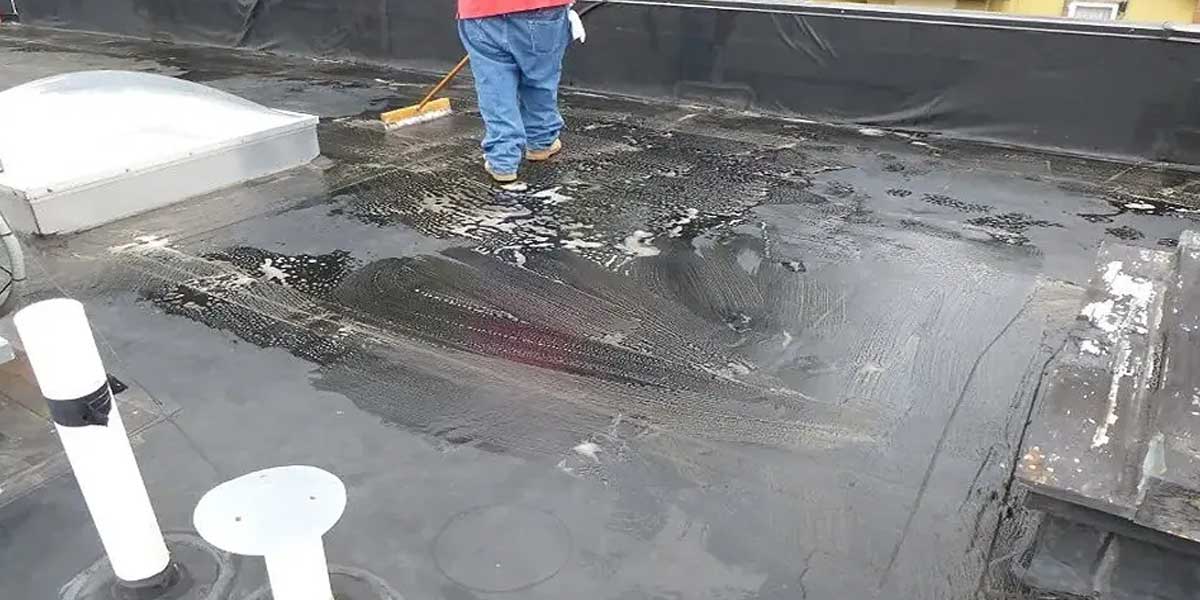
- Clean aggressively. Remove dirt, chalking, oils, biological growth, loose granules, and rust scale. Coating bonds to the surface it touches, not the roof you wish were underneath.
- Repair first. Fix seams, cracks, penetrations, fasteners, blisters, flashings, and drains before applying the field coat.
- Prime when specified. Primer can improve adhesion, block bleed-through, and stabilize difficult surfaces.
- Reinforce stress points. Use fabric, flashing-grade material, or manufacturer-approved detail products at seams, curbs, penetrations, scuppers, and transitions.
- Apply in proper weather. Respect temperature, humidity, dew point, rain forecast, and cure time.
- Measure wet film. Use a wet-film gauge so the coating is not guessed into failure.
- Inspect the cured system. Check thin spots, pinholes, missed edges, ponding zones, and traffic paths.
Most coating failures look mysterious only after the fact. During application, they usually look like shortcuts: a roof washed too lightly, a seam left to the finish coat, a storm arriving too soon, or a crew trying to cover more square footage than the product data sheet allows.
Cost, Lifespan, and Maintenance Expectations
Waterproof roof coating usually costs less than roof replacement, but the real value depends on roof condition, labor quality, coating thickness, warranty length, and planned maintenance after installation.
Material price alone is a poor way to compare systems. A thicker silicone project with primer and reinforced seams may cost more up front than a thin acrylic maintenance coat, but it may also be the better match for a low-slope roof with recurring ponding. A small residential patio roof may need only a simple elastomeric coating. A large commercial roof with HVAC traffic may need walk pads and a more abrasion-resistant build.
Service life varies widely. Some maintenance coatings are short-cycle protection. Better liquid-applied systems can be renewed later with cleaning, repairs, and another topcoat if the underlying membrane remains sound. That renewability is one of the strongest reasons to coat at the right time instead of waiting until replacement is the only honest option.
Common Failure Signs After Coating
Early coating failure usually shows up as peeling, blisters, pinholes, dirt streaks, ponding discoloration, cracked seams, or leaks returning near penetrations, edges, drains, and old flashing repairs.
| Failure sign | Likely cause | Best next step |
|---|---|---|
| Peeling sheets or flakes | Poor cleaning, wrong primer, incompatibility, or damp substrate | Adhesion test surrounding areas and remove loose coating before repair |
| Round blisters | Trapped moisture, vapor pressure, or coating applied over unstable membrane | Cut open selected blisters to confirm moisture source before recoating |
| Leaks at pipes or curbs | Detail work skipped or movement exceeded coating ability | Rebuild flashing detail with manufacturer-approved reinforcement |
| Thin, patchy finish | Coverage stretched too far or spray/roller pattern uneven | Measure dry film where possible and add a compatible coat if allowed |
| Dirty gray surface on white coating | Airborne dirt, low slope, silicone dirt pickup, or poor drainage | Clean according to product guidance and verify reflectivity expectations |
A leak after coating does not always mean the entire system failed. Often the weak point is a drain, parapet, equipment curb, skylight, or old repair patch. Find the entry point before rolling more product across the field of the roof.
Buying Checklist Before You Order
Before buying waterproof roof coating, confirm the roof is eligible, the product is compatible, the coverage rate matches the roof area, and the weather window is long enough for proper cure.
- Roof type and age are known.
- Moisture problems have been checked, not guessed.
- Leaks, seams, flashing, drains, rust, and fasteners have a repair plan.
- Manufacturer data sheet confirms substrate compatibility.
- Primer requirements are clear.
- Coverage rate is calculated by finished system, not by one cheap coat.
- Weather forecast allows cleaning, drying, application, and cure.
- Installer will measure wet-film thickness.
- Warranty language explains maintenance, exclusions, ponding rules, and recoating terms.
A good coating project feels slightly boring before it starts because the variables are already named. The wrong project feels exciting because a miracle product is being asked to solve everything at once.
FAQ
Does waterproof roof coating stop leaks?
Waterproof roof coating can stop minor leaks when seams, cracks, and penetrations are repaired first, but it should not be used as the only fix for major roof failure.
How long does roof coating last?
Roof coating lifespan depends on product chemistry, applied thickness, roof drainage, weather exposure, maintenance, and substrate condition, so manufacturer system warranties are more useful than generic year claims.
Can I apply roof coating myself?
Small, simple roofs may be DIY candidates, but large low-slope roofs, active leaks, wet insulation, complex flashing, and commercial buildings usually need a qualified roofing contractor.
Is silicone roof coating better than acrylic?
Silicone is often better for ponding water and severe UV exposure, while acrylic is often better for cost, reflectivity, cleanup, and roofs with reliable drainage.
Can you coat over old roof coating?
You can coat over old roof coating only when the existing layer is clean, bonded, dry, compatible with the new product, and repaired where it has peeled, cracked, or blistered.
Final Verdict
A waterproof roof coating is worth considering when the roof is still sound enough to preserve. It can add a seamless protective layer, improve reflectivity, reduce surface weathering, and delay replacement when the project is specified honestly.
The best results come from a simple order of operations: diagnose first, repair details, clean the roof, match the chemistry, apply the required thickness, and inspect the cured membrane. Skip that order and the coating becomes expensive paint. Follow it and the roof gets a real second act.
Selecting a solution that handles environmental wear helps maintain the baseline integrity of the structure. Over time, addressing elements like roofing maintenance or other property exterior improvements can limit potential leaks and structural damage. Building owners often consider these upgrades together to manage general upkeep efficiently. Making these structural changes supports long-term durability and may reduce overall maintenance costs by protecting the building from moisture infiltration before problems arise.
Structural preservation often includes managing the internal climate to reduce the wear on mechanical systems. When the envelope of a building is sealed and protected, the internal temperature remains more stable, allowing the heating and cooling equipment to run more efficiently. Property owners can get info on how specialized system maintenance and environmental controls work together to create a more resilient indoor space. By addressing the health of the entire building, from the roof membrane to the air handlers, you can ensure that the structure handles seasonal changes without unnecessary mechanical stress or energy waste.
Last modified: June 24, 2026