Discovering a water stain on your ceiling is a universally stressful moment for any homeowner. As you watch the water drip into a plastic bucket on your living room floor during a heavy rainstorm, the immediate anxiety about the physical damage to your home is almost always followed by a sinking feeling in your wallet, says property management Hays County. How much is this going to cost me?
The fear of being overcharged, up-sold, or outright scammed by an unscrupulous roofing contractor is very real. Because most homeowners do not feel comfortable (or safe) climbing onto a steep, wet roof to inspect the damage themselves, they are entirely at the mercy of the roofer’s diagnosis. This comprehensive guide will pull back the curtain on the roofing industry’s pricing structures so you know exactly what to expect before you sign a contract.
The Short Answer
In 2026, the national average cost to repair a residential roof leak is between $400 and $1,500. However, this is a broad average. Minor, localized repairs (like replacing a cracked rubber vent boot) can cost as little as $150, while major structural repairs involving rotted wood decking or collapsed rafters can easily exceed $3,000.
Cost Breakdown by Repair Type
A “roof leak” is just a symptom, not a diagnosis. The actual cost of the repair depends entirely on the underlying cause and how much secondary damage the water has done before you noticed it. Here is what you should expect to pay based on the specific component that has failed on your roof:
| Type of Repair | Typical Cost Range | What It Involves |
|---|---|---|
| Plumbing Vent Boot | $150 – $400 | Replacing the cracked rubber seal around the white or black PVC pipes sticking out of your roof. This is the cheapest, fastest, and most common repair. |
| Missing Shingles | $200 – $800 | Replacing a small section of shingles that blew off during a windstorm. Costs increase if the shingles are discontinued or difficult to color-match. |
| Valley Repair | $400 – $1,000 | Removing shingles from the “V-shaped” crease where two roof slopes meet, installing new waterproof membrane and metal flashing, and re-shingling the area. |
| Chimney Flashing | $500 – $1,500 | Removing old, rusted metal from the base of the chimney, cutting new grooves into the brick mortar, and installing new step and counter flashing. |
| Structural / Decking | $1,500 – $5,000+ | Required when a leak has been ignored for a long time, causing the plywood roof deck or the wooden rafters beneath to rot, soften, and sag. |
The “Minimum Trip Charge” Explained
One of the most common complaints from homeowners is the perceived high cost of very minor repairs. You might watch a roofer climb up your ladder, squeeze a $10 tube of sealant onto an exposed nail hole, climb down 15 minutes later, and hand you a bill for $350.
While this feels like a rip-off, it is standard industry practice. Professional roofing companies have massive overhead costs. They have to pay for commercial liability insurance, worker’s compensation (which is incredibly high for roofers due to the danger of the job), fuel, truck maintenance, and the time it takes the crew to drive to and from your property. Because of this, almost all reputable roofing companies have a minimum trip charge of $250 to $400, regardless of how small the repair actually is. In the roofing business, labor accounts for 50% to 70% of your total bill, not the materials.
Real Homeowner Experiences and “The Hack Warning”
When getting quotes for a leak, you will likely encounter wildly different prices from different contractors. In a Reddit discussion about a chimney leak, a homeowner shared their confusion over two vastly different quotes they received:
“Hey all, I’m trying to get an idea of what’s a fair price for roof repairs before I commit to a contractor… One roofer said they’d just replace shingles and seal it, another said they’d cut in proper flashing.”
— u/hcm2015, r/Roofing
Professional roofers on the forum were quick to warn the homeowner about the dangers of accepting the cheaper quote:
“The first guy who told you he’s going to put caulking or tar should immediately be thrown off your property because he’s a hack… Proper way would be to use step flashing and then cut in (the brick) the counter flashing on top. Probably 1-2k for this as you get hit with minimum charge for the job as well as material and the labor.”
— u/roofer_anon & u/anon2, r/Roofing
Beware the “Tar and Caulk” Special
If a contractor offers to fix a major leak for $100 by simply slathering black roofing tar or clear silicone caulk over the area, decline the offer immediately. The sun’s intense UV rays will dry out, shrink, and crack that caulk within 12 to 18 months, and your leak will return—often worse than before. A proper, professional repair is a mechanical repair. This means the contractor physically removes the damaged materials and installs new shingles, underlayment, or metal flashing to ensure water sheds correctly.
Factors That Increase the Cost of Your Repair
If your quote comes in significantly higher than the national average, it might be due to one of these complicating factors:
- Roof Pitch (Steepness): If your roof is steeper than a 6/12 pitch, it is no longer safe to walk on normally. The crew must install roof jacks, toe boards, and wear safety harnesses. This extra setup time adds $100 to $300 to the final bill.
- Roof Height: A repair on a single-story ranch home is cheaper than the exact same repair on a three-story townhome, simply because hauling materials up three stories takes more time and carries significantly more risk.
- Material Type: Asphalt shingles are the cheapest and easiest material to repair. If you have a metal, slate, or clay tile roof, you must hire a specialist. Repairing a slate roof can easily cost double or triple the price of an asphalt repair because the materials are fragile, expensive, and require specialized tools to manipulate.
- Emergency / After-Hours Service: If water is pouring into your home at 2:00 AM on a Sunday and you need a roofer to come out immediately to throw a heavy-duty tarp over the hole, expect to pay a $200 to $500 emergency premium on top of the actual repair cost.
Repair vs. Replace: The 25% Rule
At some point, repairing an old roof becomes a waste of money. If your asphalt shingle roof is over 15 years old, the shingles have likely become brittle and stiff. When a roofer tries to lift an old shingle to slide a new piece of metal flashing underneath it, the old shingle will often snap in half, creating a brand new problem that also needs fixing.
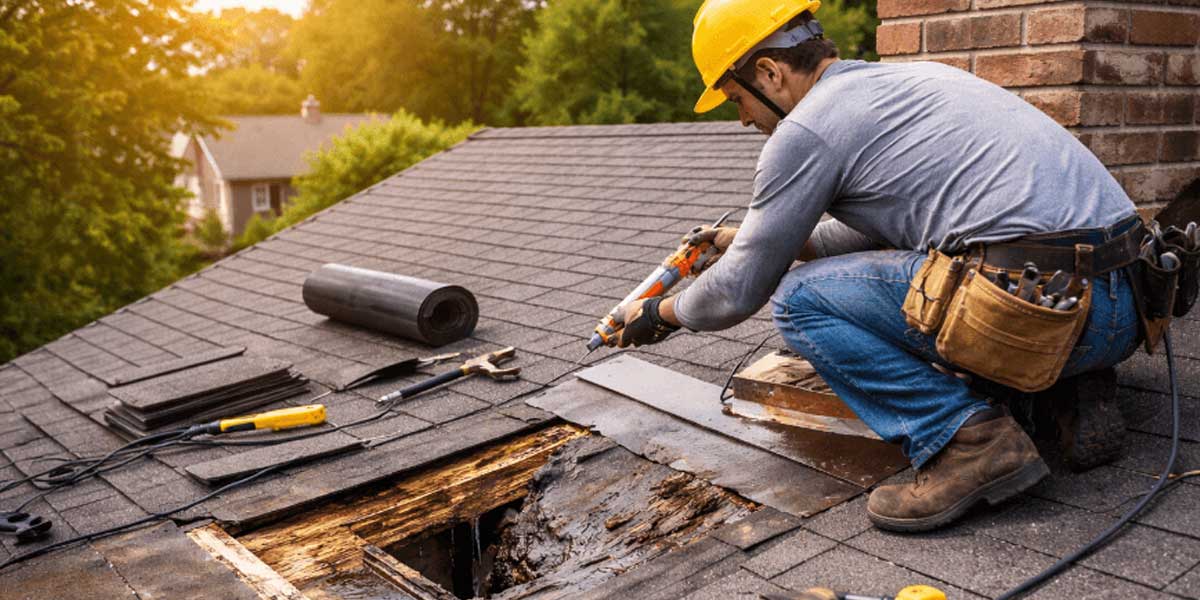
A good rule of thumb in the roofing industry is the 25% Rule. If the quoted cost of the repair exceeds 25% of the cost of a brand new roof, or if more than 25% of the roof’s total surface area is damaged, it is financially wiser to bite the bullet and pay for a full roof replacement. Throwing thousands of dollars at a roof that will need to be replaced in two years anyway is a poor investment.
Frequently Asked Questions (FAQ)
It depends entirely on the cause of the leak. If the leak was caused by a sudden “Act of God”—such as a heavy tree branch falling on the roof, a severe hailstorm, or hurricane-force winds ripping off shingles—your insurance will likely cover the repair (minus your deductible) and the interior water damage. However, if the leak is due to old age, general wear and tear, or a lack of routine maintenance, the insurance company will almost certainly deny the claim.2. Can I repair a roof leak from the inside of the attic?
No. While you can sometimes temporarily slow a leak by catching the water in a bucket in the attic or applying a temporary patch to the wood, the actual repair must be done on the exterior surface of the roof. Patching the wood from the inside does not stop the water from getting under the shingles and rotting the roof deck from the outside in.3. How long does a typical roof repair take?
Most minor to moderate roof repairs (like replacing vent boots, swapping out a few damaged shingles, or resealing a roof valley) can be completed by a standard two-man crew in 2 to 4 hours. Major structural repairs involving rotted wood or extensive flashing replacement can take 1 to 2 full days.4. Should I tip the roofers?
Tipping roofers is not expected or required. They are skilled tradesmen who are paid an hourly wage by their employer. However, roofing is grueling physical labor. If they are working in 100-degree heat, offering them cold water, sports drinks, or access to a shaded area for their lunch break is highly appreciated and a great way to show your gratitude.
5. Can a leaky roof cause mold in my house?
Yes, and it can happen very quickly. Mold can begin growing on damp wood or wet drywall within 24 to 48 hours. This is why it is critical to address a roof leak immediately, even if the drip seems minor. The cost of mold remediation can easily exceed the cost of the roof repair itself.
Conclusion
While paying $800 to fix a leaky roof is never a fun way to spend your weekend, ignoring the problem is guaranteed to cost you significantly more in the long run. A small leak left unchecked will eventually rot your roof decking, ruin your attic insulation, and cause hazardous mold to grow in your drywall—turning a minor, manageable repair into a $5,000 structural nightmare. By understanding the average costs, expecting a minimum trip charge, and demanding a proper mechanical fix rather than a quick squirt of caulk, you can hire a contractor with confidence and protect the structural integrity of your home.
Last modified: May 27, 2026