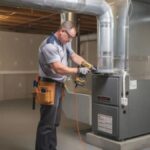
When your HVAC system fails in the middle of a heatwave or a freeze, the first question on your mind is usually: How much does a new furnace and AC cost? The short answer is that replacing both systems together typically costs between $7,500 and $12,500 for most homeowners. However, that is just the national average. Your actual price will depend heavily on the size of your home, the efficiency ratings you choose, and who you hire for the installation, adds Keyrenter West Seattle experts.
While it might be tempting to just replace the broken component, replacing your furnace and air conditioner at the same time can save you thousands in labor costs over the long run. In this guide, we will break down exactly what you can expect to pay, how much you save by bundling, and how to take advantage of the 2026 IRA tax credits to lower your final bill.
What You’ll Actually Pay: Cost by Home Size
The size of your home is the single biggest factor in determining your furnace and AC cost. A larger home requires a larger air conditioner (measured in tons) and a more powerful furnace (measured in BTUs) to maintain a comfortable temperature. If you install an undersized system, it will run constantly and drive up your utility bills. If you install an oversized system, it will short-cycle and fail to remove humidity properly.
Here is a breakdown of the average furnace and AC cost based on the square footage of your home:
| Home Size (Sq. Ft.) | AC Size Required | Furnace Size Required | Average Total Cost Range |
| 1,000 – 1,200 | 2.0 Tons | 40,000 – 60,000 BTUs | $5,500 – $8,500 |
| 1,500 – 1,800 | 3.0 Tons | 60,000 – 80,000 BTUs | $7,000 – $10,500 |
| 2,000 – 2,500 | 4.0 Tons | 80,000 – 100,000 BTUs | $8,500 – $13,000 |
| 2,500 – 3,000 | 5.0 Tons | 100,000 – 120,000 BTUs | $10,000 – $15,500 |
| 3,000+ | Multiple Units | Multiple Units | $14,000 – $22,000+ |
Note: These estimates include both the equipment and the labor for a standard installation. Homes with poor insulation or high ceilings may require a larger system than indicated by square footage alone.
Breaking Down the Bill: What You’re Paying For
When you receive a quote for a new furnace and AC cost, the total number can cause sticker shock. It helps to understand exactly where your money is going. A typical HVAC replacement quote is divided into equipment, labor, and additional materials.
The Equipment ($3,500 – $8,500)
The actual machinery makes up about 50% to 60% of your total bill. A standard gas furnace typically costs between $1,500 and $3,500, while a central air conditioning unit costs between $2,000 and $5,000. High-efficiency models with variable-speed blowers will push these numbers toward the higher end of the spectrum.
The Labor ($2,000 – $4,000)
Labor is the second largest expense in your furnace and AC cost. HVAC installation requires specialized knowledge of electrical wiring, gas lines, and refrigerants. A professional installation crew usually consists of two technicians working for one to two days. You are paying for their expertise, licensing, insurance, and the guarantee that your system will operate safely.
Additional Costs and Fees ($500 – $2,500)
Your quote should also account for the hidden costs of installation. This includes local building permits and inspection fees, which generally run between $250 and $500. If your existing ductwork is leaking or undersized for the new system, duct modifications can add $500 to $2,000 to your total. Finally, most contractors charge a disposal fee of $100 to $300 to safely remove and recycle your old equipment and refrigerant.
Should You Replace Both at Once? The Math
If your air conditioner dies but your furnace is still working perfectly fine, you might wonder if you really need to replace both. Contractors will almost always recommend replacing them together, but is that just a sales tactic, or does it actually make financial sense?
The Bundling Savings
Replacing your furnace and AC at the same time is almost always cheaper than replacing them separately. When a crew is already at your house, with their trucks unloaded and the system opened up, adding a furnace replacement to an AC job only takes a few extra hours.
If you replace them separately, you will pay the base labor fee twice. A standalone AC installation might include $2,000 in labor, and a standalone furnace installation might include $1,500 in labor. If you do them together, the combined labor might only be $2,500—saving you $1,000 right off the bat. Additionally, many manufacturers offer rebates of $200 to $500 when you purchase a complete matched system.
When You Should Replace Both
You should absolutely replace both units at the same time if your working unit is more than 10 years old. HVAC systems are designed to work as a matched pair. If you pair a brand-new, high-efficiency air conditioner with a 15-year-old furnace blower motor, the new AC will not be able to reach its advertised efficiency rating. You will pay for a 16 SEER AC but only get 13 SEER performance.
When You Should NOT Replace Both
We want to be honest: there are times when bundling does not make sense. If your furnace is only three or four years old and your AC dies, do not replace the furnace. The labor savings will not outweigh the cost of throwing away a nearly new piece of equipment. Similarly, if you are planning to sell the house in the next six months, a buyer will see “New AC” as a selling point, but they likely will not pay a premium just because you also replaced a perfectly good furnace.
Efficiency Ratings Explained: Is the Upgrade Worth It?
When you start shopping for a new system, you will be bombarded with acronyms like SEER2 and AFUE. These efficiency ratings have a massive impact on your initial furnace and AC cost, but they also determine your monthly utility bills for the next 15 years.
Understanding SEER2 (Air Conditioning)
The Seasonal Energy Efficiency Ratio (SEER2) measures how efficiently your AC cools your home. As of 2023, the federal minimum is 13.4 SEER2 in the North and 14.3 SEER2 in the South.
Upgrading from a base model (14 SEER2) to a high-efficiency model (18 SEER2) will increase your upfront furnace and AC cost by $1,500 to $2,500. However, the 18 SEER2 unit uses about 22% less electricity. If your summer cooling bills average $150 per month for five months, the upgrade saves you about $165 per year. In this scenario, it would take about 10 to 15 years to break even on the upgrade cost.
Understanding AFUE (Furnaces)
Annual Fuel Utilization Efficiency (AFUE) measures how much of the fuel your furnace consumes is actually turned into heat. An 80% AFUE furnace turns 80% of the gas into heat and exhausts 20% out the flue. A high-efficiency 96% AFUE furnace turns 96% of the gas into heat.
Upgrading from an 80% to a 96% AFUE furnace usually adds $1,000 to $1,800 to your furnace and AC cost. If you live in a cold climate like Minnesota or Michigan, the 16% reduction in your winter gas bills will easily pay for the upgrade within 5 to 7 years. If you live in Texas or Florida, where the furnace barely runs, sticking with an 80% AFUE model is the smarter financial choice.
Tax Credits and Rebates That Can Cut Your Cost
One of the biggest mistakes homeowners make is paying the full retail furnace and AC cost without taking advantage of available incentives. Thanks to the Inflation Reduction Act (IRA) of 2022, there is unprecedented federal funding available for HVAC upgrades.
Under the Energy Efficient Home Improvement Credit (Section 25C), you can claim a tax credit for 30% of the project cost when you install qualifying high-efficiency equipment. The credit is capped at $600 for high-efficiency air conditioners and gas furnaces.
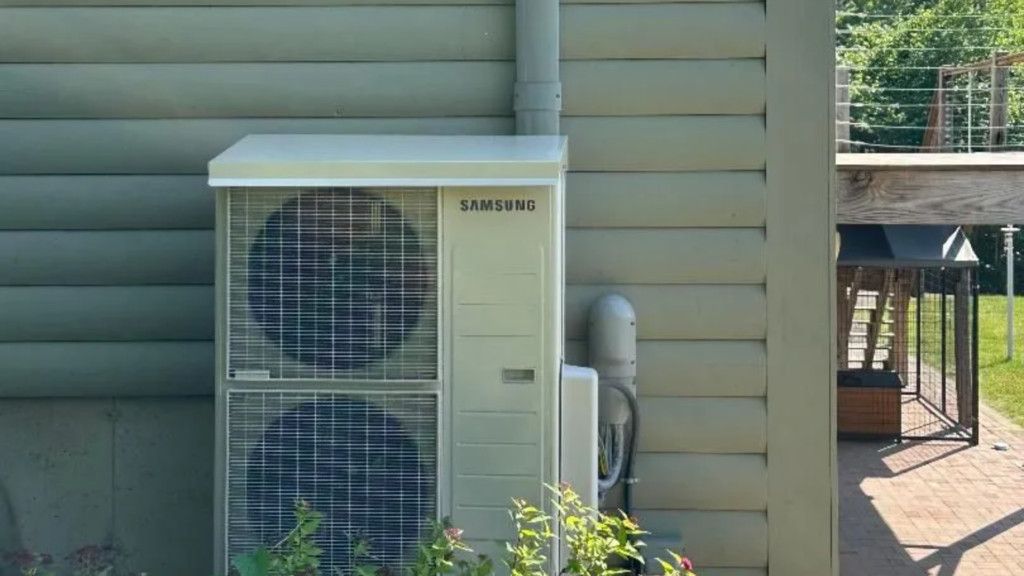
However, if you choose to install a heat pump instead of a traditional AC, the tax credit jumps to a maximum of $2,000. A heat pump can both heat and cool your home, and pairing a heat pump with a gas furnace (known as a dual-fuel system) is becoming increasingly popular.
In addition to federal tax credits, you should always check with your local utility company. Many power and gas companies offer instant rebates ranging from $200 to $1,000 when you upgrade to energy-efficient equipment. Your HVAC contractor should be able to provide you with the exact forms needed to claim these local rebates.
Why Quotes Vary So Much: Location and Other Factors
If you ask your neighbors what their furnace and AC cost was, you might hear wildly different numbers. A homeowner in Ohio might pay $8,000, while a homeowner in California pays $12,000 for the exact same equipment. Why the discrepancy?
Regional Differences
Labor rates and cost of living heavily influence HVAC pricing. In high-cost urban areas, contractors must charge more to cover their overhead, insurance, and employee wages. Additionally, regional climate dictates equipment requirements. Southern states require larger, higher-SEER air conditioners, while Northern states require larger, higher-AFUE furnaces.
The Retailer vs. Contractor Difference
Where you buy your system drastically affects the price. If you walk into a big-box home improvement store, their quoted furnace and AC cost is often 30% to 50% higher than a local independent contractor. The retail store is essentially acting as a middleman; they take your money, take a large commission, and then subcontract the actual installation to a local company anyway. You will almost always save money by skipping the retailer and hiring a reputable local HVAC company directly.
How to Get a Fair Price
The golden rule of HVAC replacement is to always get three quotes. Do not accept the first price you are given, especially in an emergency situation. Getting three quotes allows you to throw out the suspiciously low bid (which often indicates cut corners or hidden fees) and the outrageously high bid, leaving you with a fair market price. Make sure all three quotes specify the exact brand, model numbers, and efficiency ratings so you are comparing apples to apples.
When to Repair Instead of Replace
If you are staring at a $10,000 furnace and AC cost, you might be desperately hoping for a repair instead. The HVAC industry relies on the “$5,000 Rule” to help homeowners make this decision.
Multiply the age of your equipment by the estimated cost of the repair. If the total is less than $5,000, you should repair the unit. If the total is more than $5,000, you should replace it.
For example, if your 8-year-old AC needs a $400 repair (8 × 400 = 3,200), you should repair it. But if your 12-year-old AC needs a $600 repair (12 × 600 = 7,200), it is time to bite the bullet and invest in a new system. Furthermore, if your system uses the old R-22 Freon refrigerant (which was phased out in 2020), any major refrigerant leak means it is time for a full replacement, as R-22 is now prohibitively expensive to recharge.
Frequently Asked Questions
How long does a new furnace and AC last?A properly installed and maintained gas furnace will typically last 15 to 20 years. A central air conditioning unit usually lasts 12 to 15 years. Regular annual maintenance can significantly extend the lifespan of both units.
Consistent upkeep also helps maintain the system’s ability to regulate humidity and manage airflow correctly. When filters are clean and coils are clear of debris, the equipment can operate without unnecessary strain, which supports better energy efficiency. While some minor tasks can be handled by homeowners, having a professional technician perform a comprehensive evaluation once or twice a year ensures that small mechanical issues are identified before they lead to unexpected failures. For those who want to stay proactive with their system care, you can see details about professional tune-up checklists and how they contribute to long-term reliability and comfort.
Does a new HVAC system increase home value?Yes. While it may not offer a 100% return on investment, a new HVAC system is a major selling point for prospective buyers. According to the National Association of Realtors, a new HVAC system can recover about 60% to 85% of its cost in increased home value, and it will often help your home sell much faster.
What is the best time of year to replace an HVAC system?The best time to buy is during the “shoulder seasons”—spring (March to May) and fall (September to November). During these times, HVAC contractors are less busy with emergency repair calls. Manufacturers often run promotions, and contractors may offer discounts to keep their crews busy during the slow season.
Can I install my own furnace and AC to save money?No. HVAC installation is not a DIY project. It requires handling high-voltage electricity, combustible gas lines, and pressurized refrigerants. In almost all jurisdictions, it is illegal to handle refrigerants without an EPA certification. Furthermore, installing the equipment yourself will instantly void the manufacturer’s warranty.
Disclaimer: The pricing data in this guide is based on national averages for the 2026 calendar year. Actual costs will vary based on your specific location, home architecture, and local market conditions. Always consult with a licensed HVAC professional for an accurate assessment of your home’s needs.
Last modified: June 23, 2026