Quick Answer
Furnace installation cost ranges from $4,000 to $8,000 for most homes in 2026, covering the unit, labor, and standard installation. The full range runs from $2,000 (small electric furnace, simple swap) to $14,200+ (high-efficiency propane system with new ductwork). What you actually pay depends on five factors, and one of them, contractor choice, can shift your bill by nearly 4x, says Jamestown Property Management.
Understanding furnace installation cost before you call a contractor is one of the best ways to protect yourself from overpaying. If you just received a furnace installation cost quote that felt too high or too low, you are not imagining it. Furnace installation pricing is among the least transparent in the home improvement industry. This guide breaks down every cost factor, explains the $5,000 repair-or-replace rule, shows you exactly what a fair quote looks like, and gives you the tools to avoid being overcharged.
What Does Furnace Installation Cost on Average?
The most useful starting point is the all-in installed cost, meaning the furnace unit, labor, standard connections, and removal of the old system. Fuel type is the single largest variable when estimating furnace installation cost at this level.
| Fuel Type | Average Furnace Installation Cost | Notes |
|---|---|---|
| Electric | $2,000 to $7,000 | Lowest upfront; highest operating cost in cold climates |
| Natural Gas | $3,800 to $10,000 | Most common; best balance of cost and efficiency |
| Oil | $6,000 to $10,000 | Popular in Northeast; requires on-site storage tank |
| Propane | $3,700 to $14,200 | Wide range due to tank setup costs; good where gas is unavailable |
| Pellet | $4,000 to $17,000 | Renewable option; higher maintenance; niche market |
Understanding furnace installation cost by fuel type helps you set a realistic budget before requesting quotes. For most American homeowners, the relevant comparison is natural gas versus electric. Gas furnaces cost more upfront but typically deliver lower monthly heating bills, especially in colder climates where the furnace runs for six months or more. Electric furnaces are cheaper to buy and install but can double your electricity bill in a cold winter.
Balancing the immediate savings of equipment setup against future heating costs is a central part of managing long-term residential energy expenses. For property owners working with aging infrastructure or managing a sudden system failure, evaluating local maintenance options can help clarify if an immediate upgrade is necessary. Utilizing a regional furnace repair service provides a detailed diagnostic evaluation of existing parts, ensuring your current unit operates safely and helps extend its overall operational lifecycle.
Furnace Installation Cost by Efficiency (AFUE Rating)
Every furnace sold in the United States carries an Annual Fuel Utilization Efficiency (AFUE) rating, a percentage representing how much of the fuel it burns actually becomes heat for your home. A furnace rated at 80% AFUE converts 80 cents of every dollar of fuel into heat; the other 20 cents escapes through the flue. The AFUE rating is one of the most important factors in the total furnace installation cost because higher-efficiency units require different venting and components.
Source: U.S. Department of Energy, Furnaces and Boilers. The DOE sets 80% AFUE as the minimum efficiency standard for new gas furnaces sold in the northern United States.
| Efficiency Tier | AFUE Range | Furnace Installation Cost | Est. Annual Savings vs. 80% |
|---|---|---|---|
| Standard | 80% to 89% | $3,000 to $5,000 | Baseline |
| High-Efficiency | 90% to 95% | $4,000 to $8,000 | $100 to $200/yr |
| Ultra-High Efficiency | 96% to 98.5% | $6,000 to $12,000 | $200 to $400/yr |
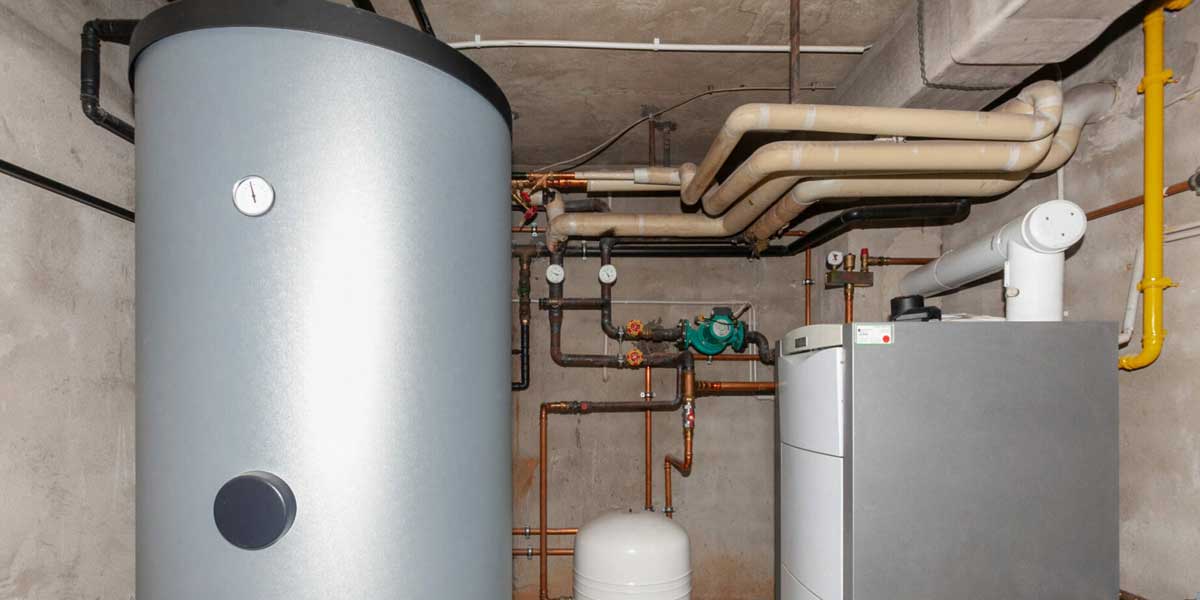
When budgeting furnace installation cost by efficiency tier, keep in mind that high-efficiency condensing furnaces (90%+ AFUE) include a second heat exchanger that captures heat from combustion gases before they exit the flue. This is why they cost more upfront and why they require PVC exhaust piping rather than a traditional metal flue, which adds $200 to $600 to the furnace installation cost if your home does not already have it.
Furnace Installation Cost by Home Size
Home size directly affects furnace installation cost because larger homes require higher-capacity units. Furnace capacity is measured in BTUs per hour (BTU/h). A properly sized furnace is critical. An undersized unit runs constantly and fails to heat the home; an oversized unit short-cycles, wears out faster, and creates uncomfortable temperature swings. As a general rule, plan for 30 to 50 BTUs per square foot in moderate climates and 50 to 60 BTUs per square foot in colder regions.
| Home Size | Recommended BTU | Average Furnace Installation Cost |
|---|---|---|
| Under 1,000 sq ft | 30,000 to 45,000 | $2,000 to $4,500 |
| 1,000 to 1,500 sq ft | 45,000 to 60,000 | $3,000 to $5,500 |
| 1,500 to 2,000 sq ft | 60,000 to 80,000 | $4,000 to $7,500 |
| 2,000 to 2,500 sq ft | 80,000 to 100,000 | $5,500 to $9,000 |
| 2,500 to 3,500 sq ft | 100,000 to 120,000 | $6,500 to $11,000 |
| 3,500+ sq ft | 120,000+ | $8,000 to $14,000+ |
The True Total Furnace Installation Cost: What Your Quote Might Not Include
The average quote covers the furnace unit and basic labor. But a complete installation often involves additional line items that can add $1,000 to $5,000 to your final furnace installation cost. Before signing anything, ask your contractor to itemize every cost in writing.
| Cost Item | Typical Range | When It Applies |
|---|---|---|
| Furnace unit (equipment) | $700 to $6,500 | Always |
| Labor (installation) | $500 to $2,000 | Always |
| Old furnace removal and disposal | $50 to $200 | Replacement only |
| Permits and inspections | $50 to $1,500 | Required in most jurisdictions |
| Ductwork modifications | $200 to $3,000 | When new furnace size differs from old |
| New ductwork (full install) | $1,500 to $7,000 | First-time installation or major renovation |
| Gas line extension | $250 to $800 | First-time gas install or relocation |
| PVC exhaust piping (90%+ AFUE) | $200 to $600 | Upgrading from standard to high-efficiency |
| Thermostat upgrade | $150 to $500 | Smart thermostat or 4-wire upgrade |
| Electrical panel upgrade | $800 to $1,500 | Older homes with insufficient amperage |
One of the most overlooked factors in total furnace installation cost is whether you are doing a first-time installation or a replacement. First-time installation vs. replacement: If you are installing a furnace in a home that has never had one, or converting from a different heating system, expect to pay 20 to 40% more than a straight replacement. New gas lines, ductwork from scratch, and fresh venting all add substantial labor and materials costs that a simple swap-out does not require.
Why the Same Furnace Installation Cost Can Be $3,400 or $13,000
This is the question every homeowner deserves an honest answer to. The furnace itself might account for $1,500 to $3,000 of your total bill. The rest is labor, overhead, and profit margin, and those vary enormously by contractor type.
Large national companies and big-box retailers carry significant overhead: call centers, marketing, fleet vehicles, and commissioned salespeople. Their quotes often include upsells and limited-time offers that inflate the total furnace installation cost. Small local HVAC companies, by contrast, have lower overhead and are less likely to use pressure tactics.
“My heater broke in the middle of winter in 2023. I live in the Chicago area, and it was cold! Called one place that was local but big, and they said it wouldn’t be worth it to fix, and I should do the AC at the same time. Both units were 22 years old. They quoted me 13k. The second place was a big name business, and they said the same thing and quoted me 7.5k. The third person was a small business run by just him and his kid. They said the same thing as the first two and quoted me 3.4k.”
Anonymous homeowner, r/hvacadvice
This is not an outlier. The same job, identical equipment, identical scope, quoted at $3,400, $7,500, and $13,000. The lesson is not that the cheapest quote is always right, but that getting at least three quotes is non-negotiable. A 4x price difference on the same furnace installation cost is not unusual in the HVAC industry.
The $5,000 Rule: Should You Repair or Replace?
The $5,000 rule is a practical decision framework used by HVAC professionals to help homeowners decide between repairing an aging furnace and replacing it entirely. The formula is straightforward: multiply the furnace’s age in years by the estimated repair cost. If the result exceeds $5,000, replacement is almost always the smarter financial choice.
| Furnace Age | Repair Cost | Age x Repair Cost | Decision |
|---|---|---|---|
| 5 years | $600 | $3,000 | Repair (well under threshold) |
| 10 years | $400 | $4,000 | Repair (borderline, monitor closely) |
| 12 years | $500 | $6,000 | Replace (exceeds $5,000) |
| 15 years | $350 | $5,250 | Replace (at or above threshold) |
| 20 years | $200 | $4,000 | Repair (but plan for replacement soon) |
The rule also has a simpler version: if the repair costs more than one-third of what a new furnace installation cost would be, and the furnace is more than 10 years old, replacement is usually the better investment. A new furnace comes with a manufacturer warranty (typically 10 years on parts, 20 years on the heat exchanger), higher efficiency, and predictable operating costs.
“Also to add the average life expectancy of a furnace and AC in a normal climate is 16 to 20 years. Older units that use R22 tend to last longer. Old furnaces are bullet proof. You probably won’t make your money back on energy savings by upgrading because fancy equals more expensive parts. Always get another quote. I tell my customers to shop around even if they like my prices.”
u/Illustrious-Fuel-355 (HVAC technician), r/hvacadvice
Furnace Installation Cost by Region
Labor rates, permit costs, and fuel availability all vary significantly by geography. A gas furnace installation cost in a cold-climate state like Minnesota typically runs higher than the same job in Georgia, both because the system needs higher BTU capacity and because local labor rates differ.
| Region | Typical Furnace Installation Cost (Gas, 2,000 sq ft) | Key Factors |
|---|---|---|
| Northeast (NY, MA, CT, NJ) | $6,000 to $10,000 | High labor rates; oil common; older housing stock |
| Midwest (IL, OH, MI, MN) | $4,500 to $8,000 | Cold climate requires higher BTU; gas widely available |
| South (TX, GA, FL, NC) | $3,500 to $6,500 | Lower heating demand; smaller systems; lower labor rates |
| West (CA, WA, OR, CO) | $4,000 to $9,000 | Wide variation; CA has strict efficiency requirements |
| Mountain/Rural | $5,000 to $14,000+ | Propane common; limited contractor competition |
How to Get a Fair Furnace Installation Cost Quote (and Spot a Bad One)
Getting three quotes is the single most effective way to protect yourself from overpaying on furnace installation cost. But knowing what to look for in each quote matters just as much as collecting them. Here are the five most common red flags that signal an inflated or dishonest quote.
Red Flag 1: No itemized breakdown. A legitimate quote lists the furnace model and price, labor hours and rate, permit fees, and any additional work separately. A single lump-sum number with no detail is a warning sign.
Red Flag 2: Same-day urgency pressure. “This price is only good today” is a sales tactic, not a reflection of market reality. Furnace installation costs do not change overnight. Walk away from any contractor who pressures you to sign immediately.
Red Flag 3: Recommending replacement for a young furnace. If your furnace is under 10 years old and the contractor immediately recommends full replacement without a detailed diagnosis, get a second opinion before authorizing any work.
Red Flag 4: Bad-mouthing previous contractors. Professional HVAC technicians assess the system, not the people who installed it. Unprompted criticism of prior work is often a setup for inflating the scope of the job and the furnace installation cost.
Red Flag 5: Quote from a big-box store service desk. Home Depot and Lowe’s HVAC installation services are consistently flagged in homeowner communities as significantly overpriced compared to local independent contractors for the same furnace installation cost.
“Do yourselves a favor and call a local company. One that charges $150 to $200 for a full tune-up. Those guys will show up and not be pressed to generate income on your system because their time is compensated. They’ll spend 1 to 2 hours maintaining the system as it should be. It is money well spent, and prevents you from needing a guy with clean slacks and dress boots sitting at your dining room table asking for $16k because it’s ‘the best deal his office can offer.'”
u/MrBHVAC (HVAC technician), r/hvacadvice, PSA from an actual tech
Timing Tip: The best time to get furnace installation cost quotes is spring or early fall, before the heating season begins. Contractors are less busy, more competitive on price, and can schedule installation at your convenience rather than on an emergency timeline. Emergency winter installations routinely cost 15 to 30% more than off-season work.
Ways to Reduce Your Furnace Installation Cost in 2026
Several legitimate strategies can meaningfully reduce your furnace installation cost, both upfront and over the life of the system. Homeowners who plan ahead typically pay 15 to 30% less on furnace installation cost than those who replace on an emergency basis.
Federal Tax Credit (IRA 2022): The Inflation Reduction Act provides a tax credit of up to 30% of the furnace installation cost (maximum $600) for qualifying high-efficiency gas, propane, or oil furnaces installed through 2032. To qualify, the furnace must meet ENERGY STAR’s Most Efficient criteria, which generally means 97% AFUE or higher for gas furnaces. Keep your receipt and the manufacturer’s certification statement for your tax filing.
Source: ENERGY STAR Rebate Finder. Search by ZIP code for utility rebates and state incentives available in your area. Many utility companies offer $100 to $500 rebates for high-efficiency furnace installations independently of the federal credit.
Bundle with air conditioning: If your AC unit is also aging, replacing both systems simultaneously often results in a 10 to 20% reduction in combined furnace installation cost and labor, since the contractor makes a single trip and handles both installations at once. This is one of the most effective ways to reduce the total furnace installation cost per system.
Compare at least three quotes: As the Chicago homeowner’s story above illustrates, the spread between the lowest and highest legitimate quotes for identical work can be enormous. Three quotes takes two to three hours of your time and can save thousands of dollars on furnace installation cost.
Ask about manufacturer rebates: Carrier, Trane, Lennox, and other major brands run seasonal promotions, typically in spring and fall, that can reduce the equipment portion of your furnace installation cost by $200 to $800. Ask your contractor what current rebates apply to the models they are recommending.
Frequently Asked Questions About Furnace Installation Cost
What is the average price to install a new furnace?
The national average furnace installation cost in 2026 is approximately $5,000 to $7,000 for a gas furnace in a 1,500 to 2,000 square foot home. This includes the unit, labor, standard connections, and removal of the old furnace. The full range runs from $2,000 for a small electric furnace to $14,200+ for a high-efficiency propane system in a large home.
What is the $5,000 rule for furnace?
The $5,000 rule states: multiply your furnace’s age in years by the estimated repair cost. If the result exceeds $5,000, replacement is almost always the better financial decision. For example, a 15-year-old furnace needing a $400 repair scores 15 x $400 = $6,000, above the threshold, suggesting replacement. The rule accounts for the fact that older furnaces are likely to need additional repairs in the near future, making cumulative repair costs exceed the furnace installation cost of a new, warrantied system.
Is it worth replacing a 30-year-old furnace?
Yes, almost certainly. A 30-year-old furnace is likely operating at 56 to 70% AFUE, compared to the 80 to 98% available in modern units. The energy savings alone can justify the furnace installation cost.
Beyond energy savings, a new system offers significant improvements in indoor comfort and overall air quality. Modern heating units are designed with advanced filtration systems that help reduce dust, allergens, and other airborne particles, creating a healthier living environment for your family. This is especially beneficial in older homes where existing ductwork may have accumulated debris over several decades. To learn more about how a professional installation can enhance your home’s air quality and climate control, continue reading our detailed equipment breakdowns and regional pricing guides. Investing in a modern system ensures that your home remains a sanctuary during the most demanding winter months.
While long-term savings are a major incentive for an upgrade, maintaining an existing system is often the more practical immediate step for many households. Regular mechanical checks can identify small issues, such as worn bearings or weak capacitors, before they lead to a total system breakdown during extreme weather. For residents in the Pittsburgh area, securing a dependable furnace repair in Pittsburgh ensures that your unit operates safely and at peak efficiency. These proactive tune-ups not only extend the lifespan of your current equipment but also provide better indoor comfort while you evaluate the long-term benefits of a full system replacement.
A switch from 65% to 95% AFUE reduces fuel consumption by roughly 31%, which can translate to $300 to $600 per year in savings depending on your climate and fuel costs. Additionally, a furnace of that age poses increasing risks of heat exchanger cracks, which can allow carbon monoxide to enter the living space.
How much does Lowe’s charge to install a furnace?
Lowe’s and Home Depot HVAC installation services typically result in a furnace installation cost of $5,000 to $10,000+ for a standard gas furnace, generally 30 to 60% higher than comparable quotes from local independent HVAC contractors. These retailers subcontract the work to third-party installers and add a significant markup. The HVAC community consistently recommends getting quotes from local licensed contractors rather than big-box retailers.
How long does furnace installation take?
A standard furnace replacement, swapping an existing unit for a new one of similar type, typically takes 4 to 8 hours for a two-person crew. More complex installations involving new ductwork, gas line extensions, or a switch from one fuel type to another can take 1 to 3 days. First-time installations in homes without existing forced-air infrastructure take the longest and carry the highest furnace installation cost.
Can I install a furnace myself to save money?
Gas furnace installation is not a DIY project. It involves working with natural gas lines, high-voltage electrical connections, and combustion venting, all of which carry serious safety risks if done incorrectly. Most jurisdictions require a licensed HVAC contractor to pull permits and perform the installation, and improper installation voids manufacturer warranties. Electric furnaces are somewhat simpler but still require licensed electrical work in most states.
The Bottom Line: What to Expect for Furnace Installation Cost
Furnace installation cost ranges from $4,000 to $8,000 for most homes in 2026, but the total furnace installation cost is wide enough that the contractor you choose matters more than almost any other variable. The same job can cost $3,400 from a small local company or $13,000 from a large national chain. Getting three quotes, understanding what each line item covers, and knowing the red flags of an inflated estimate are the most valuable steps you can take before signing a contract.
Homeowners can also look for specialized expertise to ensure their heating system maintains high performance over time. While general quotes provide a baseline for installation, a technician who understands the specific heating demands of your local area can offer more accurate advice on system longevity and efficiency. Working with an established local provider like Merrell & Associates allows for a detailed assessment of your home’s unique layout and ductwork. This localized knowledge helps prevent common installation errors that often lead to higher energy bills or premature mechanical wear, supporting a more stable and comfortable indoor environment for years to come.
While long-term budgeting for a full replacement is a sound financial strategy, unexpected mechanical failures often require more immediate professional attention. Maintaining the performance of an aging system involves catching small issues before they escalate into costly emergency visits during a cold snap. For those needing a reliable furnace repair in Bunn, finding a technician with local expertise ensures that any immediate safety concerns or efficiency drops are addressed quickly. These smaller, routine mechanical checks can help extend the functional life of your current equipment and provide better indoor comfort while you prepare for a future system upgrade.
If your furnace is more than 15 years old and facing a significant repair, run the $5,000 rule before authorizing any work. And if you are ready to move forward, check the ENERGY STAR rebate finder for your ZIP code. There may be hundreds of dollars in utility and federal incentives available to offset your total furnace installation cost, making a high-efficiency upgrade significantly more affordable.
Last modified: July 14, 2026