If you are tired of dragging a ladder out to the garage every few weeks to recharge your Ring camera battery, a Ring Solar Panel feels like a miracle device. It promises a “set it and forget it” security solution, adds Limehouse Property Management specialists. But before you mount one to your roof, a practical question arises: how long do Ring solar panels actually last?
If you search online, you will find a lot of confusing, contradictory information. Some blogs bizarrely claim the panels only last six months. Let us clear the air and look at the actual hardware lifespan, the common points of failure, and how to revive a panel that appears to be dead.
The Short Answer
The physical hardware of a Ring Solar Panel is designed to last 5 to 10 years (or more). The photovoltaic (PV) cells inside the panel do not “die” quickly. However, the camera battery it is connected to may degrade over 3 to 5 years, and the connecting cable can succumb to weather corrosion. If your panel stops working after a year or two, the panel itself is rarely the broken component.
Debunking the “6-Month” Myth
Many online articles incorrectly state that Ring solar panels only last six months. This is a massive misunderstanding of the technology. Six months is the estimated lifespan of a Ring camera battery on a single charge without a solar panel attached. The solar panel itself will last for years, continuously trickle-charging that battery so you never have to take it down.
The Hardware Lifespan: What Actually Degrades?
To understand how long your Ring Solar Panel will last, you have to break down its three main components: the solar cells, the plastic housing, and the connection cable.
1. The Photovoltaic (PV) Cells (Lifespan: 10+ Years)
The actual dark glass cells that convert sunlight into electricity are incredibly durable. Standard solar technology degrades at a rate of about 0.5% per year. Even after a decade, the cells in your Ring panel will still be producing more than enough wattage to trickle-charge a camera battery.
2. The Plastic Housing (Lifespan: 5 to 7 Years)
Ring panels are encased in weather-resistant plastic. Over time, constant exposure to ultraviolet (UV) rays from the sun will cause the plastic to become brittle and fade. While this rarely stops the panel from working, extreme temperature fluctuations (freezing winters and scorching summers) can eventually cause micro-cracks in the casing, potentially letting moisture in.
3. The Connection Cable (The Weakest Link)
The most common reason a Ring Solar Panel “dies” is actually a failure of the cable or the connector plug (either the barrel plug or USB-C, depending on your model). Rain, humidity, and salty coastal air can cause corrosion on the metal contacts. If the connection between the panel and the camera degrades, the power stops flowing, even if the panel is working perfectly.
Ring’s Warranty Policy
If your panel does fail prematurely, you need to know your warranty options. Out of the box, Ring provides a 1-year limited warranty on its solar panels. This covers manufacturing defects but does not cover damage from extreme weather events, vandalism, or improper installation.
However, there is a major loophole that benefits many homeowners: The Ring Protect Plus or Pro Subscription. If you are subscribed to one of Ring’s premium cloud recording plans at the time you purchase the solar panel, Ring extends the warranty for the lifetime of your subscription. If the panel fails in year three, and you are a Protect Plus member, Ring will replace it for free.
“My Panel Stopped Working”: Is It Dead or Just Behind?
Often, a homeowner will check their Ring app, see a “Low Battery” warning, and assume the solar panel is broken. In 90% of cases, the panel is not dead; it is just losing a math battle.
Ring Solar Panels output roughly 2.2 to 5 watts of power, depending on the model. This provides a trickle charge—it slowly drips 1% to 2% of battery life back into the camera each day.
If your camera is pointed at a busy street, triggering motion alerts 50 times a day, the camera is draining the battery faster than the solar panel can refill it. This is especially common in winter when the days are shorter and the sun angle is lower. The panel is working; it just cannot keep up with the camera’s power consumption.
Real User Experiences from Reddit
When looking at real-world longevity, community forums provide the best insights. Users frequently encounter the “dead panel” illusion and have found reliable workarounds.
“Does anyone know if the Ring solar panels have a lifespan? I installed my panel a few years ago. This week, I started getting low battery warnings. Now, my camera is showing that the solar panel is not connected. It’s up on a roof, so it’s a pain to access.”
— u/freema22, r/Ring
“This has happened to me twice in a little over a year. Both times I just pulled the battery and charged it normally. After putting it back in the camera it was good to go for several more months. A bit of a pain, but 100% still beats the 2 week charging I was doing before.”
— u/PacersPK, r/Ring
As u/PacersPK notes, the solution to a panel that appears to have died is often just a manual reset of the camera’s battery level.
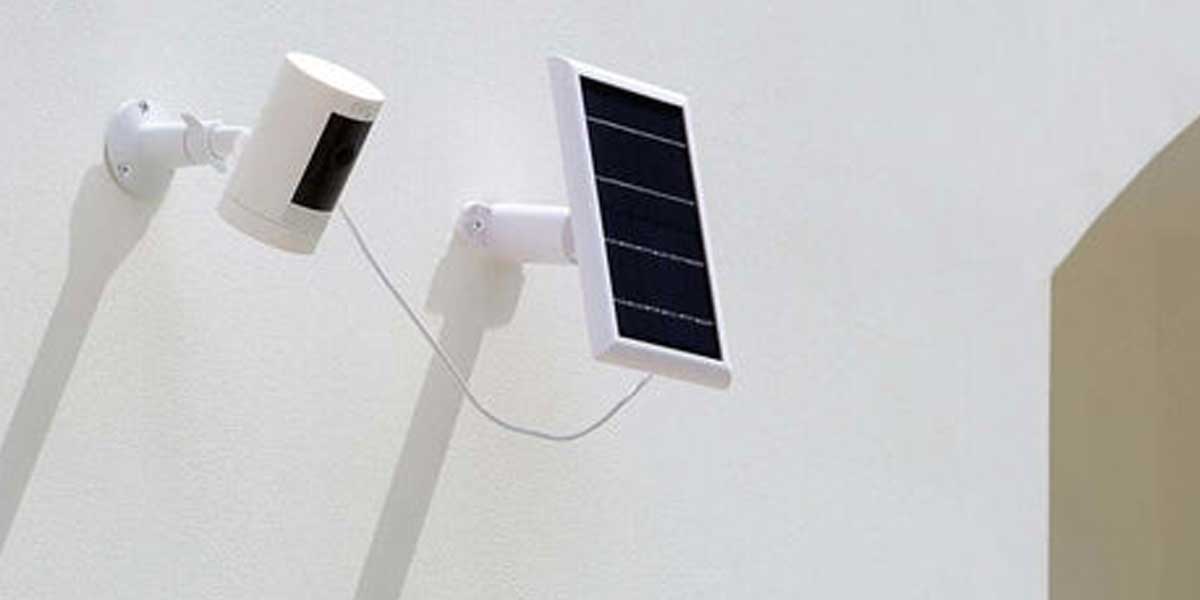
How to Troubleshoot a “Dead” Ring Solar Panel
If your app says the panel is “Not Connected” or your battery is dying, follow these troubleshooting steps before throwing the panel away:
- The Wall-Charge Reset: Bring the camera battery inside and charge it to 100% using a wall outlet. Ring cameras are programmed to stop accepting a solar charge if the battery drops too low or gets too cold. Starting fresh at 100% often forces the software to recognize the solar panel again.
- Clean the Panel: A thick layer of pollen, dust, or bird droppings will severely cut power output. Wipe the glass face with a damp microfiber cloth.
- Check the Plug: Unplug the cable from the back of the camera. Inspect it for dirt, water, or green/white corrosion. Wipe it clean, ensure it is completely dry, and push it back in firmly. You should hear or feel a distinct “click.”
- Reboot the Camera: Sometimes the camera’s firmware glitches. Use the Ring app to reboot the camera, which can force it to poll the solar connection again.
Tips to Extend the Lifespan of Your Panel
If you want your Ring Solar Panel to last a decade, a little proactive maintenance goes a long way:
- Optimize the Angle: Install the panel facing South (if you are in the Northern Hemisphere) at roughly a 45-degree angle. This maximizes sun exposure and allows rain to wash away dust naturally.
- Use Dielectric Grease: Before plugging the cable into the camera, apply a tiny dab of dielectric grease to the metal connector. This repels moisture and prevents the corrosion that kills most panels.
- Manage Motion Settings: Reduce your camera’s motion sensitivity and set up “Motion Zones” to ignore street traffic. Less battery drain means the solar panel does not have to work as hard to keep the device charged.
Frequently Asked Questions (FAQ)
Yes, but at a significantly reduced rate. A solar panel relies on UV light, which penetrates cloud cover. However, on a heavily overcast day, the panel may only produce 10% to 20% of its maximum output. If you have several cloudy days in a row, you may see your camera’s battery percentage drop slightly.2. Does the solar panel need direct sunlight?
Ring recommends at least 3 to 4 hours of direct sunlight per day for optimal performance. While the panel will generate a tiny amount of ambient power in the shade, it will not be enough to keep a security camera fully charged over the long term.3. Can I use a third-party solar panel with my Ring camera?
Yes, there are many third-party solar panels (like those from Wasserstein) that are compatible with Ring devices. They are often cheaper and sometimes offer higher wattage. However, using a third-party panel may void your Ring camera’s warranty if it causes electrical damage.4. Will the solar panel overcharge my battery?
No. Ring’s internal software is designed to protect the lithium-ion battery. The solar panel will typically stop charging the device once the battery reaches roughly 97% to 100%, preventing overcharging and thermal degradation.
Final Thoughts
A Ring Solar Panel is a highly durable piece of hardware that should easily last 5 to 10 years mounted to your home. If you are experiencing issues, do not assume the panel is dead. Nine times out of ten, a quick cleaning, a firm push on the connector cable, or a manual wall-charge of the camera battery will bring the system back to life, giving you years of uninterrupted, ladder-free security.
Last modified: May 27, 2026