If you are upgrading your heating system, you have likely heard contractors recommend a two stage furnace. They will tell you it is more comfortable and efficient, notes Property Management Campbell CA. But how does it actually work? What is happening inside that metal box that makes it different from the furnace you have had for the last twenty years?
The short answer is that this type of furnace has a gas valve that can operate at two different levels: a low stage (usually around 65 percent capacity) and a high stage (100 percent capacity), shares Ace Property Management team. Instead of blasting hot air at full power every time it turns on, it runs on the lower, quieter setting for most of the winter, only kicking into high gear when the temperature drops drastically.
This guide will break down the exact mechanical process of how a two stage furnace works, from the thermostat signal to the control board logic, and explain why these components matter for your home comfort.
The Core Mechanism: Two Firing Rates, One Smart System
The defining component of a two stage furnace is the two-position gas valve. In a traditional single stage furnace, the gas valve only knows two states: fully open or fully closed. When the thermostat calls for heat, the valve opens completely, delivering 100 percent of the furnace capacity until the target temperature is reached, at which point it shuts off completely.
This type of furnace introduces a middle ground. The gas valve is designed to open partially, typically to 60 or 65 percent of its maximum capacity, during the first stage of heating. This is the stage the furnace uses for about 80 percent of the heating season.
When the furnace operates on this lower stage, it burns less gas and produces a gentler, more continuous flow of warm air. It is only when the outdoor temperature drops sharply, or when you manually increase the thermostat setting by several degrees, that the valve opens fully to the 100 percent high stage. This two-position mechanism is the foundation of how a two stage furnace works.
How the Control Board Decides When to Switch Stages
The gas valve does not make decisions on its own. The brain behind the staging logic is the electronic control board, which relies on signals from your thermostat to determine which stage to activate.
When the temperature in your home drops slightly below your set point, the thermostat sends a signal through the W1 wire. The control board receives this W1 signal and activates the furnace on the low stage. The system will then run at 65 percent capacity.
In most scenarios, this low stage is enough to bring the house back to the target temperature. However, if the house is losing heat faster than the low stage can replace it, the temperature will continue to drop. If it falls 1 to 2 degrees below the set point, the thermostat sends a second signal through the W2 wire.
Upon receiving the W2 signal, the control board immediately opens the gas valve to 100 percent and increases the blower speed, activating the high stage. Once the target temperature is reached, the system shuts down. Some advanced control boards also use a timer algorithm. If the furnace has been running on the low stage for 10 to 15 minutes without reaching the set temperature, the board will automatically step up to the high stage, even without a W2 signal.
The Blower Motor’s Role in Two Stage Heating
Understanding this heating system requires looking beyond just the gas valve. The blower motor — the fan that pushes the heated air through your ductwork — must coordinate with the heating stages.
In a two stage system, the blower motor operates at different speeds depending on the active stage. During the low stage, the blower runs at roughly 60 to 70 percent of its maximum speed. This slower speed matches the reduced heat output from the gas valve, ensuring the air coming out of your vents feels warm, rather than lukewarm.
When the furnace shifts to the high stage, the control board signals the blower motor to ramp up to 100 percent speed, pushing a larger volume of hot air through the ducts to quickly raise the indoor temperature. This coordination between the gas valve and the blower motor is what prevents the loud, sudden rush of air associated with older furnaces.
Balancing the airflow and blower speed requires proper setup to maintain efficient operation across both stages. When evaluating overall heating performance, consulting technicians who provide local hvac near me supports proper system calibration and long-term heating reliability.
Why Low-Stage Running Improves Comfort Beyond Temperature
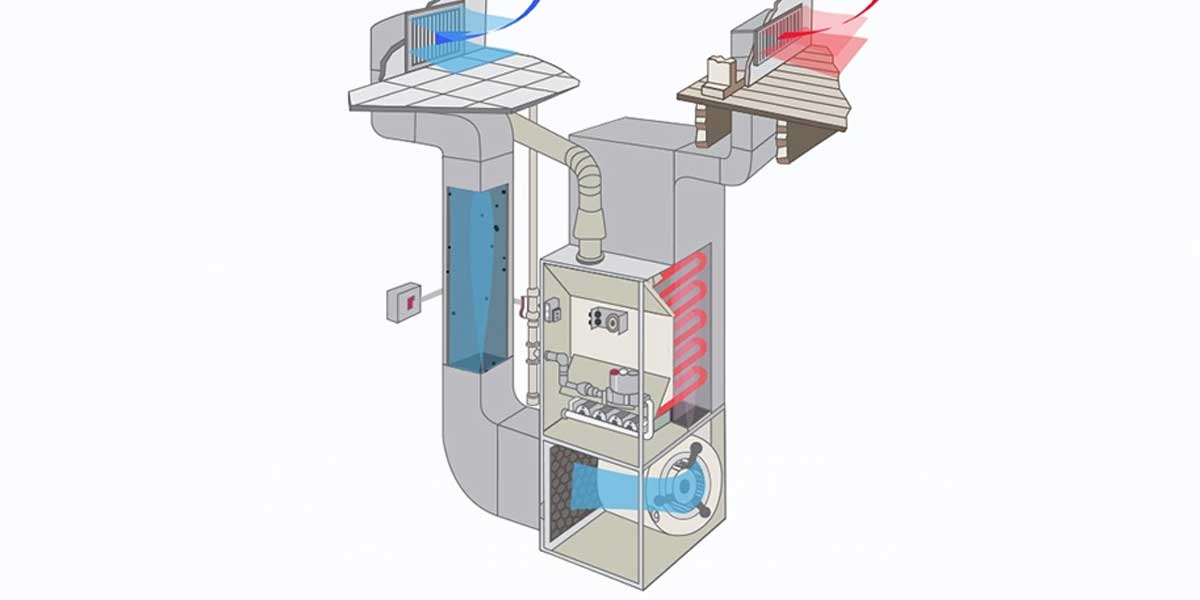
The mechanics of this heating system directly translate into tangible comfort benefits, primarily because the system runs for longer periods at a lower intensity.
When a furnace runs on the low stage, the air circulates through the heat exchanger at a slower pace. This allows the air to absorb heat more evenly. More importantly, longer run times mean the air in your home is constantly moving through the filter, which improves indoor air quality.
Furthermore, the continuous circulation helps eliminate cold spots. In a single stage system, the furnace blasts heat, satisfies the thermostat, and shuts off. The air then sits stagnant in the far corners of the house, cooling down until the next cycle. A two stage furnace keeps the air moving, maintaining a much tighter temperature variance, typically within 1 degree of your thermostat setting, compared to the 3 to 4 degree swings common with single stage units.
🟢 Homeowner Experience:
“The difference is night and day. My old single-stage would blast hot air for 10 minutes, shut off, and the house would cool down before it kicked on again. Now the two-stage just… runs quietly in the background and the temperature barely moves.”— RealC2025 on r/hvacadvice
The Thermostat Connection: Why W1 and W2 Both Matter
A critical, often overlooked aspect of the two stage system is the thermostat wiring. For the system to operate exactly as designed, it requires a two stage thermostat connected with both W1 and W2 wires.
The W1 wire controls the first stage of heat, while the W2 wire controls the second stage. If your installer reuses an old single stage thermostat, they will only connect the W1 wire. In this scenario, the furnace’s control board takes over the staging logic entirely using its internal timer. It will run on low for 10 minutes, and if the thermostat has not been satisfied, it will automatically switch to high.
This defeats the purpose of the upgrade. The system will switch to high heat even on mild days simply because the 10 minute timer expired, rather than because the house actually needed the extra heat.
🟡 Compatibility Warning:
“I was afraid the two speed may mean one more thing that could possibly break but curious if anyone has any advice!”— jackdiver69 on r/hvacadvice
To avoid this, ensure your contractor installs a compatible two stage thermostat and runs the proper wiring to the W2 terminal.
Single-Stage vs Two-Stage vs Variable-Speed: A Mechanical Comparison
To fully grasp how a two stage furnace works, it helps to compare its mechanics against the other two main types of furnaces on the market.
| Feature | Single Stage Furnace | Two Stage Furnace | Variable Speed (Modulating) |
|---|---|---|---|
| Gas Valve | 100% On or Off | 65% Low / 100% High | 40% to 100% (Continuous) |
| Blower Motor | Single Speed | Two Speeds | Variable Speed |
| Run Cycles | Short, intense bursts | Longer, moderate cycles | Continuous, low-level running |
| Temperature Swings | ± 3 to 4°F | ± 1 to 2°F | ± 0.5°F |
| Thermostat Need | Standard W1 | Two Stage W1 & W2 | Proprietary Communicating |
While modulating furnaces offer the ultimate temperature control, they come with a steep increase in mechanical complexity and repair costs.
🟠 HVAC Technician Insight:
“When it breaks, the parts can be up to 4X more expensive. There goes all your savings from efficiency. Induced draft motor on a regular / 2 stage furnace, $150-$300. Inducer motors on a modulating furnace, $500-$2000.”— Ok_Tour_5503 on r/hvacadvice
For many homeowners, this type of furnace represents the ideal middle ground: a major upgrade in comfort over single stage models, without the expensive proprietary parts required by modulating systems.
What Normal Two-Stage Operation Sounds Like
Because of its two-speed design, the system sounds different from older heating systems. Knowing what is normal can save you a panic call to your HVAC technician.
When the furnace starts on the low stage, you will hear a quiet, low-pitched hum. The air coming from the vents will be a gentle breeze, not a forceful gust. You might even have to stand close to a vent to confirm it is running. This is exactly how it is supposed to operate.
If the system needs to switch to the high stage, you will hear a distinct click from the control board, followed immediately by an increase in the fan noise and a stronger rush of air from the vents. The transition should be smooth. If you hear loud banging, rattling, or if the furnace constantly cycles between high and low every few minutes, you should have a professional inspect the system, as this indicates a staging or airflow problem.
Frequently Asked Questions
How long does a two stage furnace run on low stage?
A properly sized two stage furnace should run on the low stage for 80 to 90 percent of the heating season. During mild winter days, a cycle might last 15 to 30 minutes entirely on the low stage.
Does a two stage furnace save money?
Yes, but the savings come primarily from electricity rather than gas. Because the blower motor runs at a lower speed for longer periods, it consumes less electricity than a single stage motor starting and stopping constantly. The U.S. Department of Energy (DOE) notes that efficient blower motors are a key factor in reducing overall HVAC energy consumption. ENERGY STAR certified furnaces are required to meet minimum AFUE ratings that make this efficiency possible.
Can I use my existing thermostat with a two stage furnace?
You can, but you should not. Using a single stage thermostat forces the furnace to rely on an internal timer rather than actual room temperature to switch stages. To get the full benefit of how a two stage furnace works, you need a thermostat with W1 and W2 terminals.
Why does my two stage furnace always run on high?
If your furnace always runs on high, it is likely wired incorrectly (using only W1 with the timer set to zero), the thermostat is configured improperly, or the system is severely undersized for your home. The Air Conditioning Contractors of America (ACCA) Manual J standard is the accepted method for calculating the correct furnace size.
How do I know if my two stage furnace is actually using both stages?
You can check by listening to the blower motor and feeling the airflow at the vents. You should notice a distinct difference in air pressure and noise level when the system steps up from low to high stage. You can also test it by turning your thermostat up 5 degrees at once, which should immediately trigger the high stage.
Last modified: September 1, 2026