Quick Answer: Yes. Nationally, homes with owned solar panels sell for an average of 4.1% more than comparable homes without solar, which translates to roughly $9,274 for a median-priced home, according to a 2019 Zillow Research study. However, that premium applies almost exclusively to owned systems. Leased panels and Power Purchase Agreements (PPAs) frequently complicate sales and can reduce a home’s appeal to buyers, notes Texas rental payment expectations. The honest answer to whether do solar panels increase the value of a home depends on three things: who owns the system, where the home is located, and how old the system is.
How Much Do Solar Panels Increase Home Value? The Research Explained
Three independent research bodies have studied the relationship between solar installations and home resale prices, and their findings are remarkably consistent. The Zillow Research study, which analyzed over 1.6 million home sales between March 2018 and February 2019, found a 4.1% national premium for solar-equipped homes. For a home priced at the U.S. median, that figure represents approximately $9,274 in additional value.
The Lawrence Berkeley National Laboratory, in its landmark 2015 multi-state study, arrived at a different but complementary metric: buyers paid a premium of roughly $5,911 for every kilowatt of solar capacity installed. A typical residential system of 6 kilowatts would therefore add approximately $35,466 to a home’s appraised value under this calculation. The U.S. Department of Energy summarizes the broader research consensus by noting that solar panels are viewed by buyers as upgrades comparable to a renovated kitchen or a finished basement, and that homes with solar arrays command a premium of about $15,000 for an average-sized system.
A third metric, sometimes called the income approach or the $20 Rule, is the method most commonly used by certified appraisers. Under this framework, every $1 of annual electricity savings that a solar system generates adds approximately $20 to the home’s market value. A system that reduces a household’s annual utility bill by $1,500 would therefore contribute $30,000 to the property’s appraised value. This approach is grounded in the same logic that appraisers use when valuing rental income, and it tends to produce the most defensible figures in a real estate transaction.
| System Size | Typical Annual Savings | Value Added (LBNL Method) | Value Added ($20 Rule) |
|---|---|---|---|
| 4 kW | $700–$900 | $23,644 | $14,000–$18,000 |
| 6 kW | $1,050–$1,350 | $35,466 | $21,000–$27,000 |
| 8 kW | $1,400–$1,800 | $47,288 | $28,000–$36,000 |
| 10 kW | $1,750–$2,250 | $59,110 | $35,000–$45,000 |
These two methods sometimes diverge by a wide margin. The LBNL method, based on historical transaction data, tends to produce higher figures in markets where solar is still relatively novel. The $20 Rule, being forward-looking and tied to actual utility savings, tends to produce more conservative estimates in markets where electricity rates are low. In practice, appraisers often use a blended approach, and the final figure depends heavily on local comparable sales data.
Solar Home Value Premiums by Metro Market
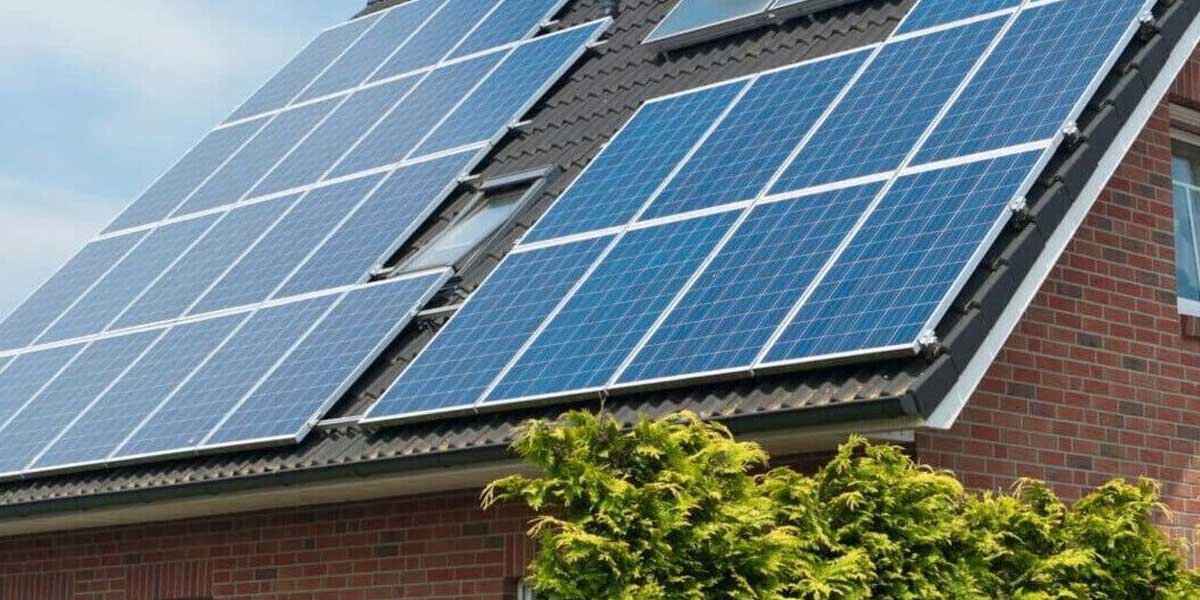
The national 4.1% average conceals real variation across U.S. metro areas. Markets with high electricity rates, strong solar incentive programs, and environmentally conscious buyer demographics consistently show larger premiums. Markets with low electricity costs, limited net metering programs, or political skepticism about renewable energy tend to show smaller or even negligible premiums.
| Metro Market | Premium (%) | Dollar Value (Median Home) | Primary Driver |
|---|---|---|---|
| New York City, NY | 5.4% | $23,989 | High electricity rates, strong buyer demand |
| San Francisco, CA | ~4.0% | $38,000+ | High home prices amplify percentage gains |
| Los Angeles, CA | ~4.0% | $28,000+ | High rates, solar-literate buyer pool |
| Orlando, FL | ~4.0% | $14,000+ | High AC costs, strong solar adoption |
| National Average | 4.1% | $9,274 | Zillow 2019 study baseline |
| Riverside, CA | 2.7% | $9,926 | High solar saturation reduces marginal value |
| Rural Midwest | 0–2% | Variable | Low electricity rates, limited buyer awareness |
| Southeast (non-FL) | 1–3% | Variable | Mixed incentive environment, lower rates |
The Riverside, California figure is instructive. Despite being in a state with high electricity rates and strong solar policy, Riverside shows a below-average premium because solar adoption in the Inland Empire is so widespread that buyers have come to expect it. When a feature becomes standard rather than exceptional, its marginal value to a buyer diminishes. This dynamic is beginning to appear in other high-adoption markets and represents an important consideration for homeowners deciding whether to install solar primarily for resale value.
The 4 Scenarios Where Solar Does NOT Increase Home Value
Every article on this topic leads with the good news. The more useful question for a homeowner considering a sale is when solar panels fail to deliver the expected premium, or actively complicate the transaction. There are four distinct scenarios where the conventional wisdom breaks down.
1. Leased Panels and Power Purchase Agreements
When a homeowner leases solar panels or enters a PPA, the solar company retains ownership of the equipment. The homeowner benefits from reduced electricity bills but cannot include the system as a real property asset in the sale. More problematically, the lease or PPA contract must be transferred to the buyer, who must qualify with the solar company and agree to take on a financial obligation that may run 15 to 25 years. Many buyers, particularly those unfamiliar with solar financing, view this as a liability rather than an asset.
The financial exposure can be severe. Early buyout clauses in solar leases are often calculated at the system’s replacement value at the time of buyout, not its original cost. A system installed for $15,000 in 2018 might carry a buyout cost of $25,000 to $30,000 in 2026 if the buyer refuses to assume the contract and the seller must terminate it to close the sale.
“For the love of everything that is worth loving in this world, avoid a solar lease if you ever plan to sell your house. It absolutely is seen as a liability when someone else is looking to buy… a $15,000 solar system could cause you to end up with a $30,000 buyout 5 years later (which is exactly what happened with my neighbor). I know a few real estate agents, and all of them say that a solar lease is a giant red flag.”
🔴 u/thewholebenchilada — r/solarenergy, 1 month ago
2. Aging Systems (10 or More Years Old)
Solar panels carry manufacturer warranties of 25 years for performance and 10 to 12 years for product defects. A system installed in 2012 or earlier is approaching or past its product warranty period, and its panels will have degraded by roughly 15 to 20 percent from their original output. Buyers who understand solar will factor in the reduced generation capacity, the likelihood of inverter replacement within the next few years (inverters typically last 10 to 15 years), and the possibility of panel replacement before the end of the system’s useful life. An appraiser using the income approach will apply a depreciation factor to an older system’s annual savings, reducing the calculated value addition accordingly.
3. Poor Roof Condition
Solar panels are typically installed to last 25 to 30 years. If the underlying roof is 15 or more years old, a buyer faces the prospect of paying to remove the panels, replace the roof, and reinstall the panels, a process that can cost $8,000 to $15,000 depending on system size and roof complexity. Informed buyers will either walk away or negotiate a price reduction that exceeds the solar system’s appraised value. The National Renewable Energy Laboratory’s guidance for installers recommends that homeowners have a roof with at least 10 years of remaining life before installing solar, precisely because of this resale complication.
4. Markets With Low Electricity Rates or Limited Net Metering
The $20 Rule depends entirely on the underlying utility savings. In states where electricity costs $0.09 to $0.11 per kilowatt-hour, a typical 6 kW system might save only $600 to $800 per year, producing a calculated value addition of $12,000 to $16,000. In states where electricity costs $0.25 to $0.35 per kilowatt-hour, the same system might save $2,000 or more annually, producing a value addition of $40,000 or more. Additionally, states that have weakened or eliminated net metering programs reduce the annual savings a solar system can generate, directly reducing its appraised value.
Owned vs. Leased Solar: The Distinction That Determines Everything
The single most important factor in whether solar panels increase the value of a home is ownership. Research consistently shows that solar panels increase home value when the system is fully owned, and that the premium disappears or reverses when the system is leased. Fully paid-off solar systems behave like any other permanent home improvement: they are included in the property appraisal, they transfer to the buyer at closing without additional contracts or approvals, and they reduce the buyer’s future operating costs in a way that is directly reflected in the purchase price. Financed systems that carry a lien on the property introduce complexity at closing but can still be handled cleanly if the seller pays off the loan from sale proceeds.
“I sold my house for well over asking. Part of it was a motivated buyer pool, but the solar panels and battery backup were strong attractors. The purchaser (former engineer, for what it’s worth) did say they liked the benefit of having a newer system with a few years real-life proven track record. They also said they would absolutely not be interested in any leasing situation (and passed on some houses because of that). We had already paid for the system in full, so wasn’t an issue.”
🟢 u/Actual-Outcome3955 — r/solar, 12 days ago
The contrast with leased systems is stark. Real estate agents who regularly work with solar-equipped homes report that leased panels are among the most common reasons deals fall through or require price concessions. The buyer must qualify with the solar company, agree to assume a long-term contract with escalating payments, and accept that the panels are not their property. For buyers who are already stretching to afford a home, this additional obligation is often a dealbreaker.
| Ownership Type | Effect on Home Value | Closing Complexity | Buyer Reaction |
|---|---|---|---|
| Fully owned (paid off) | +3% to +5.4% | Low (transfers with deed) | Strong positive signal |
| Financed with home loan | +2% to +4% | Medium (paid off at closing) | Neutral to positive |
| Solar-specific loan (UCC lien) | +1% to +3% | High (lien must be cleared) | Cautious |
| Leased or PPA | 0% to negative | Very high (contract transfer) | Frequently negative |
Does Adding a Battery Storage System Increase Home Value Further?
Battery storage systems, led by products like the Tesla Powerwall and Enphase IQ Battery, have become an increasingly common addition to residential solar installations. The question of whether batteries add incremental home value beyond solar alone is relatively new territory for appraisers, but early evidence points to yes, particularly in markets affected by grid reliability issues or changing net metering policies.
In California, the transition from NEM 2.0 to NEM 3.0 in 2023 dramatically reduced the compensation that solar-only homeowners receive for excess generation. Under NEM 3.0, the value of exported solar energy dropped by roughly 75 percent, making battery storage necessary for maximizing the financial return on a solar investment. A home with a NEM 2.0 grandfathered status (systems installed before April 2023) carries a hidden premium of $5,000 to $15,000 in California markets, because the buyer inherits the more favorable compensation rate for the remaining life of the agreement. This is a detail that most sellers and buyers overlook, but that a knowledgeable buyer’s agent will identify and negotiate around.
Outside of California, battery systems add value primarily through resilience. In markets prone to hurricanes, ice storms, or rolling blackouts, a home with solar plus battery backup can operate independently of the grid for one to three days, a capability that commands a meaningful premium among buyers who have experienced extended outages. The Department of Energy notes that energy resilience features are increasingly cited by buyers as key factors in purchase decisions, particularly in climate-vulnerable regions.
How Solar Panels Affect Property Taxes
A common concern among homeowners considering solar is whether the increase in property value will trigger a corresponding increase in property taxes. In most states, the answer is no, because legislatures have enacted property tax exemptions specifically to encourage solar adoption. The U.S. Department of Energy and the Solar Energy Industries Association track these exemptions, and as of 2026, more than 36 states offer some form of property tax relief for residential solar installations.
| Exemption Type | States |
|---|---|
| 100% exempt (indefinite) | Arizona, Colorado, Connecticut, Florida, Indiana, Kansas, Louisiana, Maryland, Michigan, Minnesota, Missouri, New Jersey, New Mexico, Oregon, Rhode Island, Texas, Vermont, Wisconsin |
| 100% exempt for 20 years | Massachusetts |
| 100% exempt for 10 years | Montana |
| 100% exempt for 5 years | Iowa, New York, North Dakota |
| Local exemptions only | Alaska, Hawaii, New Hampshire, Ohio, Virginia |
| 80% exempt | North Carolina |
| No exemption | Alabama, Arkansas, Delaware, Georgia, Idaho, Kentucky, Maine, Mississippi, Nevada, Oklahoma, Pennsylvania, South Carolina, Utah, Washington, West Virginia, Wyoming |
Homeowners in states without exemptions should consult a local tax assessor before installation to understand the potential property tax impact. In most cases, the net effect is still positive: solar panels increase home value by more than the incremental property tax cost, particularly in high-electricity-rate states. In states like Georgia and Pennsylvania, where no exemption exists, a solar system that adds $30,000 to appraised value could increase annual property taxes by $300 to $600 depending on the local millage rate, a factor that should be included in any return-on-investment calculation.
How to Maximize Your Home’s Solar Value When Selling
For homeowners who already have solar and are preparing to sell, the difference between capturing the full premium and leaving money on the table often comes down to documentation and presentation. Most real estate agents are not solar experts, and many buyers have limited familiarity with how solar systems work or how to evaluate their value. The seller who proactively provides clear, organized information about the system’s performance and financial benefits will consistently outperform the seller who leaves buyers to figure it out on their own.
“Leased or financed systems usually have negative value towards a home. Owned systems are like a pool. Some people see it and say ‘cool! I want that!’ Some people say ‘meh, whatever’. Some people say ‘absolutely not’. It depends on the individual buyer. In general, owned systems add value to a home. The amount really depends on the buyer. Listings with solar usually attract a certain type of buyer as well.”
🟠 u/REF_YOU_SUCK — r/solar, 12 days ago
The solar-ready buyer is a real phenomenon. Engineers, technology professionals, and environmentally conscious buyers actively seek out homes with owned solar systems, and they tend to be financially capable buyers who are less likely to require seller concessions. Positioning a solar-equipped home toward this buyer pool, through targeted marketing language and the right choice of listing agent, can meaningfully reduce time on market and increase final sale price.
5-Step Solar Documentation Checklist for Sellers:
- Pull 12-month production data from your monitoring app (SolarEdge, Enphase, or Tesla app) and calculate total annual kWh generated and dollar value of savings.
- Compile utility bills from the 12 months before and after installation to show the concrete reduction in electricity costs.
- Gather warranty documentation for panels (typically 25-year performance warranty), inverter (10–15 years), and any battery system.
- Confirm ownership status and obtain a payoff statement if any solar loan remains outstanding, so it can be cleared at closing without delay.
- Note net metering agreement status, particularly if you are in California with a NEM 2.0 grandfathered agreement, which has transferable value to the buyer.
Frequently Asked Questions
Do solar panels increase the value of a home in all 50 states?
Solar panels generally increase home value in states with high electricity rates and strong net metering programs, such as California, New York, Massachusetts, and New Jersey. In states with low electricity rates and limited solar incentives, such as Wyoming, West Virginia, and Arkansas, the premium is smaller and less consistent. The $20 Rule provides a useful framework: if your annual electricity savings are modest because rates are low, the calculated value addition will be proportionally smaller.
Do solar panels make a home sell faster?
Research from the National Renewable Energy Laboratory found that homes with solar panels sold approximately 20 percent faster than comparable homes without solar. More recent data from real estate agents suggests that the speed advantage applies primarily to owned systems in high-electricity-cost markets. Leased systems can actually extend time on market by introducing additional approval steps into the closing process.
How do appraisers value solar panels?
Appraisers use three approaches: the income approach (the $20 Rule, based on annual utility savings), the cost approach (replacement cost minus depreciation), and the sales comparison approach (adjustments based on comparable solar home sales in the area). The income approach is most commonly used for owned systems with documented production history. Appraisers who are not familiar with solar may undervalue the system, which is why sellers should request an appraiser with NABCEP or PV Value certification when possible.
Will a solar lease hurt my home sale?
A solar lease introduces complexity that can slow or derail a home sale. The buyer must qualify with the solar company, agree to assume the contract, and accept ongoing payment obligations. Many buyers, particularly first-time buyers or those using FHA or VA financing, are unwilling or unable to assume these contracts. If the buyer refuses and the seller cannot afford the buyout, the deal may fall through. Sellers with leased panels should consult their solar company about buyout costs well before listing.
Does the age of a solar system affect its value?
Yes, substantially. Appraisers apply depreciation to older systems, and buyers factor in the remaining warranty period and likely inverter replacement costs. A system that is 3 to 7 years old with a proven production track record and a new or recently replaced inverter is in the optimal range for resale value. Systems older than 15 years may add little to no value, particularly if the panels have degraded considerably or the inverter is approaching end of life.
Do solar panels affect property taxes?
In most states, no. More than 36 states offer property tax exemptions for residential solar installations, meaning that even though solar increases your home’s appraised value, it does not increase your property tax bill. States without exemptions include Alabama, Georgia, Pennsylvania, and several others. Homeowners in these states should factor the potential property tax increase into their solar investment calculations.
The Bottom Line
The answer to whether solar panels increase the value of a home is yes, with important qualifications. Research from Zillow, Lawrence Berkeley National Laboratory, and the U.S. Department of Energy all confirm that solar panels increase home value, with the national average sitting at 4.1 percent. Nationally, owned solar systems add approximately 4.1 percent to a home’s sale price, or roughly $9,274 for a median-priced home. In high-electricity-cost markets like New York City and San Francisco, the premium can reach 5 to 6 percent and translate to tens of thousands of dollars. The income approach used by appraisers, which values solar at $20 for every $1 of annual utility savings, provides the most reliable framework for estimating the specific value addition for any given system.
The central caveat is ownership. Leased panels and PPAs frequently complicate sales, deter buyers, and in some cases require costly buyouts that eliminate the financial benefit of the installation entirely. Homeowners who own their systems outright, have maintained the roof in good condition, and can document the system’s production history are positioned to capture the full premium. Those with aging systems, poor roof conditions, or leased panels should approach the resale question with realistic expectations and, in some cases, consider addressing these issues before listing.
For homeowners still deciding whether to install solar, the resale value argument is real but should be treated as a secondary benefit. The primary financial case for solar rests on utility savings over the system’s 25-year life and the federal Investment Tax Credit, which as of 2026 covers 30 percent of installation costs. The resale premium is a meaningful bonus, not the foundation of the investment thesis. Homeowners who ask whether solar panels increase the value of a home are asking the right question, but the fuller question is: what kind of solar ownership, in what market, with what roof condition? Those three variables determine whether the 4.1% national average applies to a specific property.
Sources: Zillow Research (2019); U.S. Department of Energy; Lawrence Berkeley National Laboratory (2015); Solar Energy Industries Association.
Last modified: May 27, 2026