Tintoretto, Titian and Bellini: Following the Masters Through the Lagoon

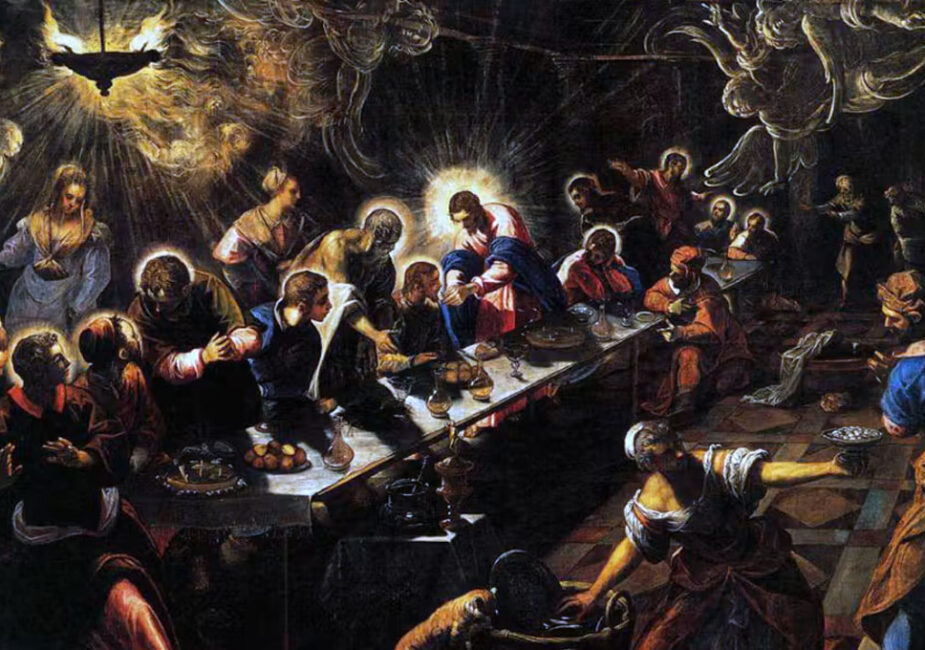
Venice is one of the rare cities where paintings can still be encountered in the places for which they were created. Museums are essential, but they tell only part of the story. Churches, confraternities and public buildings preserve works that remain connected to Venetian architecture, light and history. Giovanni Bellini, Titian and Tintoretto offer three different ways of understanding this city: Bellini brought a new softness and emotional depth to Venetian painting; Titian transformed colour into a powerful form of expression; Tintoretto introduced movement, drama and unusual perspectives. Following their work through Venice becomes more than an art itinerary. It is a journey through the city that shaped them.
Why did Venice develop such a distinctive school of painting?
Venetian painting grew in a city unlike any other Italian centre. Water changes the quality of light, while the lagoon creates reflections and atmospheric effects that seem to soften the boundary between buildings and sky.
Venice was also a wealthy trading republic with connections across the Mediterranean and beyond. Churches, religious confraternities and powerful families commissioned major works, giving artists opportunities to experiment on a large scale.
Colour became especially important. While drawing remained fundamental, Venetian painters became celebrated for creating form and atmosphere through layers of colour. The result was a tradition in which light often seems to come from within the painting itself, rather than simply falling across its figures.
Where can you see Giovanni Bellini’s paintings in Venice?
Giovanni Bellini belongs to an earlier generation than Titian and Tintoretto, and his work provides an ideal starting point. His paintings helped move Venetian art towards the rich colour and natural light that would define the following century.
The Gallerie dell’Accademia is essential for understanding this development. Its collections trace Venetian art across several centuries and allow Bellini’s work to be considered alongside later masters.
But Bellini should also be sought in churches. In San Zaccaria, his celebrated altarpiece remains in the building for which it was painted. Seeing such a work within a religious interior changes the experience: scale, architecture and surrounding space become part of the composition.
How did Titian change Venetian Renaissance painting?
Titian emerged from the Venetian tradition but pushed it in new directions. Over his long career, he worked for religious institutions, the Venetian elite and some of the most powerful rulers in Europe.
His paintings are known for their command of colour, but their impact goes beyond a rich palette. Faces, fabrics, landscapes and skin are built through paint in ways that create both physical presence and emotional intensity.
A journey through Titian’s Venice should include the Basilica di Santa Maria Gloriosa dei Frari. Here, the monumental Assumption of the Virgin demonstrates how painting could transform an entire church interior. Titian is also buried in the Frari, giving the building a particularly strong connection with his life and legacy.
Why is the Gallerie dell’Accademia essential for understanding the Venetian masters?
The Accademia provides something that individual churches cannot: comparison. Bellini, Titian, Tintoretto, Giorgione, Veronese and other major figures can be viewed as part of a continuing artistic conversation rather than as isolated names.
The collection helps reveal how Venetian painting changed between the fifteenth and sixteenth centuries. Bellini’s balanced compositions give way to new experiments with colour, movement and scale. By Tintoretto’s generation, the calm order associated with the early Renaissance could be stretched into something far more dramatic.
For travellers building an art-focused itinerary, it is also a useful first stop. The museum provides the visual vocabulary needed to recognise the same artists elsewhere in the city.
Where can you experience Tintoretto at his most dramatic?
Few places reveal the ambition of a single artist as powerfully as the Scuola Grande di San Rocco. Tintoretto worked on its decoration for many years, creating an extraordinary sequence of large religious paintings.
The experience is very different from seeing one canvas in a museum. Paintings occupy walls and ceilings, and the viewer must move through architectural space to understand their relationships. Tintoretto uses deep shadows, strong diagonals and sudden areas of light to direct attention.
His Venice extends well beyond San Rocco. Works connected with Tintoretto can be found across churches, galleries and the Doge’s Palace, creating an artistic route that reaches through several districts. An official map produced for the 500th anniversary of his birth identified numerous Tintoretto locations across Venice.
What can the Doge’s Palace reveal about art and political power?
Venetian painting was not created only for devotion or private pleasure. It also helped the Republic describe itself.
The Doge’s Palace was the centre of political and administrative life, and its interiors brought together architecture and painting on a monumental scale. Titian, Tintoretto and Veronese are among the artists represented in its decorative programmes.
Bellini also held an official role in the Republic, and his Pietà in the palace is a surviving example of that relationship.
Here art becomes part of government ceremony and public identity. The paintings do not merely decorate the palace; they help explain how Venice wanted its power, history and institutions to be understood.
How can you plan an art itinerary through Venice without rushing?
The best approach is geographical rather than chronological. Trying to see every important painting in a single day quickly turns art into a checklist.
Dorsoduro can be centred around the Accademia before continuing towards other churches and galleries. San Polo naturally brings together the Frari and Scuola Grande di San Rocco. San Marco deserves separate time for the Doge’s Palace and nearby religious buildings.
Choosing accommodation in the historic city can also make it easier to divide these visits across several days. Travellers comparing where to base themselves can use https://www.vretreats.com/en/luxury-hotel-venice/ while planning an itinerary that allows Venice to be explored largely on foot.
Why should Venetian paintings be seen in their original settings?
Museums provide excellent lighting, scholarship and opportunities for comparison. A church offers something different. The painting returns to an architectural space, a particular scale and, often, the purpose for which it was originally commissioned.
This is especially important in Venice, where art was deeply connected with religious communities, civic institutions and neighbourhood life. Walking between works also reveals how close these networks were. A masterpiece was rarely an isolated object; it belonged to a wider urban world.
The journey between Bellini, Titian and Tintoretto therefore becomes a way of reading Venice itself. Bridges, campi and canals connect one work to another, turning the city into an extension of the gallery.
What do Bellini, Titian and Tintoretto reveal about Venice?
Together, the three painters show how much Venetian art changed across little more than a century. Bellini offers stillness, luminous colour and carefully balanced emotion. Titian brings greater freedom and sensual richness. Tintoretto pushes painting towards speed, tension and theatrical movement.
Yet all three remain inseparable from Venice. Their work belongs to the lagoon not simply because they painted there, but because the city shaped the way their art was seen and used.
Following them through Venice therefore means looking beyond famous canvases. It means entering churches, crossing neighbourhoods and noticing how paintings continue to occupy the same urban fabric that produced them. In Venice, art history is not confined behind museum doors; much of it is still waiting along the next canal.
Last modified: October 25, 2026